
Michigan Senate Debate: El-Sayed’s Policy Clarity vs. Rogers’ Fear Tactics
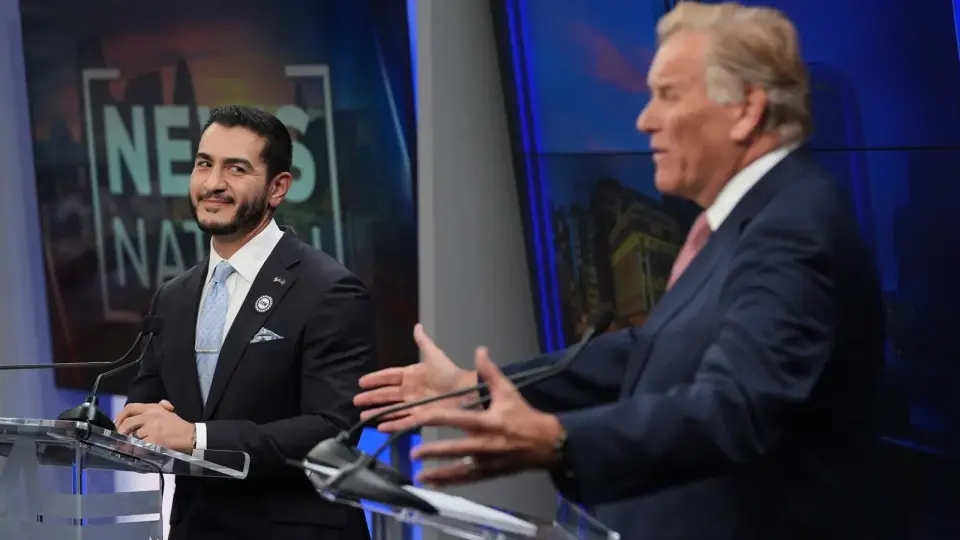
In a heated October 8 debate in Grand Rapids, Michigan, Democrat Abdul El-Sayed and Republican Mike Rogers clashed over foreign policy, healthcare, and campaign finance. While El-Sayed focused on Medicare for All and criticizing the Iran war, Rogers leveraged fear-based rhetoric regarding terrorism and AIPAC support. The race remains tight, with El-Sayed facing scrutiny over his stance on Israel and Rogers attempting to pivot away from Trump’s unpopular policies.
Key points
- El-Sayed advocated for Medicare for All and a billionaire tax, while Rogers warned of massive tax increases and government takeover of private insurance.
- Rogers repeatedly referenced the Muslim Brotherhood, Hamas, and Al Qaeda, implying El-Sayed had ties to these groups, though he did not explicitly name El-Sayed as a terrorist.
- El-Sayed stated he does not consider Israel an ally if it drags the U.S. into unnecessary wars, a stance that raised concerns among Jewish voters.
- Rogers signaled openness to AIPAC support, stating he would accept help from anyone opposing El-Sayed, despite previous reports of reluctance.
- Both candidates addressed the Iran war, with El-Sayed blaming it for gas prices and Rogers admitting the conflict needs to end but offering vague policy solutions.
Background
This debate followed a month of Rogers avoiding El-Sayed, including skipping a prior FOX 2 debate. El-Sayed had recently won the Democratic primary despite heavy AIPAC spending against him. The race is critical for Senate control, with polls showing a tight contest. El-Sayed’s confidence in winning by a wide margin contrasts with internal Democratic fears about alienating Black and Jewish voters.
How outlets are covering it
Rolling Stone portrayed El-Sayed as composed and policy-focused, while Rogers relied on 'fact-free' fearmongering and Islamophobic insinuations. The New York Times highlighted the debate's hostility, noting personal attacks and lack of substantive policy discussion. The Detroit News criticized El-Sayed for dodging questions on Israel and appearing unprepared, while praising Rogers for recovering from initial stumbles. Politico focused on Rogers’ openness to AIPAC support, contrasting with previous reports of his reluctance. Outlets disagreed on who 'won' the debate, with Rolling Stone favoring El-Sayed’s coherence and The Detroit News favoring Rogers’ maturity.
Why it matters
The Michigan Senate race is a key battleground for determining Senate control in 2026. El-Sayed’s ability to unify diverse voter blocs, including Jewish and Black communities, will determine his success. Rogers’ pivot away from Trump’s unpopular policies, such as tariffs and the Iran war, may help him appeal to moderate voters. The debate’s outcome could influence national perceptions of both candidates and the broader 2026 midterms.
What to watch
A second and final debate is scheduled for October 21 in Detroit. Both campaigns will continue to target swing voters, with El-Sayed focusing on affordability and Rogers emphasizing security and anti-El-Sayed messaging. Polls will be closely watched to gauge shifts in support among key demographics.
- Abdul El-Sayed Wouldn’t Let Mike Rogers Wash Off His MAGA Makeup Rolling Stone
- 5 Key Moments From a Hostile Michigan Debate: ‘You Going After My Mom?’ The New York Times
- Finley: Abdul says Israel not a U.S. ally; how will Jewish voters react? The Detroit News
- Mike Rogers opens the door for AIPAC support in Michigan Senate race Politico
- Fact check: Abdul El-Sayed and Mike Rogers debate Trump, tariffs, war, more Bridge Michigan
Want the full story? Read the original reporting
Read on Rolling Stone