
Michigan Senate rivals clash over AIPAC funding, wealth, and electability in final debate
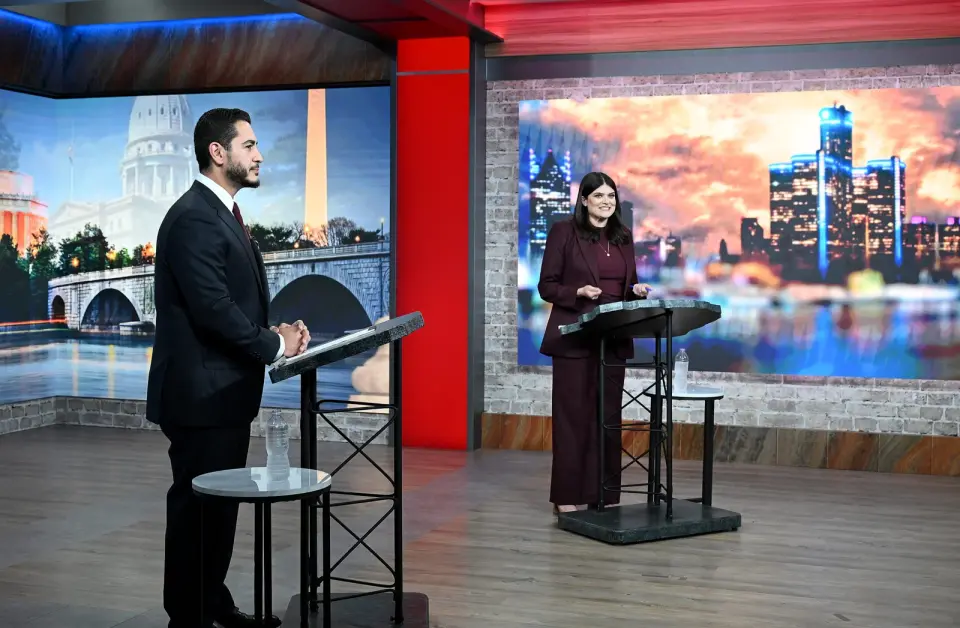
In the final debate before Michigan’s August 4 Democratic primary, candidates Abdul El-Sayed and Haley Stevens traded sharp accusations regarding campaign finance, personal wealth, and electability. El-Sayed criticized Stevens for accepting support from the American Israel Public Affairs Committee (AIPAC) and corporate interests like DTE Energy, while Stevens countered by highlighting her legislative effectiveness and questioning El-Sayed’s millionaire status. The contest, seen as pivotal for Senate control, features a stark ideological divide between a progressive outsider and an establishment-backed moderate, with both candidates vying for the support of undecided voters in a race that could determine the balance of power in the US Senate.
Key points
- El-Sayed accused Stevens of voting for $3.3 billion in aid to Israel despite AIPAC spending over $30 million on ads supporting her, calling it a quid pro quo.
- Stevens defended her vote, stating it would have stripped humanitarian funding from the region, and noted she supports a two-state solution.
- El-Sayed challenged Stevens on her acceptance of $45,000 from DTE Energy’s PAC in past campaigns, while Stevens clarified she has not taken such funds in her current Senate race.
- Stevens criticized El-Sayed’s personal wealth, noting he is likely worth between $700,000 and $2.1 million, while she declared herself the only non-millionaire in the race.
- El-Sayed dismissed the wealth critique as a distraction and emphasized his progressive agenda, including Medicare for All and abolishing ICE, which Stevens called too radical for Michigan.
- Both candidates pledged to support the winner in November, but the debate highlighted deep ideological divides over foreign policy, campaign finance, and economic priorities.
Background
This primary is one of the most closely watched in the 2026 midterms, as the winner will face Republican Mike Rogers in a race to replace retiring Senator Gary Peters. Michigan is a key battleground state for Democrats seeking to regain control of the Senate. Previous coverage noted El-Sayed’s 'ogre on a pike' remark, which he clarified referred to Senator John Fetterman, not Stevens, and the broader intra-party tensions over progressive vs. establishment priorities. The race has been marked by significant outside spending, with AIPAC-linked groups and pro-El-Sayed super PACs pouring millions into the contest.
How outlets are covering it
Bridge Michigan and CNN emphasized the personal attacks and ideological divide, with CNN noting El-Sayed’s clarification of the 'ogre' remark and Stevens’ focus on her legislative record. The New York Times highlighted the stark contrast between El-Sayed’s progressive agenda and Stevens’ establishment backing, framing the debate as a proxy fight over the party’s future. The Guardian focused on the AIPAC controversy and El-Sayed’s defense of his remarks, noting the broader implications for Democratic unity. All sources agreed on the high stakes of the race but differed in emphasis: Bridge Michigan detailed specific funding figures and fact-checks, while CNN and The Guardian focused on the personal and political fallout from the debate.
Why it matters
The outcome of this primary will determine the Democratic nominee for a crucial Senate seat in a state that could tip the balance of power in the US Senate. The debate revealed deep divisions within the Democratic Party over foreign policy, campaign finance, and economic priorities, with implications for the party’s future direction. The heavy involvement of outside groups like AIPAC and super PACs underscores the influence of money in politics, a central theme in El-Sayed’s campaign. The race also highlights the tension between progressive ideals and establishment pragmatism, a dynamic that could shape the party’s strategy in the 2026 midterms and beyond.
What to watch
Michigan voters will cast ballots in the August 4 primary, with the winner facing Republican Mike Rogers in November. Both candidates have pledged to support the nominee in the general election, but the debate suggests lingering tensions within the party. Polls show a close race, with El-Sayed and Stevens both holding leads over Rogers in hypothetical matchups. The outcome will be closely watched as an indicator of the Democratic Party’s ability to unify and compete in a key battleground state.
- Fact check: Haley Stevens, Abdul El-Sayed clash over AIPAC, electability Bridge Michigan
- Stevens and El-Sayed trade personal attacks and other takeaways from the Michigan Senate primary debate CNN
- 6 Takeaways From Michigan’s Senate Debate Between Abdul El-Sayed and Haley Stevens The New York Times
- Michigan progressive Abdul El-Sayed says ‘ogre’ remark not directed at rival The Guardian
- Democrats need Michigan. They can win with Abdul El-Sayed. | Opinion USA Today
Want the full story? Read the original reporting
Read on Bridge Michigan