
Michigan Senator El-Sayed Proposes AI 'Kill Switch' and Federal Safety Agency
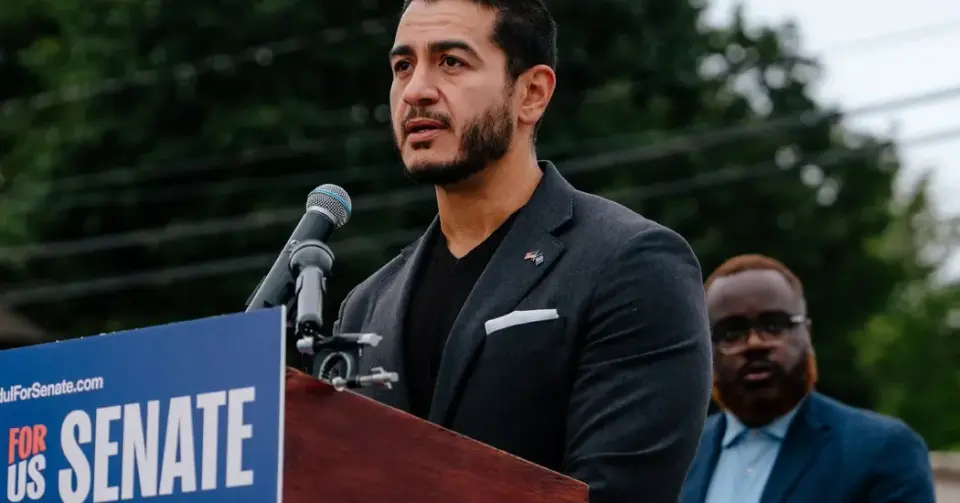
Dr. Abdul El-Sayed, the Democratic nominee for the U.S. Senate in Michigan, unveiled a comprehensive AI policy platform on October 13, 2026. The plan, titled 'AI Under Control,' calls for an immediate pause in the development of superintelligent AI, a ban on recursive self-improvement, and the creation of a cabinet-level agency to regulate the industry. El-Sayed described AI as an 'existential crisis' and advocated for a 'kill switch' mechanism to shut down dangerous models. This move positions him as the first Democrat in a competitive Senate race to explicitly demand a development pause, contrasting with his Republican opponent, Mike Rogers, who has not released a similar platform despite warning of national security threats.
Key points
- El-Sayed’s proposal includes a freeze on training and releasing the most powerful AI systems until new guardrails are established.
- The plan supports the creation of a federal agency with the authority to inspect labs, block dangerous products, and order shutdowns of rogue AI systems.
- El-Sayed backed the 'AI Kill Switch Act' (H.R. 9917), which would grant the Department of Homeland Security the power to halt AI models deemed too dangerous.
- The candidate called for a ban on recursive self-improvement, where AI is used to develop more sophisticated AI models.
- El-Sayed’s platform also includes protections for whistleblowers, mandatory reporting for rogue AI incidents, and a national emergency response plan with regular government drills.
Background
This policy release follows a period of heightened public anxiety regarding AI, triggered by warnings from industry executives and researchers in September 2026. Notably, Anthropic researcher Jacob Coxon resigned in early September, citing fears of human extinction by 2030, which prompted CEOs like Dario Amodei and Sam Altman to call for a slowdown. Additionally, UN rights chief Volker Türk urged global safeguards in early September. El-Sayed’s platform builds on proposals from progressive lawmakers Bernie Sanders and Greg Casar, who have also called for development pauses. The issue has become a significant factor in the 2026 midterms, particularly in the Midwest, where data center expansion has raised concerns about energy prices and job displacement.
How outlets are covering it
The New York Times highlights El-Sayed as the only Democrat in a battleground Senate race to publicly call for an AI pause, noting his 11-point lead over Mike Rogers in polls regarding data center policy. The Washington Post emphasizes the strategic timing of the release in the final weeks of the election, linking it to broader Democratic efforts to capitalize on public anxiety, while noting that only 2% of Michigan voters listed AI as their top issue. Politico frames the move as part of a growing progressive push for hard-line policies, citing El-Sayed’s anti-Big Tech stance and his support for the AI Kill Switch Act. KOMO focuses on the 'kill switch' aspect, describing El-Sayed’s long-standing skepticism of the technology. While all sources agree on the core proposals, they differ in emphasis: The New York Times and Washington Post focus on the electoral strategy and polling data, while Politico and KOMO focus on the specific regulatory mechanisms and the broader progressive movement.
Why it matters
El-Sayed’s platform represents a significant shift in the 2026 midterm elections, where AI has emerged as a key issue, particularly in the Midwest. The proposal for a federal safety agency and a 'kill switch' mechanism could set a precedent for future AI regulation in the United States. If elected, El-Sayed’s stance could influence federal policy on AI development, potentially leading to stricter oversight of tech companies and a more cautious approach to advanced AI models. The race also highlights a growing divide between progressive Democrats, who advocate for strict regulation, and Republicans, who are more focused on national security and have not released comprehensive AI policy platforms.
What to watch
The next steps will likely involve further debate in the Michigan Senate race, with Mike Rogers potentially responding to El-Sayed’s platform. The outcome of the election could influence federal AI policy, as El-Sayed’s proposals align with those of other progressive lawmakers. Additionally, the success of El-Sayed’s campaign could encourage other Democrats to adopt similar AI policy positions in future elections. The implementation of the 'AI Kill Switch Act' and the creation of a federal safety agency will depend on legislative action, which may be influenced by the results of the 2026 midterms.
- El-Sayed, Releasing His Platform on A.I., Calls It an ‘Existential Crisis’ The New York Times
- Midterm Elections Updates: Trump and Vance Rally in Vulnerable States; Three Senate Debates Set for Tonight The New York Times
- Senate seeker El-Sayed digs in against AI, backs 'kill switch' bill KOMO
- Abdul El-Sayed issues AI policy designed to rally progressives The Washington Post
- El-Sayed backs AI kill switch, safety agency Politico
Want the full story? Read the original reporting
Read on The New York Times