
Minnesota Senate Race: Flanagan and Tafoya Clash Over Fraud and Trump in Final Weeks
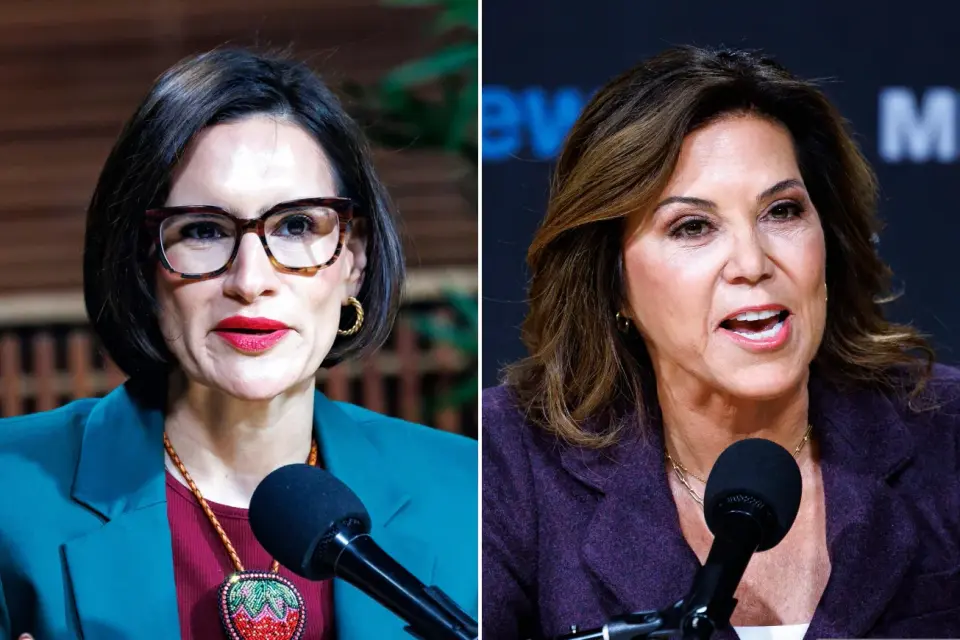
The 2026 Minnesota Senate race between Democrat Peggy Flanagan and Republican Michele Tafoya has become a critical battleground, defying the state's historical blue lean. A recent debate highlighted deep policy divides, while Tafoya's fundraising advantage and Trump's endorsement complicate her strategy to distance herself from the national GOP brand. Despite a tight poll, Democrats face significant financial and narrative challenges regarding the state's welfare fraud scandal.
Key points
- The race is unusually competitive for a reliably blue state, with Tafoya out-raising Flanagan in the third quarter ($4.9M vs. $4.3M) and entering October with a cash advantage ($2.1M vs. $1.5M).
- A recent debate revealed stark policy differences, including disagreements on term limits, tariffs, and the Iran war, though both candidates agreed the conflict should end.
- Tafoya is actively distancing herself from President Trump, who endorsed her, to appeal to moderates, while Flanagan is leveraging the state's welfare fraud scandal to attack Tafoya's competence.
- Polls show Flanagan leading by four points, but Democrats worry about the lack of national outside spending in Minnesota compared to other red-state battlegrounds like Iowa and Kansas.
- The welfare fraud scandal, which led to the deaths of two Minneapolis residents during an immigration enforcement surge, is a central theme, with Tafoya blaming state mismanagement and Flanagan pointing to Governor Tim Walz's accountability.
Background
Minnesota has not elected a Republican senator since 2002 or a Republican president since 1972. The race is for an open seat left by retiring Sen. Tina Smith. Recent archive coverage noted Flanagan facing scrutiny over a friend's fraud probe and receiving financial support from Sen. Bernie Sanders. The current race is seen as a potential 'sleeper' for Democrats, with concerns that polling may underestimate Republican support in this 'reddest blue state.'
How outlets are covering it
The Washington Post emphasizes the personal dynamics and policy disagreements between the candidates, noting Tafoya's polished delivery versus Flanagan's use of statistics. CNN highlights the financial disparity, pointing out that while Democrats dominate in other Senate races, Tafoya's fundraising advantage and the lack of national outside spending in Minnesota pose a significant threat. NBC News focuses on the GOP's strategic view of Minnesota as a potential opportunity to flip a seat, despite the state's historical blue lean, and notes Trump's direct endorsement of Tafoya. All outlets agree on the tightness of the race and the central role of the welfare fraud scandal, but differ on the emphasis: The Post on candidate contrast, CNN on financial risks, and NBC on GOP optimism.
Why it matters
The outcome of the Minnesota Senate race could signal a shift in the political landscape for the 2026 midterms. A Republican victory would break a 24-year Democratic hold in the state and could indicate broader Republican strength in traditionally blue areas. Conversely, a Democratic win would reinforce the party's control in the Senate and validate their strategy in competitive states. The race also highlights the impact of state-level scandals and funding disparities on national political outcomes.
What to watch
The final weeks of the campaign will focus on ad spending and voter outreach. Tafoya is expected to continue her strategy of distancing herself from Trump while appealing to moderates, while Flanagan will likely intensify her attacks on the welfare fraud scandal and Tafoya's association with the national GOP. The outcome will be determined by local dynamics and final-week spending, as national outside groups have largely avoided Minnesota in favor of other red-state battlegrounds.
- Takeaways from the only Minnesota Senate debate between Peggy Flanagan, Michelle Tafoya The Washington Post
- Peggy Flanagan, Michele Tafoya square off in testy Minnesota Senate debate MPR News
- Minnesota has signs of potential Democratic troubles in midterms CNN
- Republicans eye a potential opportunity in Minnesota in a tough midterm climate NBC News
- Trump ties, fraud crisis put Tafoya and Flanagan on defense in Senate debate Star Tribune
Want the full story? Read the original reporting
Read on The Washington Post