
Minnesota Senate race tightens as GOP spending advantage and ad disputes cloud Democratic hopes
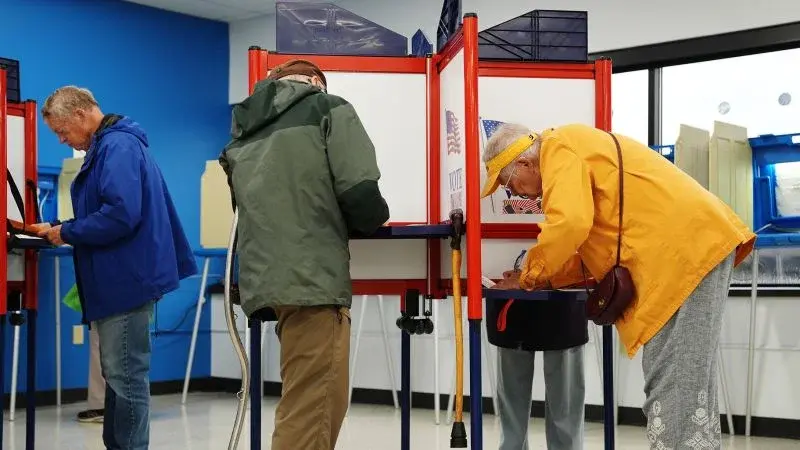
The Minnesota Senate race between Democrat Peggy Flanagan and Republican Michele Tafoya has become a critical battleground for the 2026 midterms, with polls showing a tight contest in a state that has not elected a Republican statewide official in 20 years. While Democrats hold a strong position in the House, they face significant financial disadvantages in Senate races, particularly in Minnesota, where Tafoya out-raised Flanagan in the third quarter. The race is complicated by a major welfare fraud scandal that damaged the state’s Democratic establishment and a series of misleading attack ads. Tafoya is attempting to distance herself from President Trump to appeal to moderates, while Flanagan is leveraging the scandal and high gas prices to attack her opponent. National outside groups have largely avoided Minnesota, focusing instead on other red states, leaving the race to be decided by local dynamics and final-week spending.
Key points
- Tafoya out-raised Flanagan in the third quarter, raising $4.9 million compared to Flanagan’s $4.3 million, and entered October with a cash advantage of $2.1 million to $1.5 million.
- A 5 Eyewitness News fact-check graded a Flanagan ad attacking Tafoya as a 'D' for being misleading, citing out-of-context quotes and altered video, though it contained some truthful claims.
- Tafoya is distancing herself from President Trump, describing herself as a 'pro-choice Republican' and downplaying his endorsement, while Flanagan is linking Tafoya to Trump’s policies and the state’s welfare fraud scandal.
- National outside groups have not heavily invested in Minnesota, focusing instead on red states like Iowa, Kansas, and South Carolina, where they are spending significantly more.
- The race is rated as 'Lean Democratic' by Inside Elections, but the tight margin and financial disadvantage for Democrats raise concerns about a potential 'blue wave' failure.
Background
The Minnesota Senate race is part of a broader midterm landscape where Democrats are expected to gain the House but face challenges in the Senate. The state’s political environment has been shaped by a major welfare fraud scandal that led Governor Tim Walz to drop his reelection bid, creating a vulnerability for his lieutenant governor, Peggy Flanagan. The race also occurs amid a national trend of Republican spending advantages in battleground states, with outside groups focusing on red states to build a firewall against Democratic gains. The 2024 presidential election saw Trump lose Minnesota by about 4 percentage points, but the state has not elected a Republican statewide official in 20 years, making the race a key test of Democratic strength in the Midwest.
How outlets are covering it
CNN emphasizes the financial disadvantage facing Democrats in Minnesota, noting that Tafoya out-raised Flanagan in the third quarter and that national outside groups have not heavily invested in the state. 5 Eyewitness News focuses on the accuracy of campaign ads, grading a Flanagan ad as misleading but acknowledging some truthful claims. MPR News provides a neutral overview of the candidates’ backgrounds and the upcoming debate, highlighting Tafoya’s experience as an NFL sideline reporter and her efforts to appeal to moderates. Roll Call notes that the race is rated as 'Lean Democratic' but that Republican groups have not made a full-throttle play for Minnesota, focusing instead on other red states. The outlets differ in their emphasis, with CNN and Roll Call focusing on the financial and strategic aspects, while 5 Eyewitness News and MPR News focus on the candidates’ messaging and the accuracy of their claims.
Why it matters
The Minnesota Senate race is a key indicator of the broader midterm landscape, with the outcome potentially affecting the balance of power in the Senate. The tight race and financial disadvantage for Democrats highlight the challenges facing the party in red and swing states, while the ad disputes and fact-checks underscore the importance of accurate messaging in a polarized political environment. The race also reflects the impact of the welfare fraud scandal on the state’s Democratic establishment and the efforts by both candidates to appeal to moderates and independents in a state that has not elected a Republican statewide official in 20 years.
What to watch
The race will be decided in the final weeks of the campaign, with the upcoming debate between Flanagan and Tafoya on Friday expected to be a key moment. National outside groups may increase their spending in Minnesota if the race remains tight, while local candidates will focus on final-week messaging and outreach to moderates and independents. The outcome of the race will have implications for the balance of power in the Senate and the broader midterm landscape, with Democrats seeking to gain the House but facing challenges in the Senate.
- Minnesota has signs of potential Democratic troubles in midterms CNN
- TRUTH TEST: Anti-Tafoya ad gets a D 5 EYEWITNESS NEWS
- Video: Michele Tafoya on her life in public view, rooted in family MPR News
- At the Races: Seeing red in Minnesota? Roll Call
- Peggy Flanagan’s lose-lose situation on fraud culpability in Minnesota Senate race Washington Examiner
Want the full story? Read the original reporting
Read on CNN