
Mississippi Redistricting Hearings End With Sharp Confrontations and No Maps
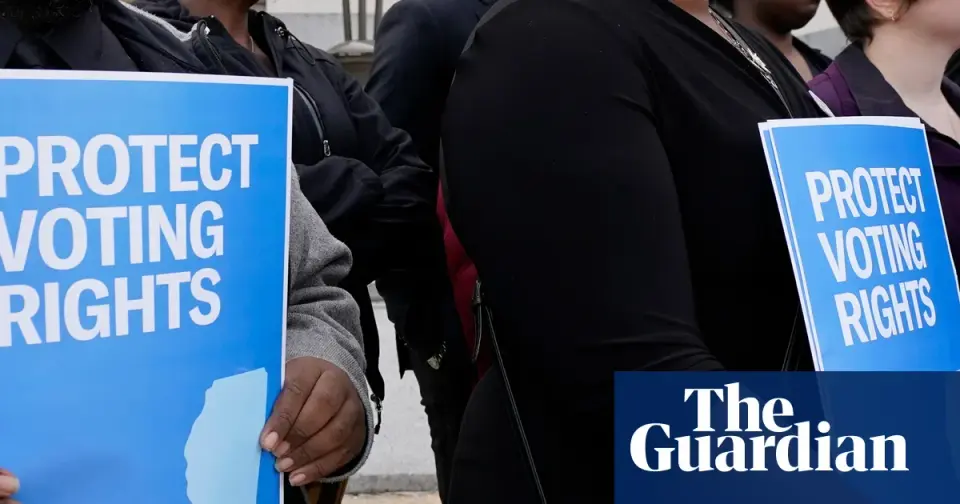
The final public hearing on Mississippi’s mid-decade redistricting concluded Thursday with no maps drawn, as a packed audience protested what they viewed as partisan gerrymandering. The event featured a heated exchange between State Auditor Shad White and House Democratic Leader Robert Johnson, with opponents arguing the process aims to dismantle Black political representation following the Supreme Court’s weakening of Section 2 of the Voting Rights Act.
Key points
- The Joint Committee on Reapportionment and Redistricting held its final public hearing in Jackson, capping a tour of eight locations across the state since August.
- No new maps were presented or approved during the hearing; the committee will now begin drawing proposals for the full legislature to review.
- State Auditor Shad White, a potential gubernatorial candidate, criticized Rep. Bennie Thompson, drawing boos from the audience and a direct confrontation with House Democratic Leader Robert Johnson.
- Opponents, including civil rights groups and Black legislators, argued the redistricting effort mirrors historical disenfranchisement tactics, while supporters cited a 'colorblind' constitutional approach.
- Governor Tate Reeves has not ruled out calling a special session this fall to redraw state legislative maps, with congressional maps potentially targeted before the 2028 election.
Background
This controversy follows the US Supreme Court’s decision in Louisiana v. Callais, which significantly weakened Section 2 of the Voting Rights Act by limiting the use of race in drawing district lines. Nationally, mid-decade redistricting efforts have yielded mixed results, with some states seeing competitive races despite Republican efforts. In Mississippi, the push is seen by critics as an attempt to reverse gains in Black representation achieved since the Jim Crow era, particularly targeting the district of Rep. Bennie Thompson, the state’s only Black member of Congress.
How outlets are covering it
The Guardian and WRAL emphasized the racial and historical dimensions of the protest, highlighting the committee’s composition (16 white Republicans, 4 Black Democrats) and the emotional testimony of attendees linking current efforts to the 1890 constitution. WAPT focused on the logistical aspects of the hearing and the broader national context of redistricting in nine states. WLBT highlighted the procedural next steps and the specific conflict between White and Johnson, noting that no maps were drawn. While all sources agree on the contentious nature of the event, they differ in emphasis: The Guardian and WRAL frame it as a civil rights struggle, while WAPT and WLBT present a more neutral procedural overview, though noting the strong opposition from the public.
Why it matters
The outcome of Mississippi’s redistricting could significantly alter the state’s political representation for years, potentially impacting the 2028 election for Rep. Bennie Thompson. The case tests the limits of the Supreme Court’s recent ruling on voting rights and may set a precedent for how other states approach mid-decade map changes. It also highlights the ongoing tension between partisan control and racial equity in American democracy.
What to watch
The Joint Committee will now begin drawing map proposals. The full Mississippi Legislature is expected to convene in a special session later this fall to approve state legislative maps. Congressional maps may be addressed before the 2028 election. Legal challenges are likely, as House Democratic Leader Robert Johnson hinted that the testimony could serve as evidence in future litigation.
- Hundreds gather in Mississippi to protest Republican redistricting: ‘This fight is familiar territory’ The Guardian
- Jackson rally challenges Mississippi redistricting plans WAPT
- Final public hearing on Mississippi redistricting draws sharp exchanges WLBT
- Fiery crowd caps Mississippi redistricting hearings. Opponents urge: ‘Leave our maps alone’ WRAL
- Last redistricting hearing comes to Jackson, MS. What happens next? The Clarion-Ledger
Want the full story? Read the original reporting
Read on The Guardian