
Musk’s $474M Midterm Bet Backfires as Democrats Sweep Texas and Congress
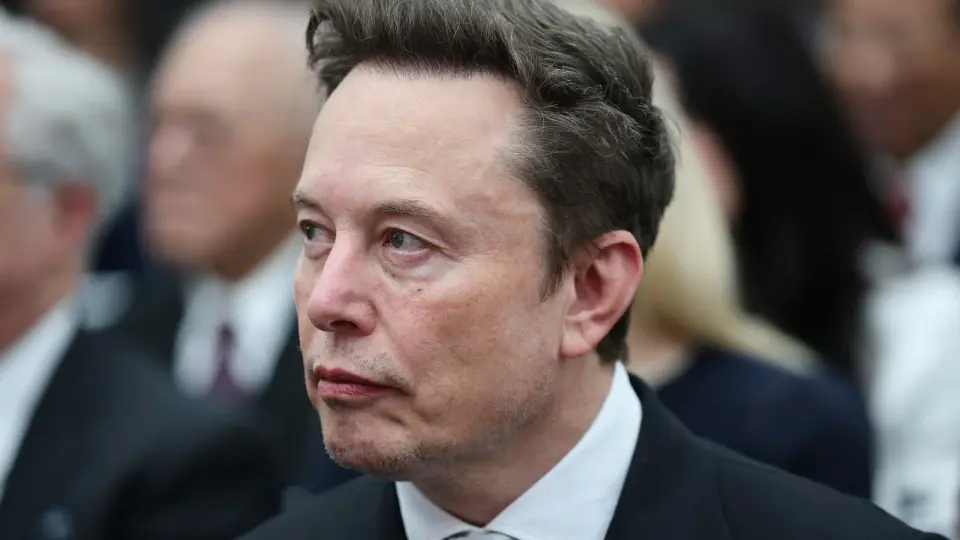
Elon Musk’s record-breaking $474 million expenditure in the 2026 midterms failed to secure Republican victories, resulting in a Democratic wave that threatens his business interests. Democrats won control of Congress and the Texas governorship, directly challenging Musk’s data center expansion plans. The outcome signals a broad voter backlash against billionaire influence and AI infrastructure, with 93% of Musk’s federal spending going to losing candidates. While Trump retains executive power, the new Democratic Congress may scrutinize Musk’s federal contracts and corporate subsidies.
Key points
- Musk spent a record $474 million, with $224 million focused on Texas, yet his favored candidates, including Ken Paxton and Greg Abbott, lost decisively.
- Democrats secured control of Congress and elected Gina Hinojosa as Texas Governor, who has pledged to impose a moratorium on new data centers and end corporate tax breaks.
- Musk’s America PAC backed 44 federal races, losing 29 and winning only three, with over $80 million spent on losing efforts.
- Voters approved at least 10 local data center bans or restrictions, reflecting a nationwide backlash against AI infrastructure expansion.
- JPMorgan estimates the AI infrastructure buildout could cost $5 trillion through 2030, with significant portions financed through debt markets.
Background
Musk’s spending in the 2026 cycle exceeded his 2024 contributions, contradicting his earlier vows to reduce political involvement. Previous coverage noted that Republicans dominated donor lists, with the top 20 contributing approximately $2 billion, but Democrats out-raised opponents in key Senate races through small-donor support. The 2026 cycle was framed as an existential crisis for Republicans, despite polls suggesting a Democratic surge.
How outlets are covering it
CNBC emphasizes the financial failure of Musk’s strategy, noting that 93% of his federal spending went to losing races and highlighting the threat to his Texas operations. MS NOW frames the election as a rejection of elite power, arguing that ordinary voters are bearing the burden of deficits while billionaires protect the status quo. Politico.eu focuses on the immediate impact on data center plans, quoting Musk’s sarcastic response about 'space lasers' and noting that Texas was expected to be an 'AI oasis' but is now in doubt. Axios’s content was inaccessible due to a bot challenge, so its perspective cannot be synthesized.
Why it matters
The election results signal a potential shift in regulatory and political support for AI and tech giants. A Democratic Congress may investigate federal contracts and corporate subsidies, while a new Texas governor could restrict data center permits and tax incentives. This could slow the $5 trillion AI infrastructure buildout, affecting companies like Tesla, SpaceX, and OpenAI, and potentially altering the trajectory of technological expansion in the US.
What to watch
Democrats in Congress may launch investigations into Musk’s federal contracts and his role in the Department of Government Efficiency. Gina Hinojosa’s administration in Texas will likely face legislative hurdles from the Republican-controlled state legislature but could complicate permitting for data centers. Musk may continue to pursue space-based data centers, as hinted in his social media posts, while other tech figures like Greg Brockman and Andreessen Horowitz face scrutiny over their political spending.
- Elon Musk’s record election bet backfired. The backlash may reach beyond one billionaire CNBC
- Musk laughs off election drubbing with space lasers joke Axios
- Opinion | We have more money than ever in politics. Ordinary voters are still left holding the bag. MS NOW
- Elon Musk’s $445M in giving makes him top 2026 political donor OpenSecrets
- Elon Musk suffers major blow in US midterms POLITICO.eu
Want the full story? Read the original reporting
Read on CNBC