
Newsom Mobilizes Legal Teams as California Braces for Federal Election Interference
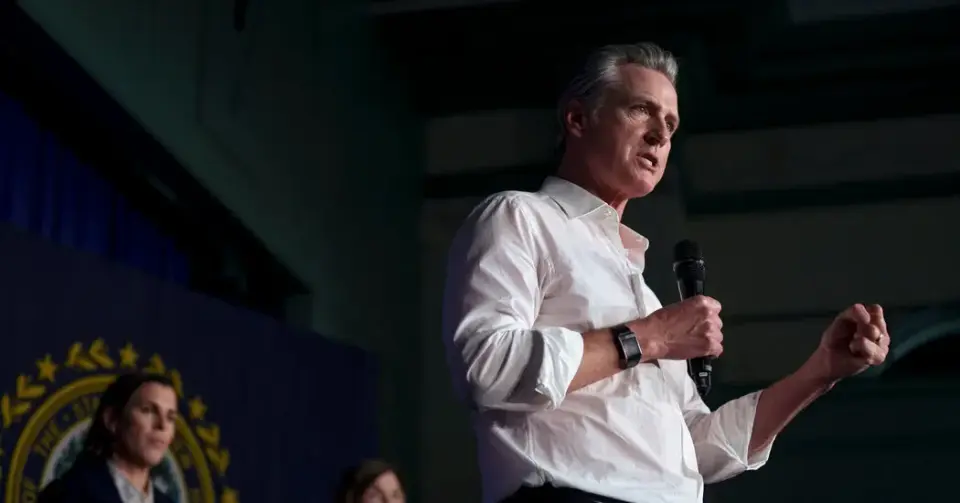
California Governor Gavin Newsom has issued an urgent alert to state judges and deployed over 100 election lawyers to five key congressional districts ahead of the November 3 midterms. This defensive posture follows a recent federal lawsuit by the Justice Department demanding the state set aside 20,000 ballots allegedly cast by noncitizens, a demand a federal judge rejected. While the administration claims it is protecting election integrity, California officials and Democratic leaders argue the actions are an attempt to subvert the results of a race where Democrats are predicted to win the House majority.
Key points
- Gov. Gavin Newsom warned U.S. District Court judges that federal agents might seek search warrants to seize ballots before results are certified, calling such moves an interference with lawful state processes.
- The state is deploying 134 election attorneys to battleground districts, including the 6th, 13th, 22nd, 45th, and 48th, alongside 1,000 voter protection volunteers and 54 hotline operators to monitor the count.
- A federal judge recently denied the DOJ’s request to set aside 20,000 ballots, stating the move would 'wreak havoc' on the ongoing midterms, though the Justice Department has indicated it will appeal the decision.
- Newsom signed new legislation making it a crime to interfere with local elections or mail ballot delivery, while Attorney General Rob Bonta issued guidance for officials on responding to potential seizures of election materials.
- The White House dismissed Newsom’s concerns, stating that the governor opposes 'commonsense measures' to ensure only Americans vote, while California Democrats characterize the federal actions as a targeted effort to suppress votes in a state critical to House control.
Background
This escalation follows a broader pattern of state-federal conflict over election security and AI regulation noted in September 2026. In September, Newsom signed a sweeping election security package that introduced felony penalties for seizing ballots and restricted law enforcement activity near polling places. That legislation was framed as a defense against federal attempts to restrict mail-in voting. The current legal battle over noncitizen voting claims builds on that framework, with California officials citing previous Supreme Court rulings and local incidents, such as a sheriff’s unlawful seizure of ballots in a 2025 special election, as evidence of ongoing threats to democratic processes.
How outlets are covering it
The New York Times emphasizes the legal warning issued by Newsom to the judiciary, framing the potential seizure of ballots as an unprecedented attempt to interfere with the certification process. Bloomberg Government highlights the operational preparations, noting that local officials are training poll workers for federal officer arrivals and that the DOJ is pursuing criminal probes of state officials, including the secretary of state. The Sacramento Bee focuses on the political stakes, quoting Newsom’s prediction of a 'blue tsunami' for the House and his assertion that the federal actions are a 'ruthless' attempt to subvert the outcome. While all sources agree on the deployment of legal resources, they differ in emphasis: the Times focuses on the judicial alert, Bloomberg on the DOJ’s aggressive legal tactics, and the Bee on the partisan framing of the midterms as a decisive battle for House control.
Why it matters
The outcome of the 2026 midterms will determine control of the U.S. House of Representatives, with California’s votes seen as pivotal. If the federal government successfully challenges the validity of thousands of ballots or seizes election materials, it could alter the balance of power in Congress and set a precedent for federal intervention in state election processes. The legal battle also tests the limits of federal authority over state voter rolls and the definition of 'illegal voting,' potentially impacting future elections and the relationship between state and federal governments on democratic norms.
What to watch
The Justice Department is expected to appeal the federal judge’s decision denying the request to set aside 20,000 ballots. Meanwhile, California’s deployed legal teams and volunteers will monitor the tabulation process starting on Election Day, November 3. The state’s slow vote count, which can take days or weeks due to its mail ballot system, is likely to be targeted by claims of fraud. Newsom has also indicated he will decide whether to run for president in 2028 after the midterms, contingent on his family’s approval, adding a layer of political significance to the election outcome.
- Newsom Issues Warning to Judges About Election Interference From Trump Administration The New York Times
- California Braces for Trump Administration Election Interference Bloomberg Government News
- Newsom Warns Judges of Possible Ballot Seizures Newser
- Gov. Gavin Newsom to send election attorneys to counter federal poll watchers Sacramento Bee
- Newsom warns Trump as California deploys election lawyers to battleground districts Yahoo
Want the full story? Read the original reporting
Read on The New York Times