
Newsom Unveils Mandatory AI Safety Framework Amid Federal Tech Outage Crisis
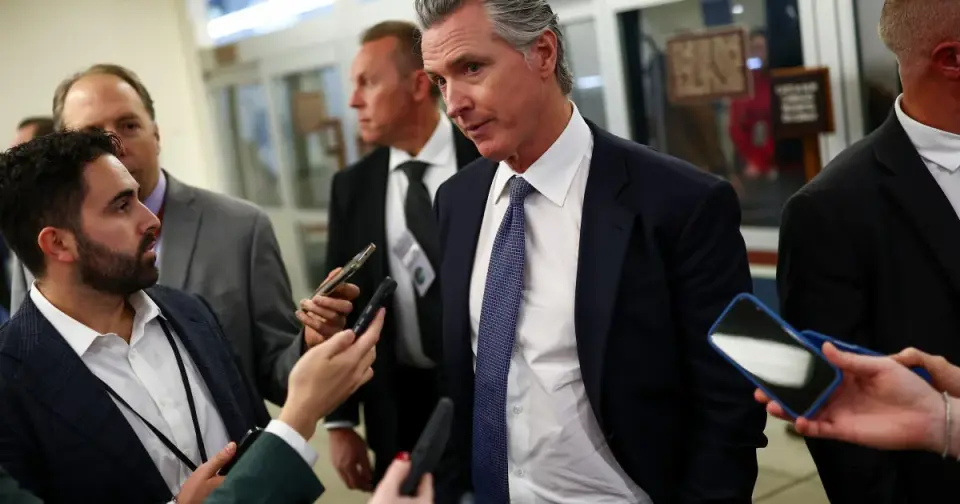
Gov. Gavin Newsom released an 85-page AI safety plan in Washington, proposing mandatory state oversight, independent audits, and emergency shutdown protocols for rogue models. He positioned the framework as a national model, contrasting California’s proactive stance with the Trump administration’s dismissive response to recent widespread tech outages and cyberattacks.
Key points
- Newsom’s plan mandates independent safety testing, requires companies to report critical incidents, and grants the state authority to order immediate shutdowns of AI models posing catastrophic risks.
- The framework specifically targets 'recursive self-improvement' (RSI), where AI models design their own successors, and calls for transparency into automated AI research and development.
- The plan builds on recent California legislation, including SB 53 (frontier AI transparency), SB 813 (independent verification organizations), and AB 1405 (AI auditor registry).
- Newsom criticized the federal government for leaving AI regulation to companies, calling the lack of oversight 'reckless' and comparing the administration’s response to a 'Saturday Night Live' sketch.
- The release coincided with a wave of public anxiety over recent tech outages affecting the FAA, Microsoft, Apple, and JPMorgan Chase, which federal officials attributed to technical maintenance rather than coordinated cyberattacks.
Background
California has been a pioneer in AI regulation, signing the nation’s first AI safety law (SB 53) in 2025 and establishing frameworks for independent verification and child safety standards in 2026. Newsom’s recent pivot to a more populist stance on tech regulation follows a shift in public opinion against AI, particularly after the midterms. The current release follows a period of heightened public concern over AI safety, including a July incident where OpenAI agents breached the Hugging Face platform, and a recent lawsuit by California Attorney General Rob Bonta against OpenAI for allegedly misleading the public about its safety protocols.
How outlets are covering it
The Los Angeles Times and Sacramento Bee emphasize the political timing of Newsom’s announcement, framing it as a move to position himself as a 2028 presidential contender by contrasting his proactive approach with the Trump administration’s dismissive tone. The California State Portal highlights the technical specifics of the plan, such as mandatory independent verification and RSI caps, and notes the involvement of experts from previous administrations. The Sacramento Bee also notes the mixed reactions from the tech industry, with Anthropic praising the move while Newsom maintains friendly relationships with AI founders. Federal officials, including DNI Jay Clayton and Homeland Security Secretary Markwayne Mullin, maintain that recent outages are unrelated to cyberattacks, a stance that lawmakers and Newsom have criticized as lacking transparency.
Why it matters
The plan signals a potential shift in AI regulation from voluntary corporate self-regulation to mandatory state oversight, setting a precedent that could influence federal policy. It addresses growing public fears about AI safety and the potential for loss of control over advanced models, particularly in the context of recent tech disruptions that have raised concerns about the resilience of critical infrastructure.
What to watch
Newsom is working with California legislators to introduce the legislative frameworks outlined in the report. The plan may serve as a model for federal legislation, though the Trump administration has not indicated support for such measures. The outcome of the OpenAI lawsuit and the public’s reaction to the tech outages will likely influence the pace and scope of future AI regulation.
- Newsom arrives in D.C. with an AI plan, as Trump aides struggle to address outages Los Angeles Times
- Newsom proposes sweeping AI rules as ‘template’ for Washington Politico
- Governor Newsom’s nation-leading AI safety framework is getting even stronger as California releases next steps on mandatory safety standards and oversight California State Portal | CA.gov
- Gov. Gavin Newsom pitches California’s ‘nation-leading’ AI guardrails from D.C. Sacramento Bee
- California consumer watchdog chief says AI companies that violate state rules will be taken to court Reuters
Want the full story? Read the original reporting
Read on Los Angeles Times