
Progressive Insurgency Threatens Jeffries' Speakership as Midterms Approach
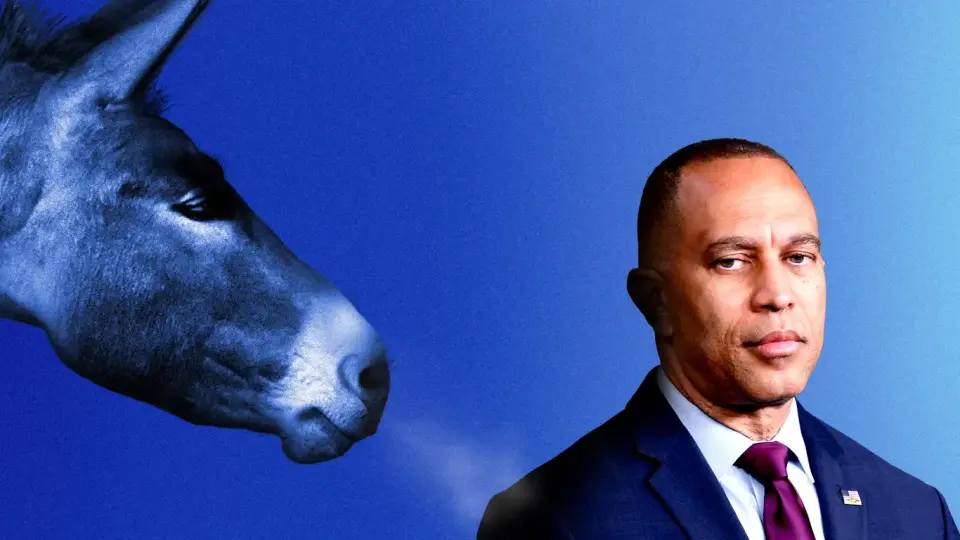
House Minority Leader Hakeem Jeffries faces escalating internal opposition from the party's left wing ahead of the November midterms. Progressive lawmakers and candidates are criticizing his public rejection of Medicare for All, his meeting with Jared Kushner, and his support for procedural rules that limit dissent. While Jeffries remains the likely Speaker if Democrats win the House, incoming progressive members are withholding support to leverage policy concessions on healthcare, Israel, and anti-corruption measures.
Key points
- Jeffries publicly stated on NBC's 'Meet the Press' that he does not support the Medicare for All legislation, a stance that has angered the Congressional Progressive Caucus and its chair, Greg Casar.
- Progressive candidates, including Adam Hamawy and Darializa Avila Chevalier, have not yet decided whether to support Jeffries for Speaker, using their uncertainty to negotiate for policy priorities such as ending arms sales to Israel and abolishing super PACs.
- Jeffries' team is considering rules to penalize members who break with party leadership on procedural votes, a move that has drawn sharp criticism from progressives who view it as an attempt to suppress dissent.
- The elevation of pro-Israel Representative Jared Moskowitz to a key foreign policy subcommittee role has further alienated the left, despite claims by leadership that the appointment was standard committee procedure.
- Jeffries maintains that his opposition to Medicare for All is a matter of leadership neutrality rather than policy disagreement, noting he previously co-sponsored the bill before becoming leader in 2022.
Background
This tension follows a summer of primary victories for progressive candidates across the country, which has emboldened the left wing of the Democratic Party. Recent internal disputes, including rebel votes by moderate Democrats and leadership attempts to manage candidate endorsements in California and Michigan, have highlighted deep ideological fractures within the House Democratic caucus. These conflicts are set against the backdrop of a potential Democratic majority in the House following the November 3 midterms.
How outlets are covering it
Axios emphasizes the personal frustration and 'festering distrust' among progressives toward Jeffries, highlighting his meeting with Jared Kushner and his Medicare for All comments as key flashpoints. CNN provides a broader structural analysis, noting that while Jeffries is still the likely Speaker, incoming progressives are using their leverage to demand policy changes and that the party faces a dual challenge of balancing its left wing with centrist voters. The IPS Journal offers a critical perspective, arguing that the left's current strategy of focusing on economic populism may not translate into broad electoral success in working-class districts, suggesting that the internal fight may be a symptom of a larger strategic disconnect. Mezha.net summarizes the conflict as a pressure campaign by progressives to force leadership to acknowledge the shifting political base.
Why it matters
The outcome of this internal struggle will determine the Democratic Party's legislative agenda and ideological direction for the next Congress. If progressives successfully leverage their support to force policy concessions, it could signal a permanent shift in the party's center of gravity. Conversely, if the conflict leads to a fractured caucus, it could undermine the party's ability to govern effectively and pass major legislation, potentially impacting the 2028 presidential cycle.
What to watch
The critical moment will arrive on November 4, the day after the midterms, when the incoming House Democratic caucus must vote for Speaker. The behavior of the new progressive members in this vote will signal the extent of their power and the degree of influence they can exert on the party's leadership. Additionally, the outcome of the California and Michigan races will test the party's ability to manage internal dissent and support its candidates in competitive districts.
- "Voters don't trust Jeffries": Democratic leader faces impending fight with the left Axios
- Democrats might win in the midterms — but a whole new set of problems await edition.cnn.com
- Progressive Democrats Pressure Party Leaders as House Leadership Fight Intensifies mezha.net
- Bernie and Mamdani did it, can the rest of the progressives? – Democracy and society IPS Journal
- US Democratic Party rattled by left-wing successes Arab News
Want the full story? Read the original reporting
Read on Axios