
Prop 40 Fact Check: Legal Experts Debate if Billionaire Tax Can Be Expanded to All Californians
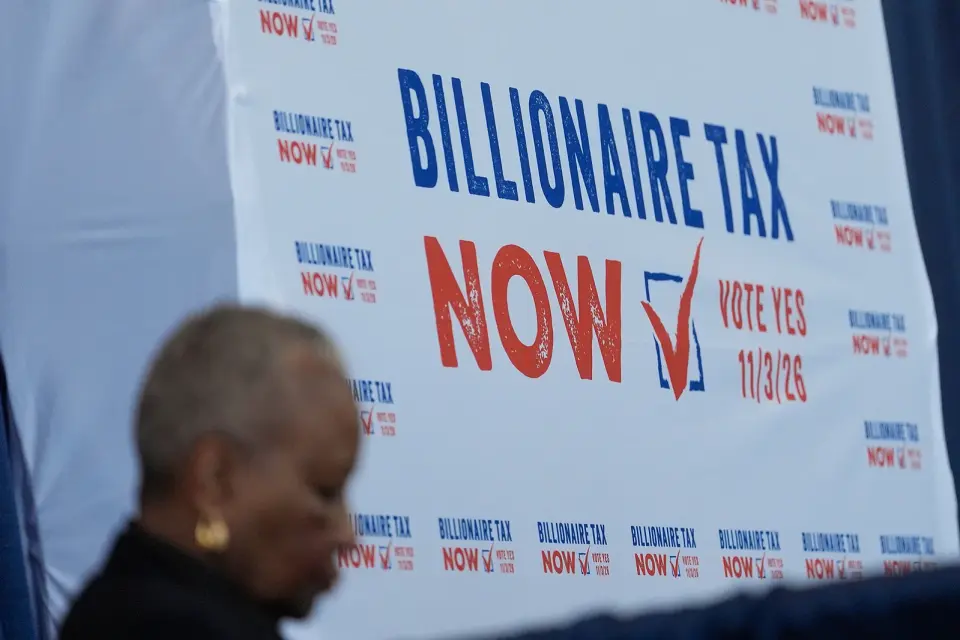
CalMatters fact-checks claims that Proposition 40’s legislative amendment clause could allow lawmakers to expand the billionaire tax to all Californians. While the measure includes language permitting two-thirds legislative changes if they 'further the purposes' of the act, legal experts note that courts generally restrict such changes to the original intent. The debate highlights a legal gray area, as opponents argue broad healthcare goals could justify expansion, while proponents emphasize the tax is constitutionally limited to billionaires. Meanwhile, polling shows the measure leads but lacks majority support, and opposition spending exceeds $100 million, led by Google co-founder Sergey Brin.
Key points
- Proposition 40 includes a clause allowing the California Legislature to amend the tax by a two-thirds vote if changes 'further the purposes' of the 2026 Billionaire Tax Act.
- Opponents, including the California Business Roundtable, argue this clause is a 'Trojan horse' that could eventually expand the tax to non-billionaires, while proponents like SEIU-UHW insist the tax is strictly limited to those with over $1 billion in net worth.
- Legal experts note that while legislative amendments are common, California courts use a 'reasonable construction' standard to ensure changes align with voter intent, making a broad expansion to all taxpayers legally difficult but not impossible without a new ballot measure.
- The measure would levy a one-time 5% tax on assets of Californians with net worths exceeding $1.1 billion, with 90% of revenue directed to healthcare and 10% to education and food assistance.
- Polling data from NBC News and UC Berkeley shows the measure has plurality support (48% to 38% or 41%) but lacks a majority, with 14% of likely voters undecided.
Background
Proposition 40 is the centerpiece of the 2026 California general election, pitting labor unions against tech billionaires. The measure was placed on the ballot by the Service Employees International Union-United Healthcare Workers West to offset federal Medicaid cuts. It follows a trend of increasing wealth gap concerns and populist campaigning in the 2026 midterms. The archive notes a broader national trend of tech policy debates and wealth inequality, but Prop 40 remains a unique state-level test of a direct wealth tax, distinct from previous income-based taxes like the Mental Health Services Act.
How outlets are covering it
CalMatters presents a balanced legal analysis, noting that while the amendment clause exists, courts have historically blocked legislative changes that conflict with the primary purpose of a ballot measure, such as the 2019 ruling on the Political Reform Act. CNN emphasizes the financial stakes, highlighting that Google co-founder Sergey Brin has donated over $100 million to defeat the tax, framing it as a strategic investment to avoid a potential $14 billion personal liability. NBC News focuses on the polling data, showing that while the tax leads, it is not a foregone conclusion, with significant undecided voters and concerns about wealthy residents leaving the state. The Los Angeles Times highlights the broader economic impact, noting that over $200 million has been spent on the campaign, with opponents arguing the tax will drive businesses out of California, while proponents call the exodus a 'myth.'
Why it matters
The outcome of Proposition 40 will determine whether California becomes the first state to implement a direct wealth tax, potentially setting a precedent for other states. If passed, it could raise up to $100 billion to fund healthcare, education, and food assistance, directly addressing federal budget cuts. If defeated, it may signal a limit to populist wealth tax efforts and reinforce the political power of tech billionaires in shaping state policy. The legal precedents set regarding legislative amendments to ballot measures could also influence future tax initiatives across the country.
What to watch
California voters will decide on Proposition 40 in the November 2026 general election. If passed, the state will face the logistical challenge of valuing assets, including private businesses and art collections, for the first time. Legal challenges are likely if the Legislature attempts to amend the tax in ways that opponents argue exceed the 'billionaire' scope. The results will also influence the gubernatorial race, as candidates like Xavier Becerra and Steve Hilton have opposed the measure, and may impact federal discussions on a national billionaire tax, as suggested by Governor Gavin Newsom.
- Fact check: Could California lawmakers expand the billionaire tax to everyone? CalMatters
- Top real estate mogul issues stark warning as California buyers say 'enough is enough' on taxes Fox Business
- A Google co-founder is spending $100 million to defeat California’s wealth tax. It could become one of his best investments CNN
- California poll: Voters back a billionaire tax, but the proposal falls short of majority support NBC News
- Your guide to Proposition 40: California’s billionaire tax proposal Los Angeles Times
Want the full story? Read the original reporting
Read on CalMatters