
Scott Defends Use of El-Sayed’s Full Name in Michigan Attack Ad
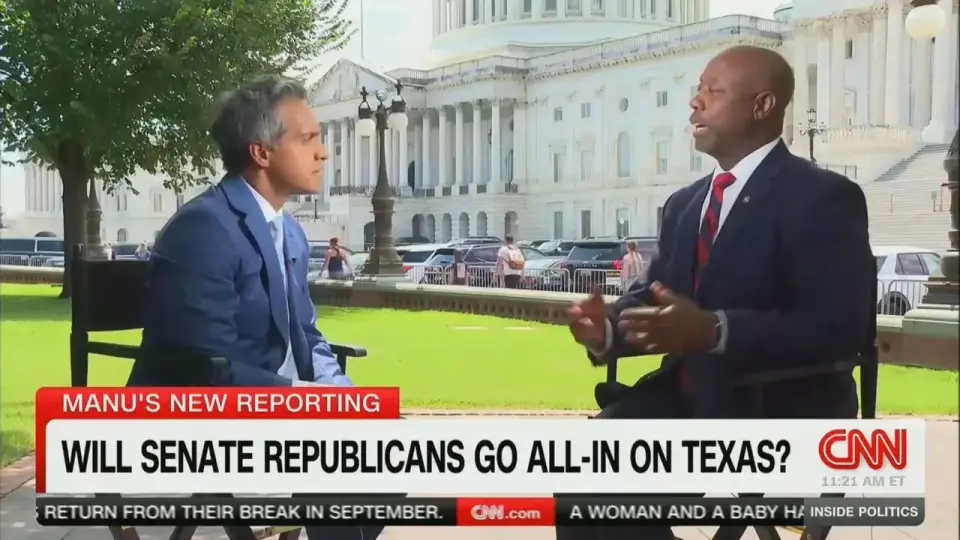
CNN’s Manu Raju questioned Sen. Tim Scott about the National Republican Senatorial Committee’s recent attack ad against Michigan Senate candidate Abdul El-Sayed, which used his full birth name, Abdulrahman Mohamed Abdul El-Sayed. Scott denied the tactic was intended to highlight El-Sayed’s Muslim faith, arguing instead that the focus should be on his policy positions and associations. Critics compared the strategy to former President Donald Trump’s use of Barack Obama’s full name to emphasize his Muslim heritage. The ad also featured a clip of El-Sayed calling himself 'dangerous' to political establishments and showed him with influencer Hasan Piker, whom Scott cited as evidence of El-Sayed’s radicalism.
Key points
- The NRSC released an attack ad on Friday using El-Sayed’s full birth name, Abdulrahman Mohamed Abdul El-Sayed, rather than his preferred name, Abdul El-Sayed.
- CNN’s Manu Raju asked Scott if the use of the full name was intended to signal to voters that El-Sayed is Muslim, drawing a parallel to Trump’s past use of 'Barack Hussein Obama.'
- Scott denied the religious implication, stating the ad’s purpose was to highlight El-Sayed’s policy positions, including defunding police and ICE, and his association with Hasan Piker.
- The ad included a clip of El-Sayed saying he is 'pretty damn dangerous,' which he later clarified meant he was dangerous to political establishments, and showed him standing with Piker.
- Scott argued that El-Sayed is 'inconsistent with Michiganders' and that voters should trust El-Sayed’s own words about his radicalism rather than the NRSC’s messaging.
Background
This controversy occurs amid a broader pattern of political attacks targeting candidates’ religious identities, as seen in Trump’s use of Obama’s full name. Tim Scott, chair of the NRSC, is actively working to secure Republican victories in key midterm races, including the Michigan Senate seat held by Rep. Mike Rogers. The use of full names to imply religious affiliation has been a recurring tactic in U.S. politics, often drawing criticism for its perceived discriminatory intent. Scott’s defense emphasizes policy disagreements and associations with controversial figures, rather than religious identity, to justify the ad’s strategy.
Why it matters
The use of full names in political ads can signal racial or religious targeting, influencing voter perceptions and potentially violating norms of fair campaigning. Scott’s defense highlights the tension between policy-based criticism and perceived identity-based attacks, which can polarize voters and shape the narrative of the 2026 midterm elections. The controversy also underscores the ongoing debate over the role of religious identity in political discourse and the effectiveness of such tactics in swaying public opinion.
What to watch
The NRSC may continue using similar tactics in other races, while El-Sayed’s campaign is likely to respond by emphasizing his policy positions and distancing himself from controversial figures. The ad’s impact on voter perception in Michigan will be closely monitored, and Scott may face further scrutiny from media and opponents over the use of full names in political advertising.
Want the full story? Read the original reporting
Read on Mediaite