
Raman’s $3.1B Transit Plan Pits Bike Lanes Against Car Traffic in Los Angeles
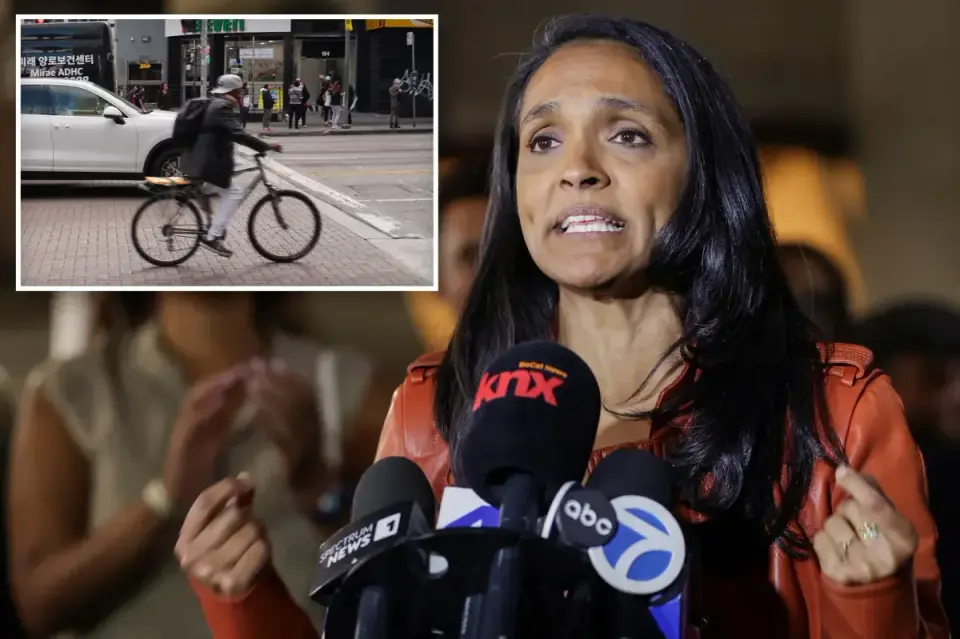
Incoming Los Angeles Mayor Nithya Raman is set to accelerate a $3.1 billion transportation overhaul, prioritizing protected bike lanes and bus corridors over vehicle traffic. Her administration plans to aggressively enforce Measure HLA, a voter-approved mandate requiring street safety upgrades during road repairs, despite opposition from some council members and emergency services unions.
Key points
- Raman’s platform includes installing concrete barriers, speed humps, and automated speed cameras to reduce traffic violence.
- The plan targets major boulevards like Lincoln, Santa Monica, and Sunset, potentially removing car lanes or parking spaces.
- Streets for All, which backed Raman’s campaign with $1.2 million, expects the new mayor to end City Hall’s resistance to street redesigns.
- Raman will control three seats on the 13-member Metro board, influencing countywide transit decisions and rail expansions.
- The initiative aims to revive the Vision Zero framework, which previously failed to eliminate traffic deaths by its 2025 deadline.
Background
Raman defeated incumbent Karen Bass in a surprise upset, becoming Los Angeles’ first South Asian mayor and a prominent democratic socialist. Her victory followed a campaign focused on tenant rights, Latino voters, and progressive transit policies, despite lacking endorsements from the City Council, which largely supported Bass. The new administration faces immediate challenges including a strained budget, a housing crisis, and a divided council, as it seeks to implement ambitious infrastructure changes ahead of the 2028 Olympics.
How outlets are covering it
Advocates like Streets for All and People’s Vision Zero view Raman’s win as a mainstream moment for safe streets, praising her commitment to enforcing Measure HLA and expanding transit. They argue that previous administrations obstructed these measures, wasting millions in legal fees. Conversely, critics including Councilwoman Traci Park and the firefighters’ union warn that mandatory road diets could worsen congestion, delay emergency responders, and harm neighborhood businesses. Park specifically criticized the measure for removing council discretion and eliminating community engagement, while the union expressed concerns about slower ambulance response times. The Los Angeles Times frames Raman’s potential impact as a historical political shift, comparing her to past revolutionary mayors who sought to overhaul city governance, though it notes the divided council may hinder her agenda.
Why it matters
The implementation of this $3.1 billion plan could fundamentally reshape Los Angeles’ urban landscape, prioritizing pedestrians and cyclists over cars. Success or failure in enforcing Measure HLA and expanding transit will determine whether the city can reduce traffic deaths and improve mobility, with significant implications for emergency response times, local businesses, and the broader political landscape of progressive governance in major U.S. cities.
What to watch
Raman is expected to take office in mid-December, where she will assume control of the city’s transportation department and three seats on the Metro board. Her first 100 days will focus on urgent road repairs and pothole fixes, while she works to resolve delays in the $3.3 billion LAX automated people mover project. She will also need to navigate opposition from the City Council, particularly regarding the Forest Lawn Drive project, and implement her Vision Zero director role to guide street safety decisions.
- LA Mayor-elect Nithya Raman to push $3.1B street overhaul forward that could squeeze drivers on city’s busiest roads New York Post
- Raman’s win triggers surge of optimism among advocates of transit and safer streets in LA LAist
- Is Nithya Raman L.A.’s next revolutionary mayor? What history has to say Los Angeles Times
- A generational upset in Los Angeles The Economist
- Opinion | Los Angeles voted against failure, not for socialism The Washington Post
Want the full story? Read the original reporting
Read on New York Post