
Schumer and Jeffries Face Internal Backlash Over Post-Midterm Strategy
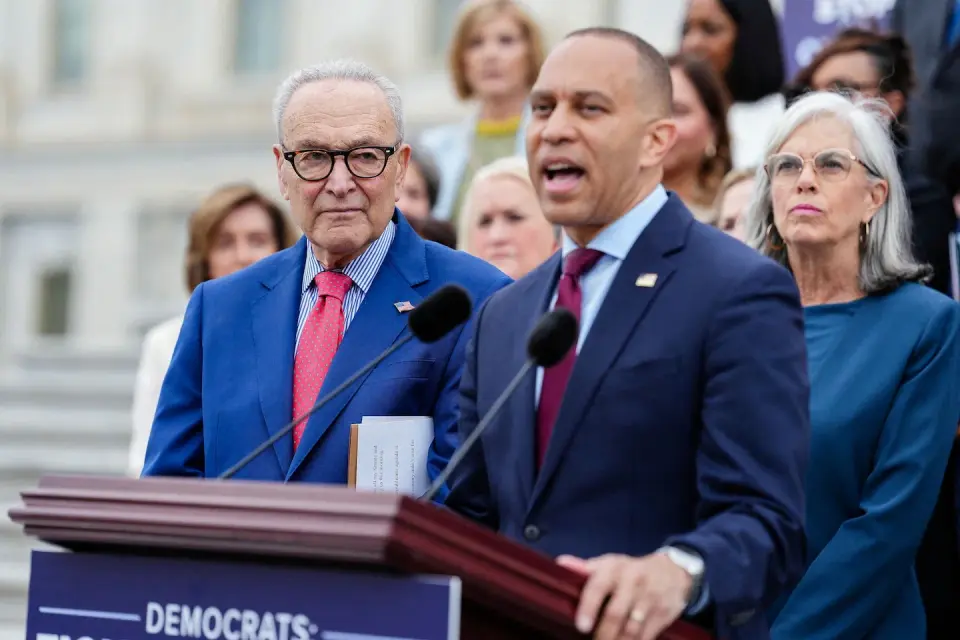
Following a historic Democratic victory in the 2026 midterms, party leaders Chuck Schumer and Hakeem Jeffries face intense internal pressure to expand their agenda beyond affordability. While they emphasize pragmatic governance, progressives demand accountability for the Trump administration and aggressive legislative action, creating a rift over the party's future direction.
Key points
- Democrats secured a historic majority in both chambers, winning at least 250 House seats and 54 Senate seats, driven by voter anger over affordability, the Iran war, and tariffs.
- Schumer and Jeffries have stated they will focus on 'kitchen-table issues' like affordability, dismissing calls for aggressive litigation or social agenda items as distractions.
- Progressive leaders, including Bernie Sanders and Alexandria Ocasio-Cortez, are demanding a shift in strategy, arguing that voters expect accountability for Trump-era abuses and bold legislative attempts, even if vetoed.
- No formal challengers have emerged for Schumer or Jeffries, but opposition is growing; Jeffries claims he has the votes secured, while Schumer expresses confidence in his caucus unity.
- Republicans have selected Jim Jordan as House Minority Leader and John Thune as Senate Minority Leader, with Jordan emphasizing a combative approach to the new Democratic majority.
Background
The 2026 midterms marked a significant shift in congressional power, with Democrats flipping deep red states and securing their largest House majority since 2008. This victory followed a period of intense voter frustration over economic costs and social issues. Previous coverage noted that while moderate candidates drove the wave, internal party dynamics regarding leadership style and policy priorities remain unresolved.
How outlets are covering it
The Washington Post criticizes Schumer and Jeffries for ignoring the broader mandate of voters, arguing that focusing solely on affordability dismisses the anger regarding civil rights, corruption, and the Iran war. It labels their approach as 'cowardice' and a refusal to risk failure. In contrast, Axios highlights the structural reality that no formal challengers have emerged, noting that while progressives demand change, the leadership retains significant support from incumbents like AOC and Ro Khanna. WBAL-TV reports the factual outcome of the leadership selections, noting the confidence of the current leaders and the specific timeline for final elections, without editorializing on the ideological conflict. The outlets differ in emphasis: the Post focuses on moral and strategic failure, while Axios and WBAL focus on the procedural and political mechanics of the leadership transition.
Why it matters
The internal Democratic conflict determines the legislative agenda for the next two years. If leaders stick to a narrow affordability focus, they may alienate the progressive base that drove the historic turnout. Conversely, aggressive legislative attempts could force President Trump to veto, potentially strengthening the Democratic narrative for the 2028 election. The outcome also sets the tone for potential impeachment proceedings against Trump administration officials, such as Defense Secretary Pete Hegseth, which requires a majority in the House and a two-thirds majority in the Senate.
What to watch
Senate Democrats are expected to finalize their leadership choice in early December, while House Democrats will vote next week. The lame-duck session will focus on judicial appointments, with Republicans committing to fill vacancies before the new Congress convenes. Democrats are also planning to reintroduce impeachment resolutions against Trump administration officials once they control the House majority in January.
- Chuck Schumer and Hakeem Jeffries are not meeting the moment The Washington Post
- Activists, some colleagues aim to block Schumer, Jeffries from leading Democrats The Washington Post
- The Democratic leadership revolt has a glaring problem Axios
- Opinion: The people versus Hakeem Jeffries and Chuck Schumer Deseret News
- Republicans, Democrats select next leaders for new Congress WBAL-TV
Want the full story? Read the original reporting
Read on The Washington Post