
Schumer Faces Dec. 1 Leadership Vote as Progressives Demand Generational Shift
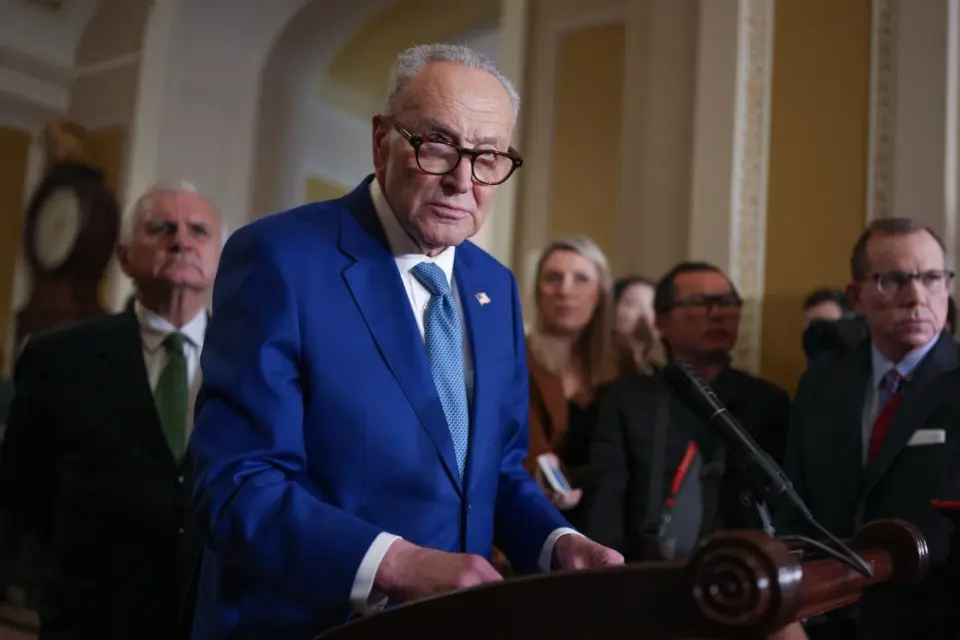
Chuck Schumer is favored to retain Senate Democratic leadership despite a challenge from Chris Van Hollen, as the party debates whether to embrace new progressive voices or maintain establishment control following a decisive 56-seat midterm victory.
Key points
- Senate Democrats secured a 56-seat majority in the November 2026 midterms, flipping nine seats, including in states President Trump won by double digits in 2024.
- A secret ballot for the majority leader position is scheduled for December 1, with Schumer holding the support of at least 16 caucus members versus six for challenger Chris Van Hollen.
- Progressive groups, including the Working Families Party and the International Association of Machinists, have urged Schumer to step aside, arguing the party needs a generational shift to reflect voter demands for change.
- Schumer, who turns 76 on Monday, has stated he is 'strongly favored' to win and is focused on delivering for the American people, while critics cite his age and close ties to establishment interests as obstacles to a bolder agenda.
- President Trump has publicly stated that working with Schumer will be 'very hard,' predicting a confrontational relationship and potential veto wars if Schumer retains the role.
Background
This leadership contest follows a period of internal tension within the Democratic Party, highlighted by earlier calls from labor unions and progressive lawmakers for Schumer to make way for younger leaders. The debate echoes broader discussions about generational change in American politics, particularly after the 2024 presidential election, where calls for leadership renewal were prominent. Schumer’s long tenure, spanning nearly 50 years in Congress, has made him a central figure in Democratic strategy, but his continued leadership is now being tested by a new cohort of lawmakers who prioritize anti-establishment policies.
How outlets are covering it
The Times of Israel and Reuters emphasize the procedural aspects of the leadership race, noting Schumer’s strong support base and his confidence in winning the December 1 vote. They highlight the contrast between Schumer’s establishment ties and the progressive demands for change, citing specific examples of primary races where Schumer’s support was criticized. Politico’s Jonathan Martin argues that Schumer should voluntarily commit to retiring in 2028 to ease tensions and allow new leaders to develop, framing the issue as one of legacy and political capital. ABC News features former Chicago Mayor Rahm Emanuel, who urges Schumer to step down after the next Congress to allow 'young voices' to grow, while also criticizing progressive defectors who voted against Hakeem Jeffries for House speaker. The Daily Camera’s opinion piece by LZ Granderson frames the debate as a clash between 'public service' and 'politics,' arguing that Schumer’s inside-game mastery is ill-suited to a new era where voters are setting agendas independently of Washington establishment figures. All sources agree that the 56-seat majority represents a historic shift, but they differ on whether Schumer’s leadership is a bridge to that change or an obstacle to it.
Why it matters
The outcome of the December 1 vote will determine the strategic direction of the Democratic Party in a Congress poised to face a confrontational White House. If Schumer retains leadership, the party may prioritize stability and establishment interests, potentially limiting its ability to advance bold progressive agendas. If Van Hollen or other challengers gain traction, it could signal a shift toward more populist, anti-establishment policies, reflecting the demands of the voters who delivered the 56-seat majority. The leadership contest also has implications for the 2028 presidential race, as Schumer’s potential retirement or continued influence could shape the party’s future leadership pipeline and its relationship with key donor and interest groups.
What to watch
The secret ballot for Senate Democratic majority leader will take place on December 1, with the outcome expected to be announced shortly after. If Schumer wins, he will formally take control of the Senate in January, where he will face a Trump administration that has signaled a confrontational stance. If Van Hollen or another challenger wins, the new leader will need to navigate a fragmented caucus and potentially face primary challenges from ambitious Democrats, including Representative Alexandria Ocasio-Cortez, who has indicated she may run for Schumer’s seat in 2028. The leadership decision will also influence the party’s approach to key policy issues, including tariffs, minimum wage, and ethics reform, as well as its relationship with the White House and the Supreme Court.
- After Schumer led US Democrats to big Senate win, some say he should now step aside The Times of Israel
- Chuck Schumer’s Best Exit Is on His Own Terms Politico
- Rahm Emanuel: Sen. Schumer should commit to stepping down as leader after next Congress ABC News - Breaking News, Latest News and Videos
- David Axelrod Warns Chuck Schumer Not to Repeat Biden’s Mistake Newsweek
- Schumer’s political era is over. Democrats need a public servant to lead them. (Opinion) Daily Camera
Want the full story? Read the original reporting
Read on The Times of Israel