
Schumer Faces Internal Challenge as Senate Democrats Debate Leadership Direction
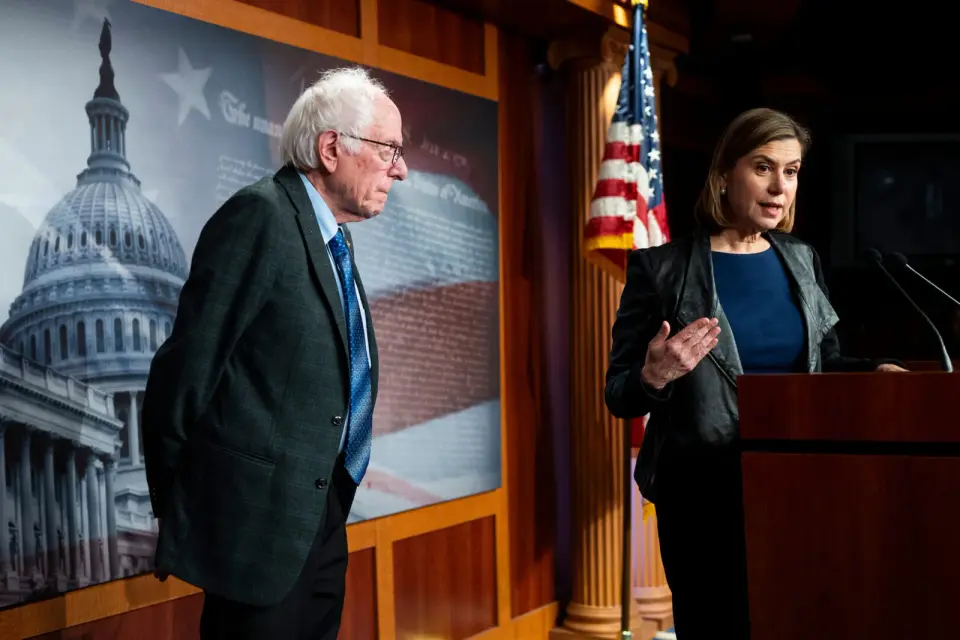
Senate Democratic leader Chuck Schumer faces a growing internal rift as progressives demand a new direction. While Schumer maintains confidence in his re-election, figures like Bernie Sanders and Elissa Slotkin have publicly opposed him or demanded concrete policy changes. Chris Van Hollen is emerging as a potential challenger, though he has not formally declared. The leadership vote is expected in December, following a historic midterm victory that secured the party at least seven Senate seats.
Key points
- Chuck Schumer stated he is confident in his re-election as majority leader, citing unity on cost reduction and ending the war.
- Bernie Sanders announced he will not support Schumer, arguing the party needs a 'new and bold direction' for the economy.
- Elissa Slotkin refused to endorse any candidate, demanding a 'concrete plan' for change and urging peers to withhold quorum until such a plan is presented.
- Chris Van Hollen is in 'active listening mode' regarding a leadership challenge, despite previously focusing on a 2028 presidential run.
- Kirsten Gillibrand and Mark Kelly defended Schumer, crediting him with strategic recruitment that secured a historic Senate majority.
Background
Following the November 2026 midterms, Democrats secured a historic Senate majority, winning at least seven seats and potentially nine. This victory, which included a narrow win in Mississippi, was largely attributed to Schumer’s fundraising and recruitment efforts. However, the party now faces internal divisions over policy direction, particularly regarding the economy and foreign policy, as it prepares to assume majority control in January 2027.
How outlets are covering it
Roll Call and The New York Times highlight the sharp divide between establishment and progressive wings, noting that while Schumer is credited with the electoral victory, figures like Sanders and Slotkin view his leadership as insufficient for the new mandate. CNN provides background on Chris Van Hollen, noting his previous focus on a 2028 presidential bid and his criticism of the party’s stance on Israel and crypto industry preferences. The outlets agree that the leadership contest is not just about names, but about the strategic direction of the party in its first 100 days in power.
Why it matters
The outcome of the leadership election will determine the legislative agenda of the new Democratic majority. A shift in leadership could signal a pivot toward more progressive economic policies, while a re-election of Schumer would maintain the current strategic approach. The internal debate reflects broader tensions within the party over how to translate electoral victory into effective governance and policy change.
What to watch
Senate Democrats are expected to hold leadership elections in December. The outcome will depend on whether a challenger can present a concrete plan that satisfies progressive demands for change, or if the caucus will coalesce around Schumer’s record of electoral success. Van Hollen’s decision on whether to run for leadership or a presidential bid is also expected to be made by early 2027.
- Rift grows among Senate Democrats over who will lead in majority Roll Call
- 'The time is now for change.' Bernie Sanders won't support Schumer for Senate Democratic leader PBS
- Who is Chris Van Hollen, the senator progressives are pushing instead of Schumer? The Washington Post
- Meet the 2028 Potential Presidential Contenders – Chris Van Hollen CNN
- Bernie Sanders Opposes Schumer as Majority Leader The New York Times
Want the full story? Read the original reporting
Read on Roll Call