
Schumer Fights Back Against Democratic Leadership Challenge With 2027 Agenda
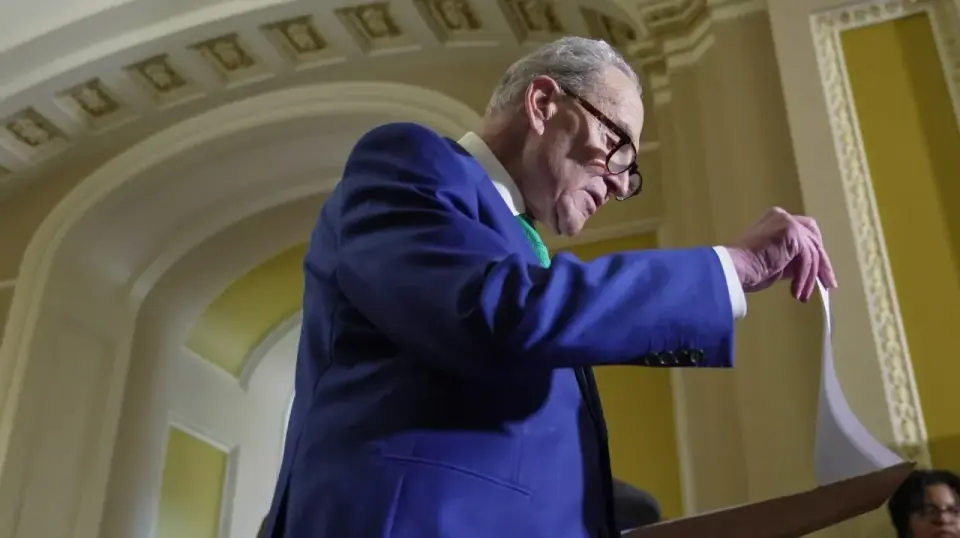
Senate Democratic Leader Chuck Schumer is aggressively securing support for his re-election as majority leader following a historic midterm victory. While he has pledged to cede some spotlight to committee chairs and coordinate with House Speaker-elect Hakeem Jeffries, a faction of the caucus, including Bernie Sanders and Elissa Slotkin, is demanding new leadership. Chris Van Hollen is currently in 'listening mode' regarding a potential challenge, though he has not officially declared his candidacy. Schumer’s strategy relies on a detailed 100-day legislative plan, including restoring health subsidies and reversing tariffs, to demonstrate his value to incoming freshmen who are currently undecided or opposed to his leadership.
Key points
- Schumer claims to have locked up the necessary votes for re-election and is meeting individually with incoming freshmen to shore up support.
- Schumer’s 100-day agenda includes restoring expired health insurance subsidies, reversing Trump-era tariffs, and undoing $1 trillion in Medicaid cuts.
- Bernie Sanders publicly refused to support Schumer, calling for a new direction, while Elissa Slotkin urged the caucus to withhold quorum until a concrete plan is presented.
- Chris Van Hollen is actively listening to colleagues but has not committed to running, though he criticized the DSCC for siding with crypto and AIPAC interests in primaries.
- A majority of the incoming freshman class, including Annie Andrews and Troy Jackson, have pledged not to support Schumer, though some remain uncommitted.
Background
This leadership struggle follows the Democratic Party’s historic midterm victory, which secured a Senate majority. Previous coverage noted that progressives and union leaders had already begun challenging Schumer’s leadership, arguing that the election mandate requires a new direction. The tension is part of a broader internal debate within the party over how to translate electoral success into legislative action, with some factions demanding aggressive accountability for the Trump administration while others prioritize pragmatic governance.
How outlets are covering it
The Hill emphasizes Schumer’s strategic maneuvering, highlighting his coordination with House Speaker-elect Hakeem Jeffries and his detailed legislative roadmap as tools to deter challengers. It notes that while Van Hollen and Slotkin are the primary names floated, there is skepticism within the caucus that either will actually run. Politico frames Van Hollen as the 'darling of the Democratic left,' focusing on his resurgence as an alternative to the establishment. Roll Call highlights the broader rift, noting that while some incumbents like Kirsten Gillibrand and Mark Kelly support Schumer for his fundraising and recruitment efforts, others like Sanders and Slotkin are openly critical. The outlets differ on the likelihood of a challenge: The Hill suggests the fundraising burden may deter challengers, while Roll Call notes that no one has officially stepped up yet, and Politico suggests Van Hollen is the preferred alternative for progressives.
Why it matters
The outcome of the December leadership election will determine the legislative priorities of the new Democratic majority. If Schumer retains the leadership, the party will likely pursue a pragmatic agenda focused on cost reduction and reversing recent Republican policies. If a challenger like Van Hollen emerges, the party may shift toward a more progressive platform, potentially impacting the 2028 presidential cycle and the party’s long-term strategic direction.
What to watch
The Senate Democratic caucus is expected to hold its leadership election in December. Schumer is continuing to meet with incoming freshmen to secure their support, while Van Hollen is actively listening to colleagues. The outcome will likely depend on whether the caucus prioritizes Schumer’s detailed legislative plan and coordination with the House, or the demand for a new generation of leadership and a different approach to governance.
- Inside Schumer’s push to squash a brewing Democratic rebellion The Hill
- The new darling of the Democratic left is … Chris Van Hollen? Politico
- Van Hollen puts Schumer on notice The Hill
- Who is Chris Van Hollen, the senator progressives are pushing instead of Schumer? The Washington Post
- Rift grows among Senate Democrats over who will lead in majority Roll Call
Want the full story? Read the original reporting
Read on The Hill