
Schumer Unveils Anti-Corruption Bureau Bill Amid Midterm Push
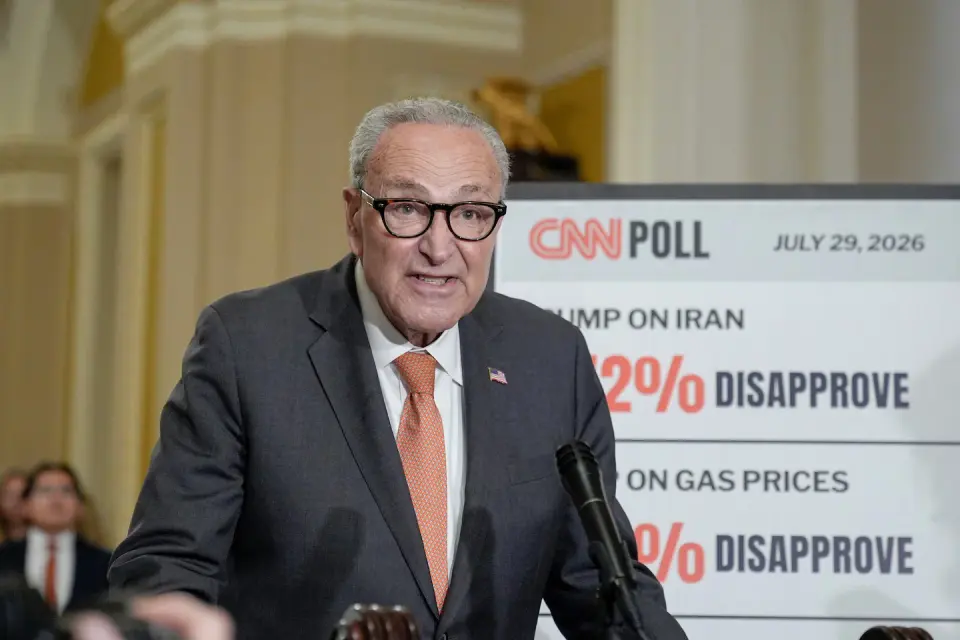
Senate Minority Leader Chuck Schumer is introducing legislation to establish a new federal anti-corruption agency, aiming to investigate alleged financial conflicts of interest in the Trump administration. The proposal, framed as a response to over $4 billion in alleged fraud by the Trump family, faces significant procedural hurdles in a Republican-controlled Senate. While Democrats position the bill as a broad institutional reform, Republicans and some critics view it as a partisan tool targeting the current administration, with the announcement itself disrupted by protests over foreign policy.
Key points
- Schumer plans to introduce a bill creating a new federal agency with broad powers to investigate corruption, potentially absorbing existing oversight bodies.
- The proposal is part of a broader Democratic legislative agenda ahead of the 2026 midterm elections, focusing on holding the Trump administration accountable.
- Schumer cited a report claiming the Trump family defrauded Americans of more than $4 billion in the past 18 months, including disputes over a $400 million luxury jet upgrade.
- The bill requires 60 votes to advance in the Senate, a threshold Democrats currently lack, making passage unlikely without significant bipartisan support.
- The announcement at the National Press Club was interrupted by a protester criticizing Schumer’s support for Israel, highlighting internal Democratic tensions on foreign policy.
Background
This move follows recent Senate hearings where Democrats, including Sen. Elizabeth Warren, aggressively questioned officials like Federal Reserve Chair Kevin Warsh over alleged corruption and asset divestments. It also aligns with broader Democratic efforts to articulate a legislative agenda focused on economic accountability and anti-corruption measures, distinct from earlier proposals like Newsom’s billionaire tax. The timing coincides with growing scrutiny of executive branch conduct and internal Democratic fractures over foreign policy, as seen in recent votes on arms sales to Israel.
How outlets are covering it
The Washington Post frames the bill as a strategic Democratic effort to define a legislative agenda ahead of midterms, emphasizing its broad scope and institutional intent. Fox News highlights the disruption of Schumer’s announcement by a protester criticizing his support for Israel, underscoring internal Democratic divisions and the political risks of linking anti-corruption rhetoric with foreign policy controversies. myMotherLode.com presents the bill as a direct response to alleged financial exploitation by the Trump family, focusing on the $4 billion fraud claim and the need to stop 'grift.' The outlets differ in emphasis: The Post focuses on procedural and legislative strategy, Fox News on political controversy and internal party conflict, and myMotherLode.com on the financial allegations and populist framing. All agree on the bill’s introduction but diverge on its perceived motivation and political viability.
Why it matters
The proposed Anti-Corruption Bureau could reshape federal oversight if enacted, potentially expanding investigative powers beyond current inspector general frameworks. Its failure or success will signal the viability of Democratic legislative initiatives in a Republican-controlled Senate and influence the 2026 midterm narrative on accountability and institutional reform. The controversy surrounding the announcement also reflects broader tensions within the Democratic Party over foreign policy and the effectiveness of anti-corruption messaging in a polarized political environment.
What to watch
Schumer is expected to formally introduce the bill in the Senate, where it will face a 60-vote threshold for passage. Democrats will likely seek bipartisan support or use the bill to pressure Republicans on corruption investigations. The administration may oppose the bill as partisan overreach, while internal Democratic debates over foreign policy could complicate unified messaging. Public and media scrutiny will focus on the bill’s scope, potential conflicts with existing agencies, and its impact on the 2026 election cycle.
- Schumer pitches new federal agency to investigate corruption The Washington Post
- WATCH: Schumer's anti-corruption speech derailed after heckler brands him 'genocidal maniac' Fox News
- Leader Schumer Floor Remarks On Donald T... Senate Democrats (.gov)
- 'Stop calling it success': Schumer rips Trump's Michigan speech over inflation and cost-of-living The Economic Times
- Schumer: Americans Pay, Trump Profits myMotherLode.com
Want the full story? Read the original reporting
Read on The Washington Post