
Senate Clears Sweeping Energy Bill, Splitting Colorado Democrats
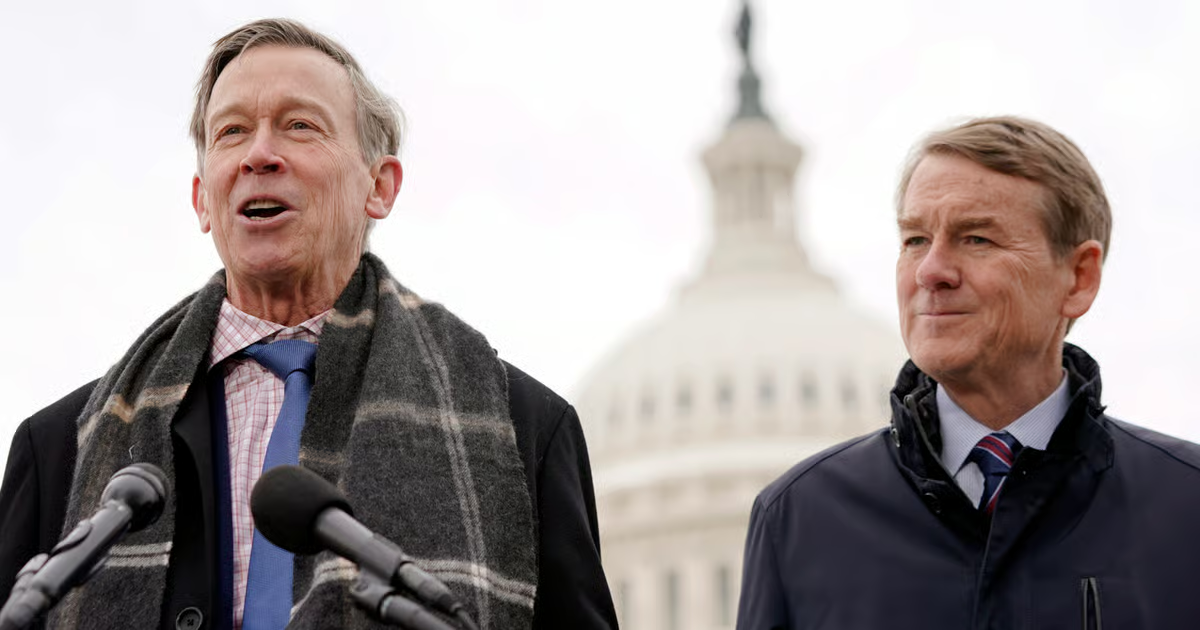
The U.S. Senate passed the Bipartisan American Affordability and Jobs Act, 62-33, to accelerate infrastructure and energy project approvals. The legislation amends key environmental statutes, including the National Environmental Policy Act, to reduce regulatory delays. It mandates that large data centers cover increased electricity costs and allows federal regulators to approve transmission lines if states do not act. The bill now moves to the House, where its fate remains uncertain due to a crowded legislative calendar.
Key points
- The Senate approved the Bipartisan American Affordability and Jobs Act on November 19, 2026, with a 62-33 vote.
- The bill amends the National Environmental Policy Act, Clean Water Act, and Endangered Species Act to shorten approval timelines and limit litigation.
- It grants the Federal Energy Regulatory Commission authority to approve transmission lines when states fail to act, aiming to boost renewable energy integration.
- The legislation requires large data centers to pay for electricity cost increases they generate, addressing concerns over rising utility bills.
- Colorado Senator John Hickenlooper supported the bill, while Senator Michael Bennet voted against it, citing insufficient tribal consultation and environmental protections.
Background
This vote follows a period of rising energy costs, with kilowatt-hour prices increasing more than 6% in the past year. The bill was negotiated by leaders of the Senate Environment and Public Works and Energy and Natural Resources Committees. It represents a significant shift in federal environmental law, aiming to balance energy affordability with infrastructure development. The archive notes ongoing legal challenges in Colorado regarding tax measures, but this federal energy vote is distinct from state-level fiscal disputes.
How outlets are covering it
Supporters, including Senators Sheldon Whitehouse and Martin Heinrich, argue the bill will lower electricity bills by $50 to $78 annually by 2024 and create over 100,000 jobs. They emphasize its potential to accelerate clean energy projects. Opponents, including environmental groups like the Sierra Club and Democratic Senators Maria Cantwell and Jeff Merkley, contend the bill weakens environmental accountability and tribal sovereignty. The New York Times describes it as the biggest change to environmental law in a generation. The Hill notes that 14 Democrats supported the bill, while others opposed it due to concerns over fossil fuel expansion and reduced public input. Colorado’s split reflects this national divide, with Hickenlooper prioritizing infrastructure speed and Bennet emphasizing environmental and tribal protections.
Why it matters
The bill’s passage signals a major shift in federal energy policy, potentially accelerating the construction of data centers, power plants, and transmission lines. It could impact electricity prices and environmental protections nationwide. The House vote will determine whether these changes become law, with implications for climate goals, energy costs, and tribal rights. The divergence among Colorado senators highlights the complex trade-offs between economic development and environmental stewardship.
What to watch
The bill now heads to the House, where it faces an uncertain fate due to a crowded legislative calendar. Lawmakers will debate its provisions, particularly regarding environmental protections and data center costs. If passed, the bill could reshape federal permitting processes and energy infrastructure development across the United States.
- Colorado senators diverge on permitting package Colorado Public Radio
- Senate Passes Major Permitting Bill to Speed Up Energy Projects The New York Times
- Opinion | America is one vote away from getting back to building The Washington Post
- These 14 Democratic senators voted to loosen environmental laws to speed up energy build-out The Hill
- Senate passes bipartisan energy bill amid environmental concerns NPR
Want the full story? Read the original reporting
Read on Colorado Public Radio