
Senators Sue to Block Colorado’s New Graduated Tax, Citing TABOR Violations
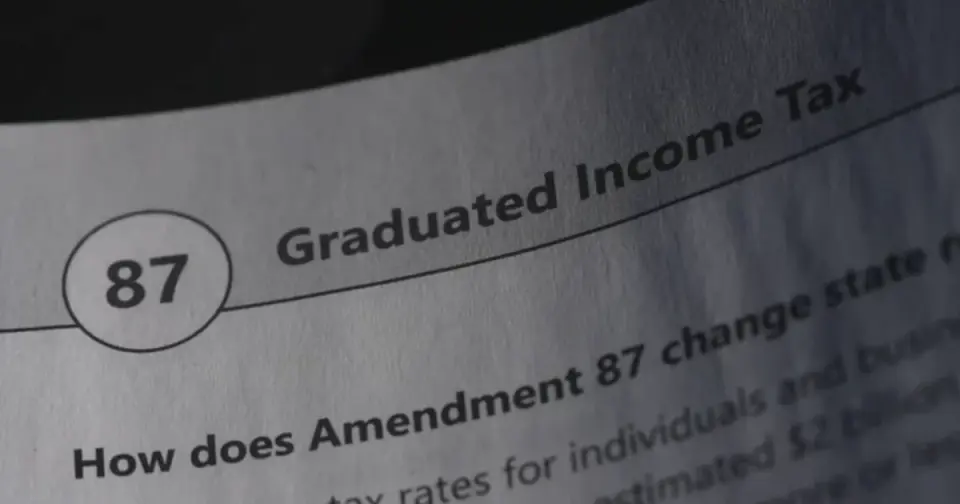
Republican state senators Barbara Kirkmeyer and Byron Pelton filed a lawsuit in Denver District Court on November 20, 2026, seeking to block the implementation of Amendment 87, a graduated income tax approved by voters on November 6. The suit, backed by the conservative group Advance Colorado, argues the measure violates the Taxpayer’s Bill of Rights (TABOR) by combining a constitutional change with a statutory tax increase in a single ballot question. Plaintiffs also allege the state’s nonpartisan voter guide, the Blue Book, contained significant calculation errors that misled voters about fiscal impacts. The tax changes are scheduled to take effect on January 1, 2027. While supporters argue the measure will raise $2.7 billion annually for healthcare and education, opponents claim it harms economic competitiveness and misinformed voters. The Colorado Sun notes that previous legal challenges regarding the single-subject rule were already adjudicated by the state Supreme Court, which allowed the measure to proceed.
Key points
- Sens. Barbara Kirkmeyer and Byron Pelton sued Gov. Jared Polis and Revenue Director Heidi Humphreys to block Amendment 87.
- The lawsuit argues Amendment 87 violated TABOR by combining a constitutional change with a tax rate increase in one measure.
- Plaintiffs claim the Blue Book voter guide contained errors, misstating tax impacts by up to $1.2 billion.
- The measure passed with 51.72% of the vote and is set to take effect on January 1, 2027.
- Advance Colorado simultaneously filed new ballot initiatives to reverse the tax changes.
Background
Amendment 87 replaced Colorado’s flat 4.4% income tax with a graduated system, raising rates for households and businesses earning over $500,000 while lowering taxes for most residents. The measure was projected to generate $2 billion annually for healthcare, education, and childcare. Prior to the election, the state Title Board and Supreme Court allowed the measure to appear on the ballot, overruling conservative opponents who argued it violated the single-subject rule. A competing measure, Proposition 136, which sought to cap the income tax rate at 4.4%, failed with 52.8% of voters rejecting it.
How outlets are covering it
Advance Colorado and the plaintiffs argue that Amendment 87 violated TABOR by combining a constitutional change with a statutory tax increase, citing the 2005 Referendum C and D as precedent for separate measures. They also claim the Blue Book voter guide contained 'materially false information' regarding tax impacts, specifically alleging that tables for high earners were calculated incorrectly. The Bell Policy Center, which supported Amendment 87, called the lawsuit 'frivolous,' stating that the single-subject question was already adjudicated by the Supreme Court and that the claims about income bracket tables are incorrect. Colorado Democratic Party chair Shad Murib called the lawsuit 'foolish,' arguing that 97% of residents will receive a tax cut and that the measure benefits most Coloradans. The Colorado Sun noted that while the Blue Book tables were confusing, they were not necessarily inaccurate due to the apportionment of income for part-time residents, and that Polis’ comments about Medicaid funding were warnings rather than promises. The Attorney General’s Office declined to comment on the lawsuit, stating it had not reviewed the filing yet.
Why it matters
The lawsuit could delay or block the implementation of a major tax change that is expected to raise $2.7 billion annually for healthcare, education, and childcare. If successful, it could reverse a significant policy shift that ended decades of low-tax policy in Colorado. The case also highlights ongoing tensions between conservative and progressive groups over tax policy and the role of voter guides in informing the public. The outcome could have broader implications for how ballot measures are structured and how voter guides are prepared in future elections.
What to watch
The lawsuit is pending in Denver District Court, and the tax changes are scheduled to take effect on January 1, 2027. Advance Colorado has filed new ballot initiatives to reverse Amendment 87, which could be on the ballot in the next election. The Bell Policy Center and other supporters are expected to defend the measure in court, arguing that the lawsuit is frivolous and that the measure was properly approved by voters. The Attorney General’s Office may respond to the lawsuit once it has reviewed the filing.
- Two state senators sue to block Colorado’s new income tax, claiming voters got inaccurate information Denver7
- Advance Colorado files lawsuit to block Amendment 87 Colorado Public Radio
- Group behind 8 ballot initiatives seeks to block Amendment 87 KDVR
- Colorado Republicans sue to block Amendment 87 tax hikes The Colorado Sun
- Colorado's tax competitiveness tanks with Amendment 87's passage Axios
Want the full story? Read the original reporting
Read on Denver7