
Senfronia Thompson Secures Majority to Become First Woman and Black Texas House Speaker
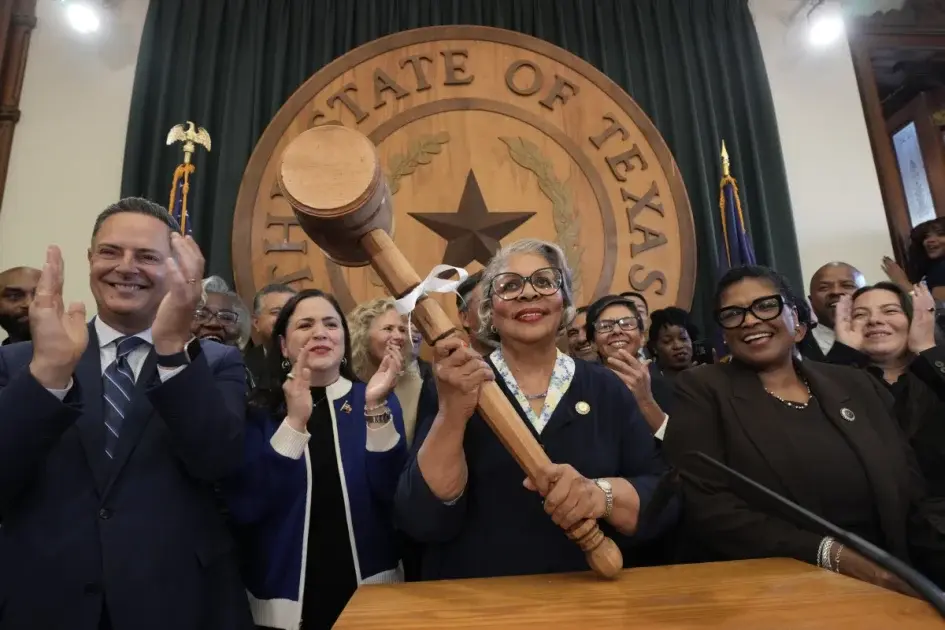
State Rep. Senfronia Thompson announced on November 6 that she has secured the necessary votes to become the Texas House speaker, a role she would hold as the first woman and first Black legislator in that position. Her candidacy gained decisive momentum after her sole rival, Rep. Eddie Morales Jr., dropped his bid and endorsed her. Thompson, 87, is the longest-serving woman and Black legislator in any U.S. state, having served since 1972. She pledged to restore bipartisan committee leadership, a practice abandoned under the previous Republican speaker, Dustin Burrows. This leadership shift follows a historic Democratic victory in the 2026 midterms, where the party won its first House majority since 2003. If elected in January, Thompson would join Gov.-elect Gina Hinojosa and Lt. Gov.-elect Vikki Goodwin to form the first all-woman 'Big Three' in Texas state history.
Key points
- Thompson declared she has a majority of the 150-member House, with support from all Democrats and a growing number of Republicans.
- Rep. Eddie Morales Jr. withdrew from the race on November 6, endorsing Thompson and citing her understanding of border and rural communities.
- Thompson promised to appoint bipartisan committee chairs, reversing the partisan exclusivity of the previous speaker, Dustin Burrows.
- The new Democratic majority controls more than 80 seats, ending Republican dominance in the House that began in 2003.
- Thompson’s election would create the first all-woman trio of top state officials, including the governor and lieutenant governor.
Background
Prior coverage noted that Democrats were poised to seize the Texas House for the first time since 2003, requiring 14 seat flips to achieve a majority. The 2026 midterms saw a historic Democratic sweep of statewide offices, including the governorship and U.S. Senate, while the Texas Senate remained under Republican control. Earlier reports highlighted how shifting Latino voter support in border-adjacent districts challenged the Republican redistricting efforts of 2025, contributing to the Democratic wave that enabled Thompson’s rise. Thompson had been identified as the frontrunner for the speakership as early as November 4, with her initial support list including key figures from Houston, Dallas, and San Antonio.
Why it matters
Thompson’s potential speakership marks a pivotal shift in Texas governance, ending two decades of Republican control in the House and introducing a new era of bipartisan cooperation. Her pledge to restore bipartisan committee leadership contrasts sharply with the partisan tactics of the previous term, which included aggressive gerrymandering and restrictions on minority rights. The historic all-woman leadership trio signals a significant demographic and political transformation in Texas, potentially influencing policy priorities in education, healthcare, and property taxes. This transition also tests the durability of the new Democratic coalition, as some Republicans remain divided on whether to support Thompson or maintain a unified opposition.
What to watch
Thompson must maintain her coalition through the January convening of the Legislature to be formally elected speaker. The House Republican Caucus, led by Tom Oliverson, has not yet decided on an endorsed candidate, though some members are considering supporting Thompson despite caucus rules. The new Democratic majority will face immediate challenges in passing legislation on education, property taxes, and healthcare, while navigating the divided state government with a Republican-controlled Senate. Thompson’s ability to balance urban and rural interests, as emphasized by Republican supporters like Drew Darby, will be critical to her success.
Want the full story? Read the original reporting
Read on The Texas Tribune