
Stevens' Defection to GOP Ends Career as El-Sayed Wins Michigan Senate
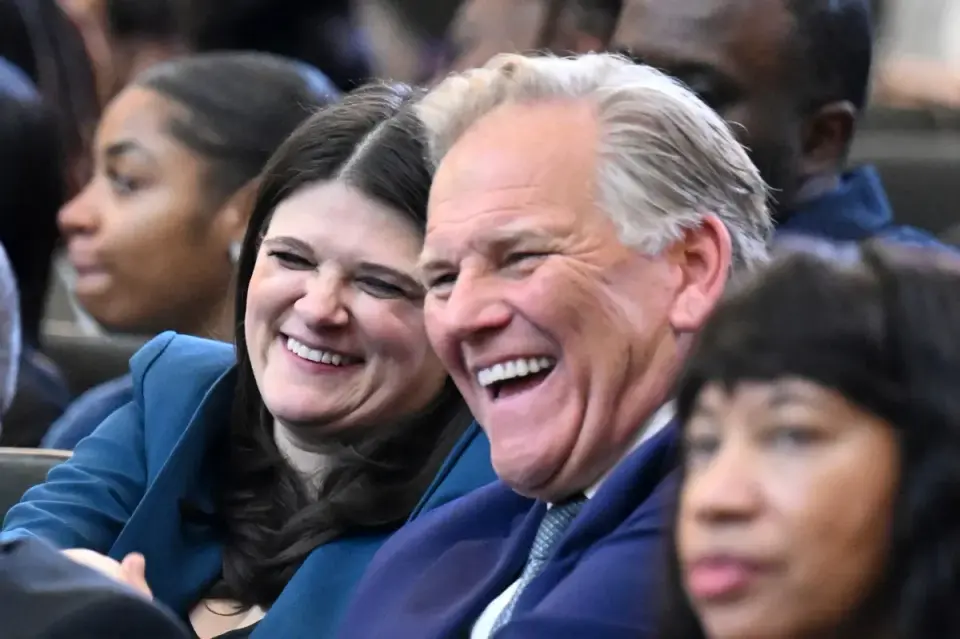
Rep. Haley Stevens ended her political career by endorsing Republican Mike Rogers after losing the Michigan Senate primary to Abdul El-Sayed. El-Sayed won the general election, becoming the first Muslim U.S. Senator. Stevens' decision drew severe backlash from Democratic leaders and raised questions about the influence of her fiancé, Jason Turkish.
Key points
- Abdul El-Sayed defeated Mike Rogers in the Michigan Senate race, securing a Democratic majority in the Senate and becoming the first Muslim U.S. Senator.
- Rep. Haley Stevens formally switched her endorsement from El-Sayed to Rogers on Sunday, November 1, 2026, after losing the primary in August by less than one percentage point.
- Stevens' decision triggered immediate backlash from Democratic leaders, including Sen. Chuck Schumer and Rep. Nancy Pelosi, who called it a 'despicable betrayal.'
- Stevens' fiancé, Jason Turkish, a political donor and lawyer, was widely suspected of influencing her decision, though Stevens denied this in a statement on X.
- Stevens' congressional staff resigned en masse, and she was effectively banished from the Michigan Democratic Party, with her name removed from its website.
Background
The 2026 midterms resulted in a Democratic sweep of both houses of Congress, marking a significant shift in power. The Michigan Senate race was particularly contentious, with El-Sayed facing a protracted primary and subsequent attacks from within the Democratic establishment. Stevens' defection was seen as a pivotal moment in the race, though El-Sayed ultimately won despite the opposition.
How outlets are covering it
The Intercept framed Stevens' endorsement as a 'despicable betrayal' driven by anti-Muslim sentiment and the influence of her fiancé, Jason Turkish. CNN highlighted the role of Turkish in the campaign, noting that he frequently sent Stevens negative comments about her appearance and positions, and that he had endorsed Rogers before Stevens did. The New York Times focused on the breakdown in relations between Stevens and El-Sayed, noting that El-Sayed had refused to appear with Stevens at a unity event after she issued a hostile statement. The Washington Post emphasized the behind-the-scenes tensions between Turkish and Stevens' staff, who had called a meeting without her to restrict his role in the campaign. All sources agreed that Stevens' decision had severe consequences for her political career, but differed in their emphasis on the role of Turkish and the broader implications for the Democratic Party.
Why it matters
Stevens' defection highlighted deep divisions within the Democratic Party over Israel policy and the treatment of progressive candidates. It also raised questions about the influence of donors and family members in political campaigns. The outcome of the Michigan race, with El-Sayed's victory, signaled a shift in the party's priorities and a growing willingness to challenge traditional establishment positions.
What to watch
Democrats are expected to engage in a long-overdue intraparty debate over how to handle dissent and the role of Israel policy in their platform. Stevens' political career is likely over, and she may face further consequences within the party. El-Sayed's victory is expected to strengthen the progressive wing of the Democratic Party and influence future policy decisions.
- Haley Stevens Destroyed Her Political Career for Absolutely Nothing The Intercept
- Haley Stevens’s 900-Word Post Defending Endorsement Switch WSJ
- ‘He would wind her up’: Democratic anger at Haley Stevens’ fiancé boils over after her endorsement reversal CNN
- Inside the Abdul El-Sayed-Haley Stevens Meltdown in Michigan The New York Times
- The unlikely player in contentious Michigan Senate race: Stevens’s fiancé The Washington Post
Want the full story? Read the original reporting
Read on The Intercept