
Stevens introduces bill to cut Social Security retirement age to 60 for manual laborers
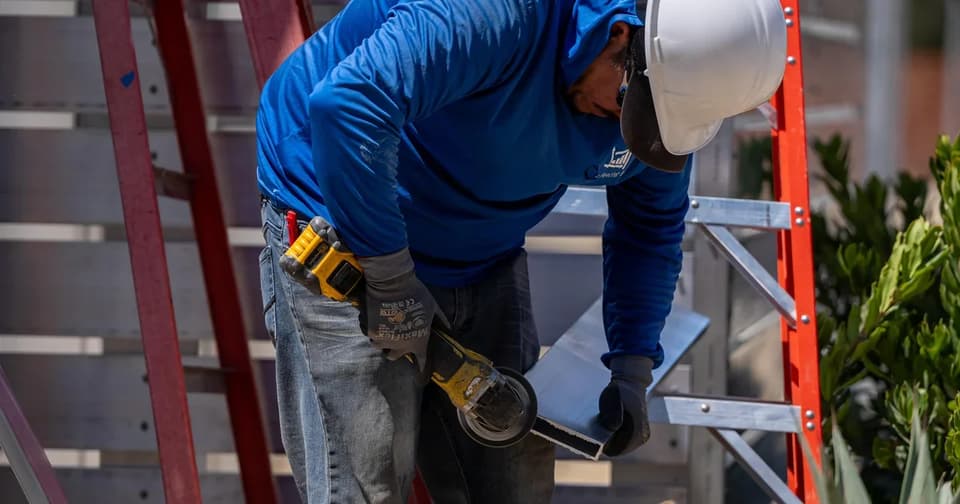
Rep. Haley Stevens introduced the Blue Collar Social Security Fairness Act, proposing that workers in physically demanding jobs can claim full benefits at age 60, seven years earlier than the current standard. The bill uses a points system based on years worked in qualifying occupations like construction and nursing. This move contrasts with other proposals to raise the retirement age or increase taxes to address the program's projected 2032 insolvency.
Key points
- The bill lowers the full benefit claiming age to 60 for workers in physically demanding roles, compared to the current age of 67 for those born after 1960.
- Qualification relies on a weighted points system: 0.5 points for years worked ages 18-34, 1 point for 35-44, 1.5 for 45-54, and 2 points for 55 and older.
- Workers need 15 points or 20 years of qualifying work to claim benefits at 60; the Social Security Administration would define and update the list of eligible jobs every three years.
- The proposal addresses the physical toll of labor, citing that 39.1% of the civilian workforce holds physically demanding jobs, which often forces early exit from the workforce.
- The bill was introduced amid concerns that the Social Security trust fund will become insolvent by late 2032, potentially triggering a 20% benefit cut.
Background
Recent archive coverage notes that the full retirement age remains 67 for those born after 1960, with average claims occurring around age 65. While 2027 projections show no immediate benefit cuts, the long-term solvency crisis remains a central debate, with some lawmakers advocating for higher retirement ages and others for increased payroll taxes.
How outlets are covering it
CBS News highlights the bill as a response to the physical demands of blue-collar work, noting Stevens' recent loss in the Michigan Senate primary. CNBC emphasizes the points system and the broader context of Social Security depletion, while InvestmentNews focuses on the funding uncertainty and the low probability of passage given Republican control of Congress. All sources agree on the bill's core mechanics but differ in emphasis: CBS frames it as a fairness issue, CNBC as a policy detail, and InvestmentNews as a financial planning concern with negligible legislative odds.
Why it matters
The proposal could significantly impact retirement security for millions of workers in physically demanding jobs, potentially allowing them to claim full benefits years earlier. However, its passage is unlikely due to the current political landscape, and it raises questions about how such a change would be funded without exacerbating the program's financial instability.
What to watch
The bill's progress will depend on whether it gains traction in a Republican-controlled Congress. If it fails, the focus may shift to other proposals, such as raising the payroll tax cap or increasing the retirement age, to address the 2032 insolvency projection.
- New bill would lower Social Security retirement age for some workers CBS News
- New Social Security bill would lower retirement age to 60 for some workers CNBC
- Social Security bill offers blue-collar workers full benefits at 60 InvestmentNews
- New proposal would lower Social Security’s full retirement age to 60 for some workers al.com
- Social Security retirement age would be would lower for 'blue collar' workers under proposed bill: What that means Fast Company
Want the full story? Read the original reporting
Read on CBS News