
Supreme Court blocks Missouri’s 2025 map for third time, citing electoral chaos
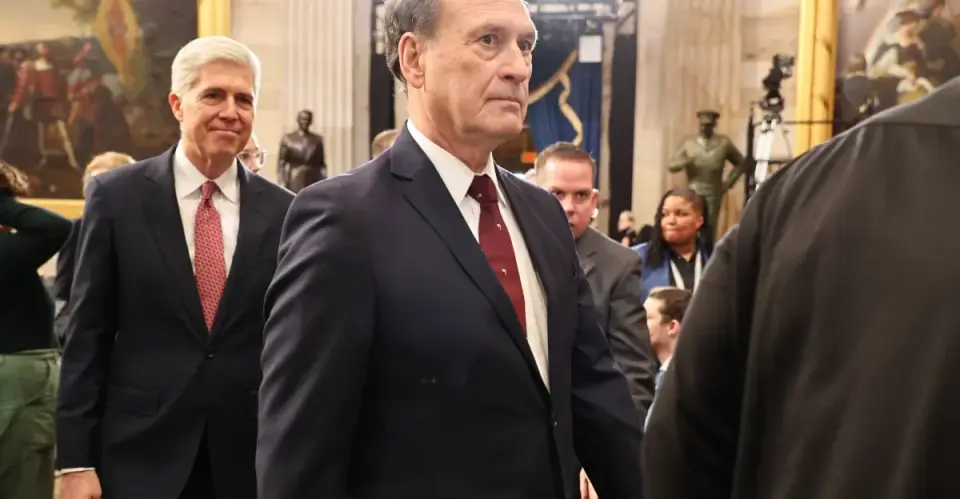
The U.S. Supreme Court has blocked Missouri from using a new congressional map for the third time in less than a month, ruling that the 2022 map must be used for the 2026 elections. The Court’s latest order, issued on September 25, paused a lower court ruling that had attempted to reinstate the 2025 map, which was designed to benefit Republicans. This decision follows a rapid series of legal battles where lower federal courts initially tried to enforce the new map, only to be repeatedly overruled by the Supreme Court. The Court emphasized that changing the map this close to the election would cause 'electoral chaos,' particularly because ballots have already been sent to military and overseas voters. The dispute stems from a Missouri Supreme Court ruling in September 2025 that invalidated the 2025 map due to a successful referendum petition, a decision that federal judges initially tried to override but the Supreme Court has now firmly upheld.
Key points
- The Supreme Court issued an unsigned order on September 25, 2026, pausing a federal appeals court ruling that had directed Missouri to use the 2025 congressional map for the 2026 elections.
- This is the third time in less than a month that the Supreme Court has intervened to block the use of the 2025 map, which was intended to give Republicans an additional House seat.
- The Court ruled that the 2022 map must be used, stating that changing the map at this late stage would create 'electoral chaos' as ballots have already been distributed to military and overseas voters.
- The dispute began when the Missouri Supreme Court ruled in September 2025 that the 2025 map was invalid because a referendum petition with over 300,000 signatures had not been properly handled by state officials.
- Lower federal courts, including a district court in St. Louis and the Eighth Circuit, initially attempted to enforce the 2025 map, but the Supreme Court has repeatedly paused these orders, emphasizing that states can make their own election decisions without federal interference at the last minute.
- Justice Brett Kavanaugh initially denied a request to pause the Missouri Supreme Court’s ruling in September 2025, acting alone under a process that allows a single justice to dispose of a case without referring it to the full court.
Background
This dispute highlights ongoing tensions between federal and state courts over redistricting and election integrity. Earlier in 2026, there were debates in Congress about capping the Supreme Court at nine justices, reflecting broader partisan clashes over the Court’s size and influence. Additionally, a recent Indiana Supreme Court decision affirmed a three-vote Republican primary win, underscoring the high stakes of close elections and the role of courts in resolving disputes. The Missouri case is part of a larger pattern where lower courts appointed by the Trump administration have been seen as more willing to challenge state court rulings, a trend that Vox’s Ian Millhiser argues indicates a new generation of Republican justices who are more partisan and less deferential to the Supreme Court’s authority.
How outlets are covering it
Vox’s Ian Millhiser frames the repeated Supreme Court interventions as evidence of a new generation of Republican lower court judges who are more partisan and willing to defy the Supreme Court’s rulings. He argues that the lower courts’ initial attempts to enforce the 2025 map, despite the Supreme Court’s earlier orders, demonstrate a lack of deference to the Court’s authority. SCOTUSblog’s Amy Howe, on the other hand, focuses on the legal and procedural aspects of the case, emphasizing the Court’s concern about 'electoral chaos' and the Purcell principle, which discourages last-minute changes to election rules. Howe notes that the Court’s order was unsigned and that there were no public dissents, suggesting a broad consensus among the justices on the need to maintain stability in the election process. The two outlets differ in their emphasis: Vox highlights the partisan dynamics and the behavior of lower court judges, while SCOTUSblog focuses on the legal reasoning and the practical implications of the Court’s decision.
Why it matters
The Supreme Court’s decision to block the 2025 map for the third time underscores the Court’s role in maintaining stability in close elections and its willingness to intervene in disputes between federal and state courts. The case highlights the potential for lower courts to challenge state court rulings, a trend that could have broader implications for the balance of power between federal and state governments. The Court’s emphasis on avoiding 'electoral chaos' reflects a concern for the integrity of the election process, particularly as ballots have already been distributed. The repeated interventions also raise questions about the deference that lower courts should show to the Supreme Court’s rulings, a issue that is likely to become more prominent as the 2026 midterms approach.
What to watch
The next step in the case is for the lower courts to comply with the Supreme Court’s order and use the 2022 map for the 2026 elections. The Missouri Secretary of State, Denny Hoskins, has indicated that the state will proceed with the 2022 map, although he has expressed concern about the 'chaos' caused by the Missouri Supreme Court’s earlier ruling. The case is likely to be closely watched as a test of the Supreme Court’s authority over lower courts and its ability to maintain stability in close elections. The outcome of the 2026 elections in Missouri will also be a key indicator of the impact of the Court’s decision on the political landscape.
- The next generation of Republican justices will be even more partisan vox.com
- For the third time, Supreme Court declines to allow Missouri to use congressional map expected to aid Republicans SCOTUSblog
- Missouri Republicans scramble to launch late campaigns on two ballot measures Missouri Independent
- Trump slams Supreme Court for blocking Missouri’s GOP-favored map for third time The Hill
- Trump Rages at Supreme Court for Ruining His Latest ‘Victory’ The Daily Beast
Want the full story? Read the original reporting
Read on vox.com