
2026 Senate races hinge on voters' growing demand for Social Security reform
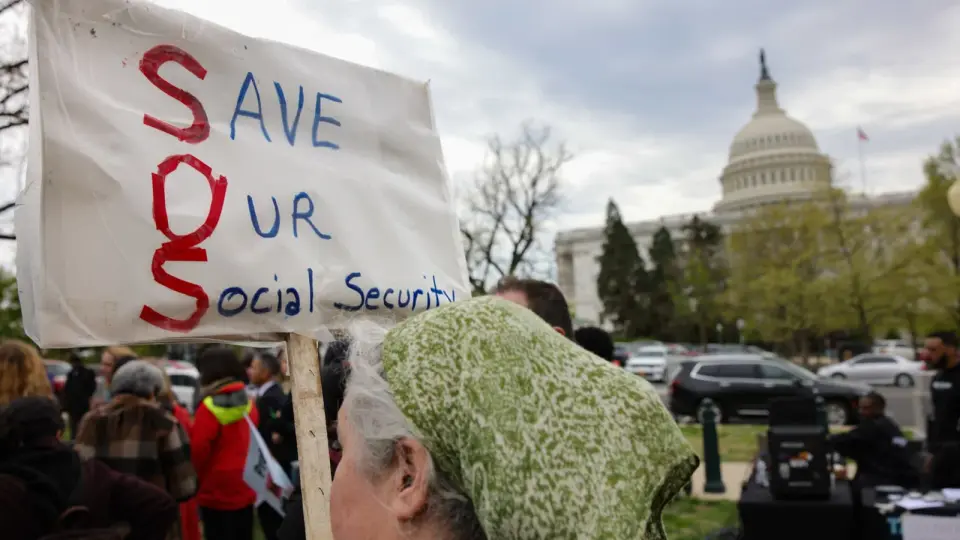
A new survey indicates that voters in key Senate battleground states are increasingly prioritizing candidates with concrete plans to address the 2032 Social Security trust fund depletion. While public awareness of the impending 22% benefit cut remains low, support for reform surges significantly once voters are informed of the financial risks. Polls show broad bipartisan backing for raising payroll tax caps and gradually increasing tax rates, though political will for implementation remains stalled.
Key points
- A Peterson Foundation survey of 2,500 voters in five battleground states found that 81% prefer candidates with plans to prevent automatic Social Security benefit cuts over those promising not to touch the program.
- Support for reform jumps to 91% when voters are informed that the trust fund is projected to run dry in 2032, potentially triggering a 22% cut in benefits.
- The most popular reform option among surveyed voters is increasing the payroll tax cap by 1% for income above $184,500, supported by 72% of respondents.
- Senators elected in November 2026 will be in office during the 2032 depletion date, making the issue directly relevant to their tenure.
- Only 29% of respondents support government borrowing to avoid benefit cuts, while 66% favor capping benefits for retired couples at $100,000 annually.
Background
This issue follows earlier 2026 coverage of intense political spending in Senate battlegrounds, including significant expenditures by Musk-backed PACs in Texas and Maine. Recent primary contests in Massachusetts and Michigan also highlighted deep partisan divisions, with Michigan races involving debates over candidate stances on Israel and antisemitism. The current focus on Social Security adds a new economic dimension to these competitive races.
How outlets are covering it
CNBC and The Atlanta Journal-Constitution emphasize the political urgency, noting that while awareness is low, it is growing and could sway votes in competitive states like Georgia, Michigan, and Texas. The Washington Post offers a critical perspective, arguing that raising the payroll tax is the 'worst candidate' for a fix because benefits are rising too quickly, and the necessary tax hikes would be enormous. In contrast, Fox News opinion columnist Ted Jenkin advocates for a three-part solution: raising the wage cap to $400,000, gradually increasing the payroll tax rate from 6.2% to 7.2% over ten years, and raising the full retirement age to 70 for those born after 1990. Jenkin argues this approach balances revenue increases with benefit adjustments, whereas the Post views tax hikes as insufficient to solve the underlying fiscal imbalance.
Why it matters
The 2026 midterms will determine the congressional makeup during the critical 2032 window when Social Security faces potential insolvency. Voter sentiment indicates a shift away from 'do nothing' politics toward demanding concrete solutions, potentially forcing candidates to take positions on unpopular but necessary reforms like tax increases or benefit caps to remain competitive in key states.
What to watch
Congressional candidates in the five battleground states are likely to face increased pressure to articulate specific Social Security reform plans in the coming weeks. The Bipartisan Social Security Commission Act, which proposes a 13-member panel to address solvency, may gain traction as a compromise. Policymakers are urged to act before 2032 to avoid a scenario where options become 'less and less appealing' as the depletion date approaches.
- Social Security reform plans could sway voters in battleground Senate races, survey finds CNBC
- Opinion | Raising the payroll tax would not fix Social Security The Washington Post
- Social Security’s financial future is on voters’ minds for the midterm The Atlanta Journal-Constitution
- There is a way to fix Social Security. And the solution might surprise you Fox News
- Americans want answers on Social Security this midterm season The Independent
Want the full story? Read the original reporting
Read on CNBC