
Teepell’s Town Hall Fail Exposes GOP Strategy Shift in Michigan
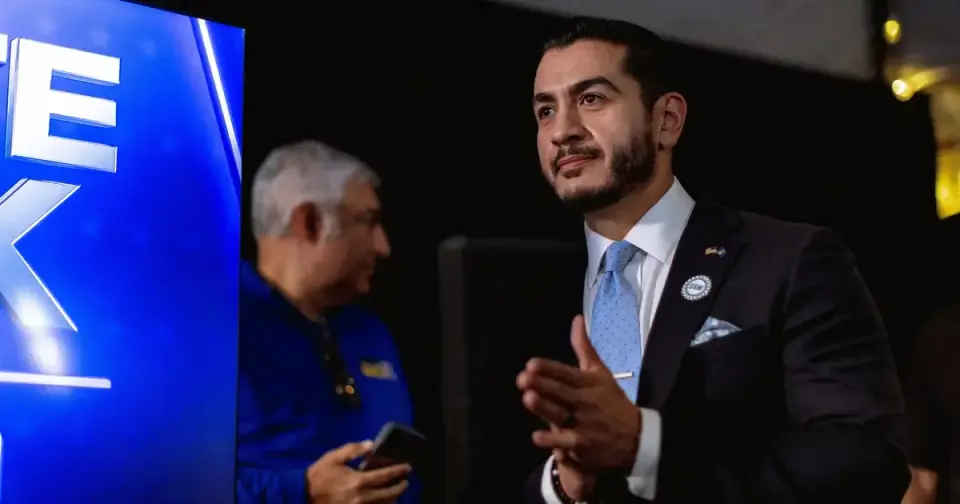
A viral exchange between Michigan Senate candidate Abdul El-Sayed and GOP operative Thomas Teepell has become a focal point for analyzing Republican midterm strategy. While El-Sayed successfully deflected a 'dual loyalty' challenge by citing the Constitution, analysts note that the GOP’s aggressive anti-Muslim rhetoric is now mainstream, even if it fails to sway voters in close races.
Key points
- Thomas Teepell, a former aide to Senator Josh Hawley, challenged El-Sayed at a town hall in Caro, Michigan, demanding he disavow the Muslim Brotherhood.
- El-Sayed accepted the challenge but countered by arguing that Teepell needed to understand the Constitution, drawing comparisons to historical doubts about John F. Kennedy’s Catholicism.
- The race remains tight, with El-Sayed holding a narrow lead in polls, though Trump and other GOP figures continue to label El-Sayed a 'jihadist' without evidence.
- Semafor argues that while Teepell failed to land a blow, the GOP’s willingness to use such rhetoric signals a shift away from the cautious approach seen during the Obama era.
- El-Sayed plans to campaign with Barack Obama in Detroit on October 24, coinciding with the start of early voting, as the election is set for November 3.
Background
This confrontation follows a series of Islamophobic attacks on El-Sayed, including claims by President Trump and opponent Mike Rogers linking him to the Muslim Brotherhood. Previous coverage noted a spike in online hate posts and a broader GOP strategy of framing Muslim immigrants as national security threats. The current race is part of a larger midterm contest where Republicans are testing the limits of previously taboo rhetoric in a new media environment.
How outlets are covering it
Semafor emphasizes that Teepell’s failure was not in the topic but in his inability to match El-Sayed’s rhetorical skill, noting that the GOP’s current strategy is to normalize anti-Muslim rhetoric despite its limited electoral impact in close races. The Guardian focuses on the identification of Teepell as a former Hawley aide and the lack of evidence for the Brotherhood claims, highlighting the political connections behind the attack. The Washington Post centers on El-Sayed’s denial of ties, dismissing his half-sister’s social media posts as hearsay. MS NOW, while largely obscured by technical code, implies a focus on El-Sayed’s constitutional defense as a successful counter to the 'gotcha' moment.
Why it matters
The incident illustrates a fundamental shift in Republican campaign tactics, moving from cautious avoidance of religious attacks to aggressive confrontation, even if it risks alienating voters. It also highlights the resilience of El-Sayed’s campaign in a tight race, where personal attacks are failing to shift the needle despite high-level support from the White House.
What to watch
El-Sayed will campaign with Barack Obama in Detroit on October 24, the first day of early voting. The election is scheduled for November 3, with polls showing a narrow margin of error. Republicans are expected to continue their strategy, though internal debates may arise if they lose the race, with blame potentially assigned to consultants or specific issues.
- View / What the GOP activist who confronted El-Sayed really got wrong Semafor
- Man who heckled Abdul El-Sayed is former Josh Hawley aide, records show The Guardian
- Abdul El-Sayed Confronts Attacks on His Faith and Family Ties The New York Times
- Opinion | Abdul El-Sayed had an easy response to 'Tommy's' viral gotcha moment: the U.S. Constitution MS NOW
- El-Sayed again denies ties to Muslim Brotherhood The Washington Post
Want the full story? Read the original reporting
Read on Semafor