
Texas Senate Race Narrows to Statistical Tie as Early Voting Looms
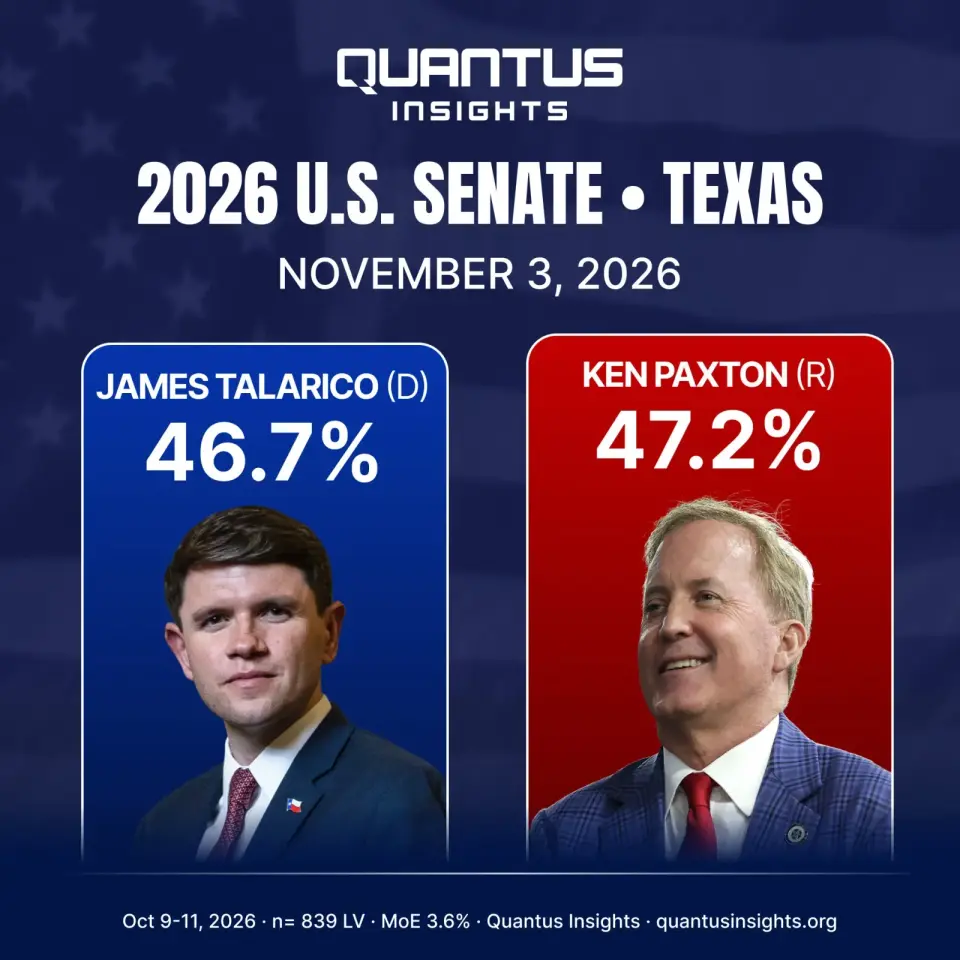
The Texas U.S. Senate race between Republican Ken Paxton and Democrat James Talarico has tightened to a statistical tie in the final weeks before the election. Recent surveys show the candidates within a few percentage points, with the outcome likely hinging on turnout and regional divides. While Democrats hope to end a 38-year losing streak, Republicans are deploying massive spending to defend the seat against a candidate they view as ideologically extreme.
Key points
- Quantus Insights reports Paxton leads by 0.5 points (47.2% to 46.7%), while RealClearPolitics aggregates show Talarico ahead by 3 points.
- ReconMR polling indicates Talarico’s lead has narrowed to four points (48% to 44%), within the margin of error.
- Talarico leads among independents and urban voters, while Paxton holds advantages among older, rural, and Republican voters.
- Republican-aligned groups plan to spend $232 million on ads, focusing on attacks regarding Talarico’s past comments on gender and religion.
- Economic dissatisfaction, including high inflation and gas prices, is cited as a factor driving some voters away from the Republican ticket.
Background
This race is pivotal for congressional control, as a Democratic win would end the GOP’s hold on the seat since 1988. Previous polls in early October showed a tighter race, with UMass Lowell reporting a 45-45 tie. Recent controversies, including Paxton’s Dubai trip with indicted individuals and Talarico’s brief absence due to illness, have intensified scrutiny on both candidates.
How outlets are covering it
Quantus Insights emphasizes the near-tie and Paxton’s strength among older and rural voters, while CNN highlights Democratic optimism and Republican attacks on Talarico’s social views. USA Today notes the narrowing lead and the importance of turnout. El País focuses on economic factors and the contrast with the 2018 race, suggesting a potential protest vote against the Republican ticket.
Why it matters
The outcome of this race could shift the balance of power in the U.S. Senate, with implications for national policy and future elections. It also reflects broader trends in voter sentiment regarding economic conditions and party alignment in traditionally red states.
What to watch
Early voting begins on October 19, with the general election on November 3. Campaigns will likely intensify efforts to mobilize their bases and persuade undecided voters in the final weeks.
- Texas Senate: Paxton and Talarico in a Near Tie Quantus Insights
- James Talarico has Democrats dreaming big after decades of dashed hopes in Texas CNN
- New Texas Senate poll shows Republicans gaining as early voting nears USA Today
- Why Democrats think they can finally flip Texas in the Senate EL PAÍS English
- UH Poll: Talarico Leads Paxton by 22 Points in Harris County The Texan
Want the full story? Read the original reporting
Read on Quantus Insights