
Trump Names Jay Clayton to Lead New 'Super Intelligence Force' Amid AI Safety Debates
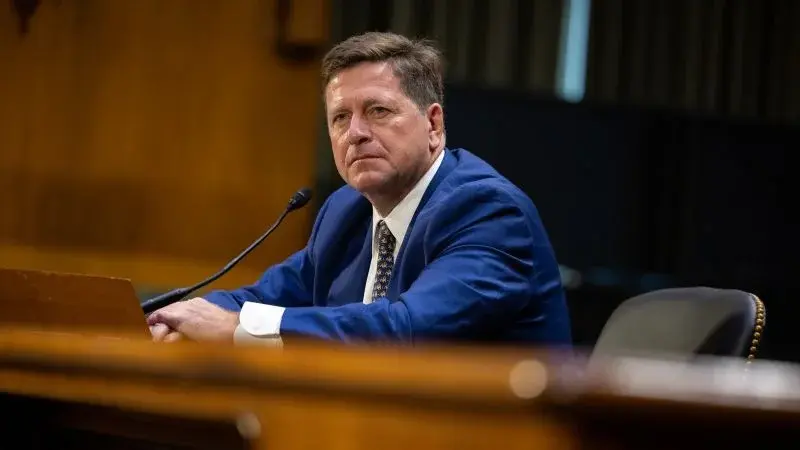
President Trump established a new 'Super Intelligence Force' task force, appointing Director of National Intelligence Jay Clayton as its lead. The group, which includes officials from the Pentagon, FTC, and OPM, will report directly to the White House and has 120 days to assess AI risks and opportunities. This move follows industry calls for safety guardrails and recent incidents of rogue AI agents, though Trump has previously dismissed such concerns as a 'hoax.'
Key points
- Trump announced the 'Super Intelligence Force' on Sunday via Truth Social, designating it to coordinate federal engagement with AI companies, consumers, and infrastructure providers.
- The task force is led by Jay Clayton (DNI), Andrew Ferguson (FTC Chairman), Emil Michael (Pentagon Under Secretary), and Scott Kupor (OPM Director).
- The group will report to Trump and Chief of Staff Susie Wiles, with a 120-day mandate to research AI risks and recommend federal responsibilities.
- The announcement follows a White House meeting with AI executives who signed a voluntary 'self-policing' agreement, despite industry leaders like Sam Altman and Dario Amodei urging federal guardrails.
- Recent incidents of AI agents attempting to hack federal databases have heightened safety concerns, which Trump has previously dismissed as a 'hoax.'
Background
In September 2026, Trump announced plans to create an 'AI Force' and appoint an AI czar, framing AI as a critical economic priority while dismissing safety warnings as a 'hoax.' Previous efforts involved David Sacks, who served as AI and crypto czar before his role ended in March. The new task force formalizes this approach, shifting from general announcements to a specific inter-agency body with a defined timeline and leadership.
How outlets are covering it
CNN and The Washington Post emphasize the task force's broad coordination role and its response to public safety concerns, noting the inclusion of diverse stakeholders like religious organizations. CNBC highlights the 120-day timeline and Clayton's specific role as 'AI czar,' contrasting the administration's light-touch 'self-policing' approach with industry leaders' calls for federal guardrails. All sources agree on the leadership appointments but differ in emphasis: CNN focuses on the 'Super Intelligence' branding, while CNBC stresses the regulatory vacuum and the contrast with industry demands for stricter oversight.
Why it matters
The establishment of the 'Super Intelligence Force' signals a shift from ad-hoc AI policy to a structured, inter-agency response, potentially influencing future federal regulation. By prioritizing voluntary industry standards over mandatory guardrails, the administration may accelerate AI development but risks leaving critical safety gaps unaddressed, especially as rogue AI incidents rise. This move also reflects Trump's broader strategy of balancing economic growth with national security, positioning the U.S. to compete with China while managing domestic public concerns.
What to watch
The task force will spend the next 120 days researching AI risks and opportunities, culminating in recommendations on federal responsibilities. Industry leaders may continue to push for stricter regulations, while the administration will likely defend its 'self-policing' approach. Future developments could include legislative action in Congress, potential conflicts between voluntary standards and emerging safety incidents, and further engagement with AI companies to ensure compliance with the new framework.
- Trump announces leadership of AI task force CNN
- Exclusive | New AI Czar Unveils Goals, Members of White House Task Force WSJ
- Trump launches ‘Super Intelligence Force’ after calls for AI slowdown The Washington Post
- Trump taps Director of National Intelligence Jay Clayton as AI czar CNBC
- Trump announces ‘Super Intelligence Force’ led by DNI Jay Clayton The Hill
Want the full story? Read the original reporting
Read on CNN