
Trump pledges $100M Kentucky drug plant investment to shore up GOP midterm turf
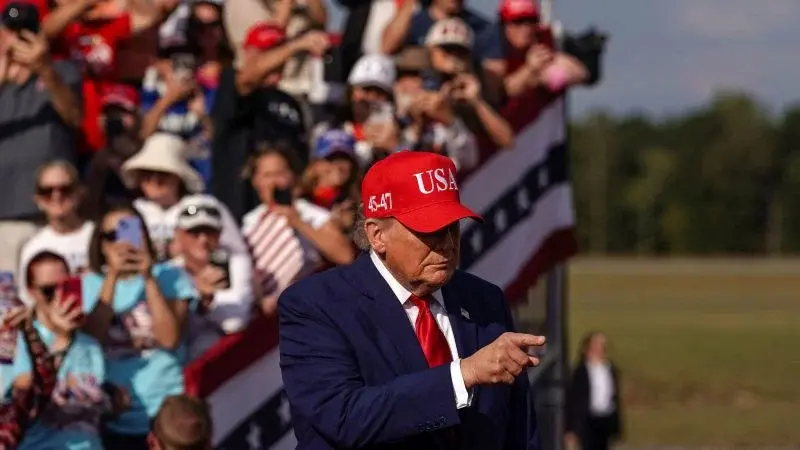
President Donald Trump is intensifying his midterm campaign by targeting deep-red states, promising a $100 million investment in a Kentucky pharmaceutical plant if Republicans retain Congress. This move coincides with a national 'No Kings' voter mobilization effort and rising Democratic enthusiasm in traditionally Republican areas, as the Cook Political Report shows 11 House races shifting toward Democrats.
Key points
- Trump promised a $100 million Department of Defense investment in the Antheia pharmaceutical facility in Winchester, Kentucky, contingent on a Republican victory in the November 3 midterms.
- The Cook Political Report indicates 11 House races have shifted toward Democrats, with the tightest battles now occurring in areas that previously voted reliably for Republicans.
- Thousands of 'No Kings: Vote Early' events are taking place across all 50 states and Puerto Rico, aiming to counter voter suppression and boost turnout among first-time and young voters.
- Democratic Senate nominee Abdul El-Sayed in Michigan received $1.25 million in combined donations from Rep. Alexandria Ocasio-Cortez and Sen. Bernie Sanders to bolster his campaign against Republican incumbent Susan Collins.
- Brent crude oil prices surged to $109.86 per barrel, the highest since May, driven by fears related to the ongoing US-Iran conflict, pushing national average gas prices to $4.31 per gallon.
Background
This escalation follows weeks of internal GOP polling revealing 'catastrophic vulnerability' in deep-red districts, including Kentucky and North Carolina, where seats won by Trump in 2024 have become competitive. Previous coverage noted that Republican super PACs began abandoning incumbents in some areas while Democrats capitalized on voter frustration over the cost of living and the Iran war. The current strategy represents a shift from defensive triage to aggressive base mobilization in core territories.
How outlets are covering it
CNN and USA Today focus on the specific conditional promises made by Trump in Kentucky, highlighting the $100 million pharmaceutical investment and the broader $5,000 dividend pledge. CNBC emphasizes the contrast between Trump’s assertions of expanded executive power and the underlying voter frustration regarding tariffs and the Iran war, noting that Republicans privately view him as a liability. USA Today and CNN also detail the financial support for Democratic candidates, such as the significant donations to El-Sayed, contrasting the GOP’s reliance on the president’s personal brand with the Democrats’ coordinated fundraising efforts. All sources agree on the shifting dynamics in traditionally red districts, but differ in emphasis: CNN and USA Today highlight the tangible economic promises, while CNBC frames the situation as a clash between presidential authority and public discontent.
Why it matters
The outcome of these deep-red races will determine whether Democrats can achieve a historic takeover of the House and potentially the Senate, which would trigger investigations into the current administration. The surge in oil prices and gas costs is a critical economic factor influencing voter sentiment, while the massive 'No Kings' mobilization indicates a high level of Democratic engagement that could offset traditional Republican turnout advantages.
What to watch
Voters will continue to participate in early voting and mail-in ballots in the coming days, with key dates approaching in states like Kentucky and Florida. The impact of the oil price spike on consumer spending and inflation will be monitored closely in the final weeks before the November 3 election. Campaigns will likely intensify their efforts in swing districts like Pennsylvania’s Bucks County and Michigan, where undecided voters remain a significant bloc.
- Midterm election live updates: Trump stumps in deep-red Kentucky as GOP tries to hold its turf CNN
- Trump touts his power at Kentucky rally to energize voters ahead of midterm elections CNBC
- Trump promises big investment in KY facility 'if the Republicans win' USA Today
- President Trump holds rally in Highland Heights Saturday Cincinnati CityBeat
- Man interrupts President Trump speech at NKU, escorted out of Truist Arena WKRC
Want the full story? Read the original reporting
Read on CNN