
Trump signs proclamation to freeze gold-decorated Oval Office as national monument
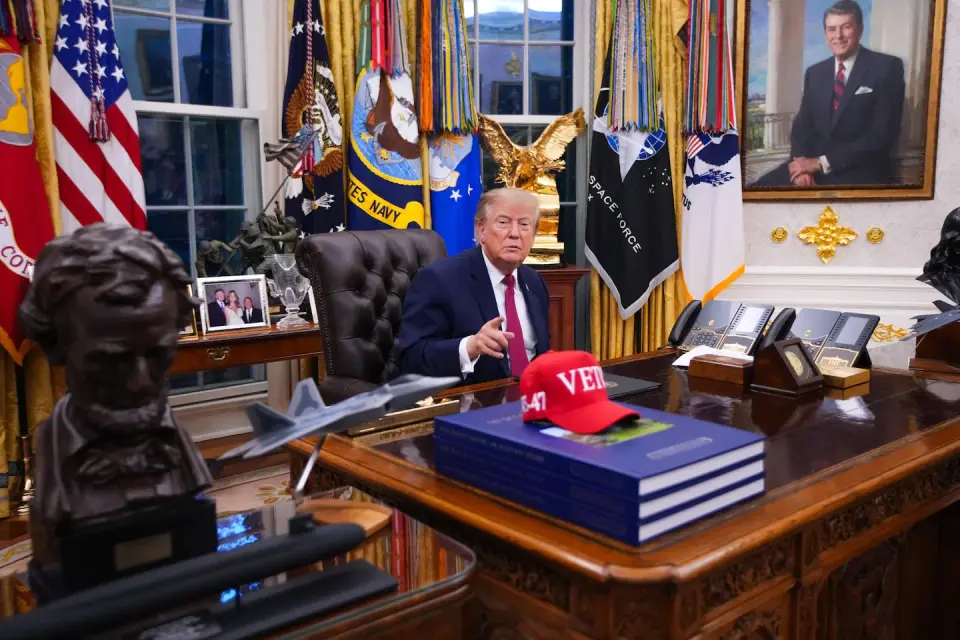
President Donald Trump signed a proclamation on November 5, 2026, designating the Oval Office and Cabinet Room as national monuments to prevent future alterations. The move follows extensive gold-themed renovations and occurs shortly after Democrats regained control of Congress. While Trump claims the designation will legally block structural changes, experts question the legal force of the proclamation, noting that future presidents may have the authority to overturn it.
Key points
- Trump signed a proclamation on November 5, 2026, declaring the Oval Office, Outer Oval Office, and Cabinet Room as national monuments and federal landmarks.
- The designation aims to preserve the spaces' current design, which includes extensive gold accents, figurines, and mirrors added since Trump returned to office in 2025.
- The announcement came two days after midterm elections in which Democrats won control of Congress, marking a significant shift in legislative power.
- Trump stated the proclamation would make it 'impossible' for future administrations to destroy or significantly alter the rooms, though he acknowledged routine redecoration might still occur.
- The legal validity of the proclamation is uncertain; The Washington Post notes that future presidents could potentially overturn the designation, and critics argue existing preservation laws may already cover these spaces.
Background
Since returning to office in 2025, Trump has prioritized high-profile architectural projects, including a $600 million White House ballroom and a granite helipad. The Oval Office redesign, featuring gold vermeil figurines and gilded mirrors, drew criticism from former President Barack Obama, who compared the aesthetic to a 'Cheesecake Factory.' The new proclamation follows a series of post-election appearances highlighting these construction initiatives, including tours of the ballroom site and remarks near the Reflecting Pool.
How outlets are covering it
Fox News emphasizes the permanence of the designation, quoting Trump’s assertion that the spaces cannot be 'taken down, destroyed, or touched.' The Guardian highlights the political context, noting a 'Veto' baseball cap on Trump’s desk as a signal of his intent to block Democratic legislative priorities. CNN focuses on the specific decorative changes, such as gold cherubs and medallions, and notes that the administration plans to send the document to Congress for ratification. The Washington Post provides a legal counterpoint, stating that the force of the proclamation is unclear and that future presidents likely retain the authority to overturn such executive actions.
Why it matters
The proclamation tests the limits of executive power over federal property and sets a precedent for how presidents can use designations to protect specific aesthetic choices. It also signals a potential clash between the White House and the new Democratic-controlled Congress, as Trump has indicated he will use his veto power to block legislative priorities. The legal ambiguity surrounding the proclamation may lead to future disputes over the preservation of presidential renovations.
What to watch
The administration plans to send the proclamation to Congress for ratification. Future presidents may attempt to overturn the designation, potentially leading to legal challenges. The Democratic-controlled Congress may scrutinize the legal basis of the proclamation and the broader renovation projects, including the ballroom and helipad.
- Trump wants Oval Office declared a national monument The Washington Post
- Trump signs proclamation to prevent changes to Oval Office, other White House rooms Fox News
- President Trump makes the Oval Office a national monument. But future presidents can still redecorate 10TV
- Trump signs proclamation to try to prevent changes to gold-covered Oval Office The Guardian
- Trump says he’s declaring Oval Office and Cabinet Room national landmarks to prevent future changes CNN
Want the full story? Read the original reporting
Read on The Washington Post