
Trump's First Televised Camp David Meeting Highlights Policy Stalls and Iran Frustration
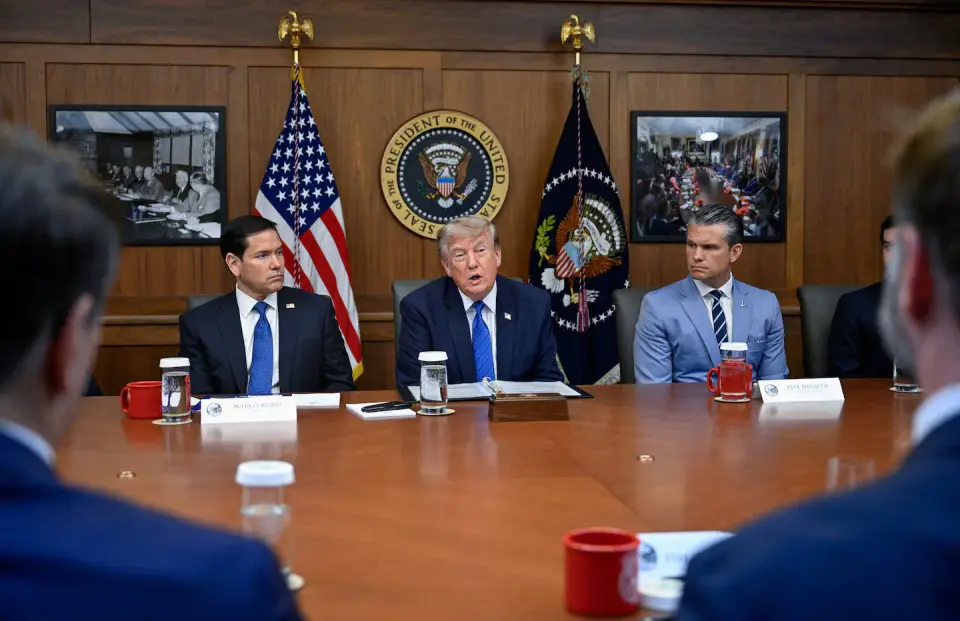
President Donald Trump held the first live, televised Cabinet meeting at Camp David on Friday, using the historic retreat to highlight administration achievements while venting frustration over stalled domestic and foreign policy initiatives. The event marked a departure from the site's traditional secrecy, with reporters allowed to film despite the secure nature of the facility. Trump criticized Republican Senator John Cornyn for blocking the nomination of acting Attorney General Todd Blanche, lamented the collapse of a proposed Justice Department payout fund, and questioned the good faith of Iranian ceasefire negotiations. He also warned that Democratic victories in the upcoming midterm elections would lead to border chaos, referencing a recent incident in North Africa. While Cabinet members praised the administration's progress on drug prices and military morale, the meeting underscored the president's growing impatience with political opponents and unresolved conflicts.
Key points
- The White House described the event as the first televised Cabinet meeting at Camp David, allowing live video streams and photography despite the site's secure status.
- Trump criticized Senator John Cornyn for blocking the full-time appointment of acting Attorney General Todd Blanche, calling Cornyn 'very angry' and defending Blanche as a 'very good man.'
- The president declared his proposed $1.8 billion Justice Department payout fund 'dead,' stating he did not want to personally benefit from it despite claiming he was 'abused more than anybody.'
- Trump expressed skepticism regarding Iranian ceasefire negotiations, stating that Iran 'breaks their word so often' and makes him angry, while also predicting the country would eventually weaken.
- He warned that Democratic control of Congress in the midterms would result in migrants 'swarming' U.S. borders, citing a recent incident at a Spanish outpost in North Africa as a cautionary tale.
- Cabinet members, including Health Secretary Robert F. Kennedy Jr. and Defense Secretary Pete Hegseth, praised the administration's efforts on drug pricing, military morale, and fraud reduction, with Kennedy noting his family's historical connection to the site.
Background
Camp David, established by Franklin D. Roosevelt in 1942 as 'Shangri-La' and later renamed by Dwight D. Eisenhower, has historically been used for sensitive private meetings and foreign summits, such as the 1978 Camp David Accords. While previous presidents like Joe Biden used the site for personal retreats, Trump has generally preferred his own properties, visiting Camp David less frequently than his predecessors. This meeting follows earlier discussions at the site regarding the Iran war and Ukraine missile production, where Trump faced pressure to define an exit strategy amid rising gas prices and low approval ratings. The administration had previously canceled a planned May meeting at the site due to weather, making this the first successful televised gathering there.
How outlets are covering it
The Washington Post emphasized the unusual nature of the meeting, highlighting Trump's public venting about political enemies like Cornyn and Walz, as well as his frustration with stalled policies. CNN focused on the symbolic shift from the White House to the rustic retreat, noting that Trump appeared to be seeking a different atmosphere amid political difficulties, while also detailing his vague comments on the Iran war and the International Criminal Court. The White House official release presented the meeting as a showcase of 'rapid progress,' with Cabinet members touting achievements in drug pricing, military recruitment, and fraud reduction, framing the administration's actions as a turnaround from previous 'chaos.' AP News provided historical context on the site's use by previous presidents, noting that while media access is typically restricted, this event was an exception, and highlighted the contrast between the site's traditional secrecy and the current administration's transparency claims.
Why it matters
The meeting signals a shift in the administration's communication strategy, using a historically private venue to broadcast political grievances and policy updates directly to the public. It highlights the growing tensions within the Republican Party, particularly regarding the Attorney General nomination, and the administration's struggle to resolve the Iran conflict and manage domestic political fallout ahead of the midterms. The public airing of these frustrations at Camp David, a site associated with diplomatic breakthroughs and private retreats, underscores the administration's attempt to frame its challenges as a result of external opposition rather than internal policy failures.
What to watch
The administration will likely continue to use high-profile venues to broadcast its messaging, potentially facing further resistance from Republican lawmakers on key nominations. The Iran conflict remains a central issue, with Trump's vague predictions of Iranian weakness suggesting continued diplomatic or military pressure, though no clear exit strategy has been defined. The midterm elections will be a focal point, with the administration intensifying its warnings about Democratic control of Congress and border security. The Justice Department payout fund is unlikely to be revived, given the federal judge's warnings and Trump's public declaration of its demise.
- At typically tranquil Camp David, Trump publicly lashes out at political enemies The Washington Post
- Trump, under pressure on Iran, takes his Cabinet to the woods CNN
- Camp David, the president’s rustic Maryland mountain retreat, through the years AP News
- President Trump Hosts Historic Cabinet Meeting at Camp David The White House (.gov)
- Trump convenes Cabinet at Camp David amid simmering Iran war Reuters
Want the full story? Read the original reporting
Read on The Washington Post