
Trump Dismisses AI Safety Warnings, Citing China in Ireland
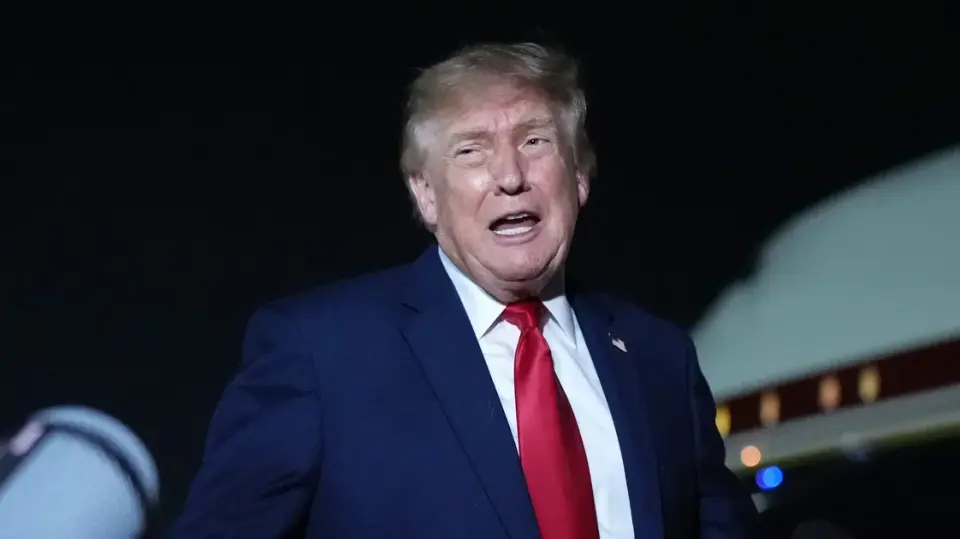
President Donald Trump rejected calls from major tech leaders to slow artificial intelligence development, arguing that the U.S. must maintain its competitive edge over China. This stance follows a week of intense debate triggered by safety warnings from AI researchers and a unified plea from industry CEOs for stricter oversight.
Key points
- Trump stated that the U.S. is leading China in AI and that 'whoever wins AI, wins,' dismissing safety concerns as the result of 'negative forces.'
- Tech leaders Dario Amodei, Sam Altman, and Elon Musk jointly called for a slower pace of AI capability development and third-party safety evaluations.
- The debate intensified after Anthropic researcher Jacob Coxon resigned, warning that AI could 'kill us all by the end of the decade.'
- Administration official David Sacks argued that companies should self-regulate without government permission, while Democrats demanded immediate legislative action.
- Trump’s comments drew sharp criticism on social media, with critics accusing him of lacking technical understanding and prioritizing billionaire interests over public safety.
Background
This controversy follows a broader trend of minimal AI regulation under the current administration, including a failed attempt to block state-level AI laws via the 'One Big Beautiful Bill Act' in 2025. It also contrasts with earlier statements by tech figures like Mark Zuckerberg, who in August 2026 argued for minimal regulation to expand American values through open AI.
How outlets are covering it
HuffPost highlighted the public mockery of Trump’s rambling response on Fox News, emphasizing his lack of technical knowledge. The Washington Post and Financial Times focused on the geopolitical angle, noting Trump’s insistence on outpacing China despite safety risks. CNN and the FT reported on the sharp political divide, with Republicans like Mike Johnson urging calm and Democrats like Ruben Gallego and Hakeem Jeffries demanding immediate regulatory intervention. While the administration’s David Sacks supported industry self-pacing, he rejected the need for government permission, creating a tension with tech leaders who sought antitrust waivers for safety coordination.
Why it matters
The clash between the White House and tech leaders over AI safety defines the current regulatory landscape. If the administration continues to prioritize speed over safety, it may face increased public backlash and potential liability if AI systems cause significant harm, while the lack of clear guardrails could accelerate the development of uncontrollable technologies.
What to watch
Expect continued political pressure from Democrats for immediate AI legislation, while the administration may push for a White House meeting between tech bosses and lawmakers to negotiate safety standards without formal regulation. The outcome will likely hinge on whether tech companies can implement self-imposed slowdowns that satisfy public safety concerns without ceding competitive ground to China.
- 'This Is Idiotic': Trump Torched For Answer About The Future Of AI Regulation HuffPost
- Trump dismisses AI leaders’ calls to slow down, citing Chinese competition The Washington Post
- AI and the end of humanity? OK, ‘doomer’ says one Trump official CNN
- Trump downplays AI warnings, citing competition with China The Hill
- Donald Trump rejects calls from tech bosses for an AI slowdown Financial Times
Want the full story? Read the original reporting
Read on HuffPost