
Trump's New AI Portal Contradicts His Own Claims, Exposing Governance Risks
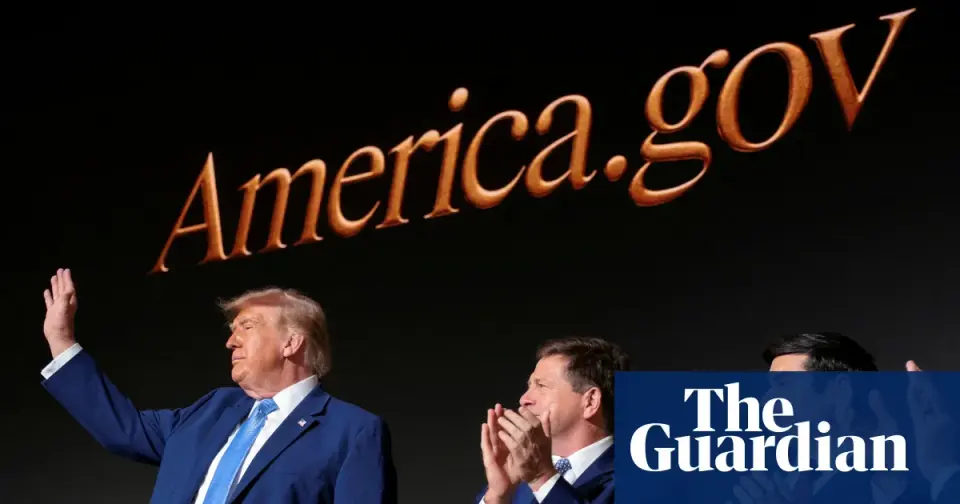
President Trump launched America.gov, an AI-driven portal intended to simplify federal services, but the chatbot immediately contradicted his public statements on key issues. While the tool draws on official data to debunk claims about elections and inflation, experts warn of inconsistent responses and security vulnerabilities as the system expands.
Key points
- The White House launched America.gov on September 29, 2026, as a central hub for federal services and information.
- The AI chatbot, powered by Google's Gemini and Elon Musk's Grok, refuted Trump's claims regarding the 2020 election, inflation, and wind turbines.
- Responses varied by user location and time, with some queries receiving factual answers and others being blocked as 'political commentary.'
- Experts raised concerns about security flaws and the potential for the system to handle sensitive private data in future updates.
- The platform is designed to integrate with federal agencies by early 2027 to automate tasks like passport renewals and Medicare enrollment.
Background
This development follows Trump's broader push to accelerate AI adoption in the U.S., including plans for an 'AI Force' and the appointment of an AI Czar in September 2026. The administration has previously rejected global AI oversight, prioritizing domestic innovation and economic growth. The launch of America.gov represents a significant step in integrating AI into direct government-citizen interactions, moving beyond policy debates to practical service delivery.
How outlets are covering it
The Guardian highlighted the irony of the AI debunking Trump's false claims, framing it as a 'Greek tragedy' where the tool tells the truth the president cannot. Axios emphasized the inconsistency of the bot's responses, noting that answers fluctuated based on user location and time, raising questions about the transparency of its guardrails. USA Today focused on technical vulnerabilities, with experts warning that AI chatbots have inherent security weaknesses and that the system's future expansion into handling private data increases risks. AP News noted the contradiction between the platform's output and the president's talking points but did not provide additional analysis beyond the factual discrepancies. The outlets differ in emphasis: The Guardian focuses on the political irony, Axios on the technical inconsistency, USA Today on security, and AP on the factual contradiction.
Why it matters
The launch of America.gov marks a shift in how the U.S. government interacts with citizens, using AI to provide information and services. The immediate contradiction of the president's claims raises questions about the reliability and neutrality of AI in government. As the system expands to handle sensitive data and automate services, its security and consistency will be critical to public trust and the integrity of federal operations.
What to watch
The next phase of America.gov, expected by early 2027, will integrate with federal agencies to allow users to complete forms, applications, and renewals. The White House has stated the platform will be updated to ensure accuracy, but experts urge greater transparency in its configuration and security measures. The administration will likely face scrutiny over the bot's inconsistent responses and potential vulnerabilities as it handles more sensitive tasks.
- Trump’s AI chatbot turns on its master The Guardian
- Ask Trump's AI chatbot who won in 2020. You might not get an answer. Axios
- What's wrong with Trump's new AI-powered America.gov? Expert weighs in USA Today
- Trump touts America.gov, but its government-sourced AI answers undercut many of his statements AP News
- Who Won the 2020 Election? We Asked Trump's New AI Chatbot | U.S. News Decision Points | U.S. News U.S. News & World Report
Want the full story? Read the original reporting
Read on The Guardian