
Vance refuses to endorse Trump’s claim that Iran was weeks from nuclear weapon
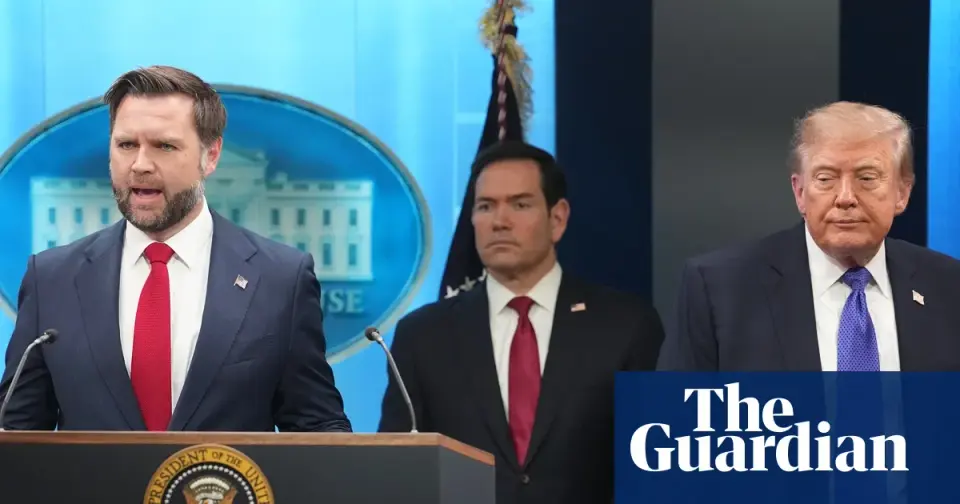
JD Vance declined to confirm President Trump’s assertion that the US war with Iran was necessary to stop a nuclear weapon, citing his duty to support the president. This stance follows Vance blaming the conflict for Republican midterm losses, creating a rift with Trump. The dispute highlights contradictions in the administration’s narrative, as intelligence assessments previously indicated Iran was not pursuing nuclear weapons.
Key points
- Vance stated it was not his place to second-guess the president but did not endorse the claim that the war was essential to prevent Iran from obtaining a nuclear weapon.
- Trump insisted the war was necessary because Iran was 'two weeks away' from a nuclear weapon, a claim contradicted by intelligence testimony from March 2025.
- Vance blamed the Iran war for Republican losses in the November 2026 midterm elections, a stance that has frustrated Trump.
- Trump’s frustration with Vance’s post-election critique has intensified over the past two weeks, according to The New York Times.
- Vance’s support among potential 2028 Republican primary voters has dropped to 20 percent, while rival Marco Rubio’s support has risen to 36 percent.
Background
The US launched a full-scale war on Iran in February 2026, with Trump stating the goal was to ensure Iran does not obtain a nuclear weapon. This followed earlier strikes in June 2025 on Iranian enrichment facilities. Prior to the war, then-Director of National Intelligence Tulsi Gabbard testified in March 2025 that US intelligence assessed Iran had not tried to make a nuclear weapon for more than two decades and had not authorized a weapons program since 2003. The current conflict has been linked to Republican losses in the 2026 midterm elections, with Vance publicly attributing the party's defeat to the war.
How outlets are covering it
The Guardian and NBC News report that Vance explicitly avoided endorsing Trump’s justification for the war, focusing instead on loyalty to the president. The New York Times emphasizes Trump’s growing frustration with Vance’s post-election analysis, noting that Trump complained to aides that Vance should have affirmed the war was the right decision. Vox frames the situation as a political crisis for Vance, highlighting his declining support in 2028 primary polls and the tension between his public criticism of the war and his role as vice president. All sources agree that Vance’s refusal to back the nuclear threat narrative has strained his relationship with Trump.
Why it matters
The disagreement between the president and vice president over the justification for a major military conflict signals deep internal divisions within the administration. Vance’s reluctance to support the nuclear threat narrative undermines the administration’s core rationale for the war, potentially affecting public support and future policy decisions. The rift also impacts the 2028 Republican primary, as Vance’s political standing has weakened significantly following the midterm elections.
What to watch
Trump is expected to continue pressing Vance to support the administration’s position on the Iran war. Vance’s political future in the 2028 presidential race remains uncertain, with rivals like Marco Rubio gaining support. The administration may face further internal tensions as it navigates the aftermath of the midterm elections and the ongoing conflict with Iran.
- Vance stops short of endorsing Trump’s claim that Iran was close to nuclear weapon The Guardian
- Trump Grows Frustrated With Vance Over Iran War Critique The New York Times
- 2028 Republican primary: Why everyone, even the GOP, is sick of JD Vance Vox
- US Vice President Vance declines to say he would have ordered Iran strikes Reuters
- Vance sidesteps question on the Iran war, saying, ‘My job is to support the president’ NBC News
Want the full story? Read the original reporting
Read on The Guardian