
Federal Judge Halts Excavation for Trump’s 250-Foot Arch Amid Legal Challenges
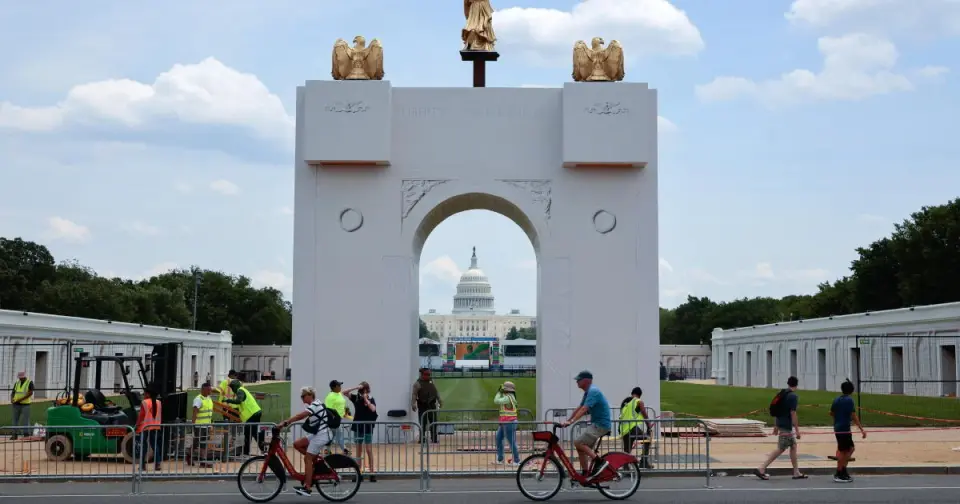
Construction of President Trump’s proposed 250-foot Great Triumphal Arch on the National Mall faces a temporary legal pause. Interior Secretary Doug Burgum announced plans to begin excavation in late September, but a federal judge ordered the administration to provide 48 hours' notice before any site activity. Critics, including Vietnam War veterans, argue the project lacks congressional approval and safety reviews, while the administration claims the initial work is limited to archaeological surveys.
Key points
- Interior Secretary Doug Burgum announced on September 3 that excavation for the Great Triumphal Arch and Military Observation Deck would begin within two weeks at Memorial Circle, between the Lincoln Memorial and Arlington National Cemetery.
- The proposed arch is estimated to cost between $100 million and $250 million, funded by a mix of taxpayer money and private donations, with completion targeted before the end of the presidential term.
- U.S. District Judge Tanya Chutkan reinforced an order requiring the administration to notify the court 48 hours before any activity on the site, other than information gathering, following a lawsuit filed by veterans and a historian.
- The administration argues that the planned mechanical excavation of four test pits by September 21 constitutes standard archaeological survey work rather than construction, aiming to restore the land by October 31.
- The project awaits final approval from the National Capital Planning Commission, which must grant an exception to a 130-foot building height limit, as the arch would stand 250 feet tall.
Background
This development follows earlier reports in August 2026 regarding the administration's focus on large-scale vanity projects, including the White House State Ballroom, which critics argue distract from economic and military issues. In early September, Vietnam War veterans sought a court pause, citing the administration's attempt to create a fait accompli before the midterm elections. The arch is part of a broader pattern of infrastructure changes in Washington, D.C., that have faced legal and public scrutiny for bypassing traditional oversight processes.
How outlets are covering it
The Los Angeles Times frames the arch as a gaudy vanity project that dominates key views of the capital, noting Trump’s admission that the monument is for himself. The outlet highlights concerns from preservationists and local officials about rushed approvals and missing safety reviews. In contrast, USA Today focuses on the procedural legal battle, detailing Judge Chutkan’s order and the administration’s defense that the initial excavation is merely archaeological survey work. While the LA Times emphasizes the political and aesthetic impact, USA Today centers on the judicial constraints and the technical distinction between surveying and construction.
Why it matters
The legal and political battle over the Great Triumphal Arch highlights ongoing tensions regarding federal oversight, historical preservation, and the use of public funds for presidential branding. The project’s potential to obscure views of Arlington National Cemetery and its lack of congressional approval raise questions about the limits of executive power in altering the nation’s capital. The outcome could set precedents for future large-scale infrastructure projects in Washington, D.C., and influence public perception of the administration’s priorities ahead of the midterm elections.
What to watch
The administration is expected to comply with Judge Chutkan’s 48-hour notice requirement before proceeding with any site activity. The National Capital Planning Commission must still review and potentially grant an exception to the building height limit. If the archaeological surveys are completed by October 31, the administration may seek to resume construction, though the legal challenges from veterans and preservationists are likely to continue. The final approval process and any further court rulings will determine whether the arch proceeds as planned or faces additional delays.
- Commentary: Trump's vanity arch is coming and it's no triumph for taxpayers Los Angeles Times
- As work on Triumphal Arch is set to begin, veteran opponents ask for temporary restraining order wusa9.com
- Judge reinforces order halting immediate work on Trump’s 250-foot arch USA Today
- Vietnam veterans suing over Trump’s arch seek court block ahead of groundbreaking The Hill
- Retired general calls Trump's proposed arch near Arlington a 'sacrilege' PBS
Want the full story? Read the original reporting
Read on Los Angeles Times