
Warren urges new Democratic majority to bypass Trump vetoes with economic populism
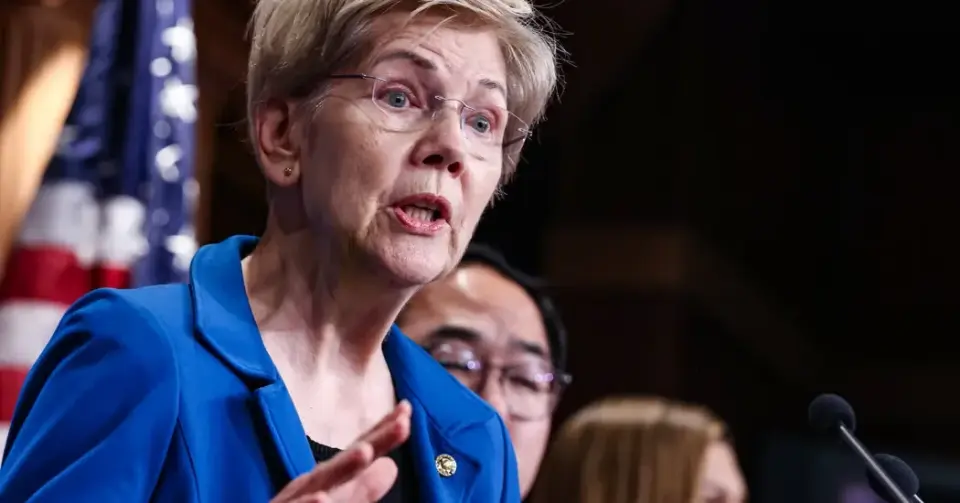
Senator Elizabeth Warren has outlined a strategy for the incoming Democratic majority to pass economic legislation despite President Trump’s veto power. She argues that bipartisan support exists for measures like capping credit card interest rates at 10% and limiting private equity in housing. Warren plans to use her new role as Senate Banking Committee Chair to investigate corporate corruption and push for affordability, asserting that Democrats must deliver on campaign promises regardless of White House opposition.
Key points
- Warren states that Democrats must pursue a 'full-throated' economic agenda to address voter frustration over cost-of-living issues.
- She identifies credit card fee caps and housing regulations as areas of potential bipartisan agreement with the White House.
- Warren challenges Trump to use his veto power, stating, 'If Donald Trump wants to be Mr. Veto, let's test that out.'
- The senator plans to launch investigations into corporate misconduct, specifically targeting entities that have cheated consumers or investors.
- Warren notes that a bipartisan housing bill banning private equity investment in housing has already become law without a presidential signature.
Background
This development follows the 2026 midterm elections, where Democrats secured majorities in both chambers of Congress. Previous coverage indicated that House Democrats had already released a 100-day legislative plan focusing on healthcare and economic stability. Additionally, a progressive policy group recently unveiled an oversight blueprint targeting tech giants and corporate allies of the administration, setting the stage for Warren’s anticipated aggressive agenda in the Senate Banking Committee.
How outlets are covering it
The New York Times emphasizes Warren’s concern that Democrats might shy away from bold economic populism despite their electoral mandate. Yahoo highlights the direct confrontation between Warren and Trump, focusing on the president’s public 'Mr. Veto' stance and Warren’s challenge to test that power. CBS News provides Warren’s detailed interview responses, where she lists specific policy overlaps with the administration, such as housing and credit card rates, while also discussing potential government shutdowns to end the Iran war. Seeking Alpha focuses narrowly on the financial implications of her proposed 10% interest rate cap for major financial institutions. While all sources agree on the legislative priorities, they differ in emphasis: the Times focuses on the political risk of inaction, Yahoo on the constitutional clash, and CBS on the specific policy mechanisms and bipartisan potential.
Why it matters
The outcome of this legislative push will determine whether the new Democratic majority can translate electoral promises into concrete economic relief. If Warren succeeds in passing bills over vetoes or through bipartisan deals, it could shift the balance of power in the 120th Congress. Conversely, if the filibuster and veto power block these measures, it may signal a stalemate that could impact public confidence in the new administration's ability to address inflation and corporate power.
What to watch
The new Congress is set to convene in January 2027. Warren is expected to formally introduce legislation on credit card caps and housing regulations shortly after taking office. The White House is likely to continue signaling its willingness to veto bills, setting up a potential constitutional test regarding override votes. Additionally, Warren’s oversight investigations into tech and Wall Street executives are expected to begin in the early months of the new session, potentially leading to subpoenas and testimony.
- Democrats Will Be in Charge of Congress. Elizabeth Warren Has a Plan for That. The New York Times
- Elizabeth Warren Dares Trump to Use His Veto Power as Democrats Prepare to Take Over Congress: 'Let's Test That Out' Yahoo
- Transcript: Sen. Elizabeth Warren on "Face the Nation with Margaret Brennan," Nov. 8, 2026 CBS News
- Sen. Warren 'ready to go' on credit card caps, housing legislation - report (COF:NYSE) Seeking Alpha
- Vault: Warren tells Democrats to go populist Punchbowl News
Want the full story? Read the original reporting
Read on The New York Times