
Whistleblowers allege Kennedy Center halted repairs to justify closure
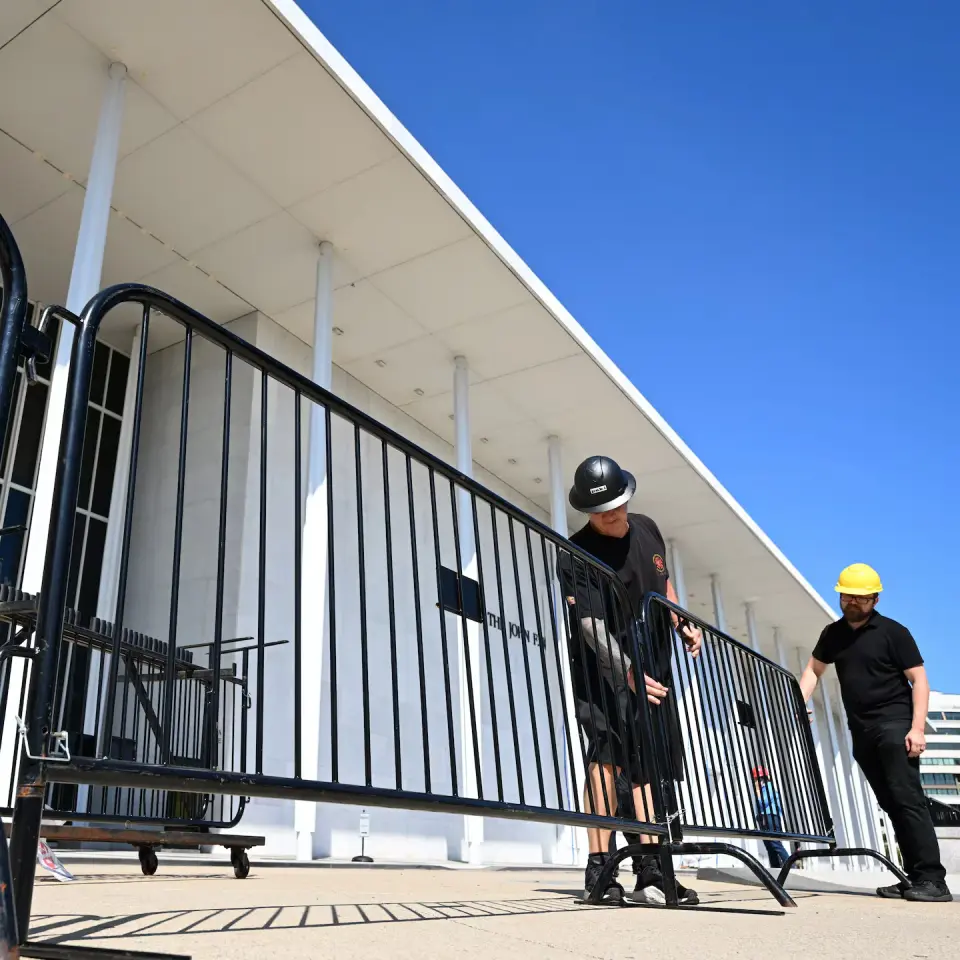
Anonymous whistleblowers allege that Kennedy Center leadership halted planned roof repairs despite receiving $9.3 million in funding, contradicting the administration's claim that structural decay necessitates closure. While the White House and Commerce Secretary Howard Lutnick cite a recent ceiling collapse as proof of 'unsafe conditions,' the center's director Matt Floca argues that procurement changes, not safety risks, delayed the work. This dispute occurs amid a broader shift in the administration's approach to federal agencies, where Cabinet roles are increasingly defined by ad hoc presidential directives rather than traditional departmental mandates.
Key points
- Whistleblowers claim director Matt Floca stopped repair plans in April despite receiving $9.3 million from the One Big Beautiful Bill Act.
- The Trump administration cites a September 4 ceiling collapse in the Grand Foyer as evidence that the building is 'completely unsafe' and must close.
- Floca states the center knew of roof leaks for years but only recently realized the extent of internal damage, attributing delays to procurement changes.
- The center is set to close temporarily until September 30 to assess safety, with a potential two-year closure for renovations previously announced by Trump.
- A federal judge previously blocked the addition of Trump's name to the building, ruling that Congress must authorize such memorials.
Background
This dispute follows a series of legal and administrative conflicts at the Kennedy Center. In September 2026, a federal judge blocked the administration's attempt to rename the facility the 'Trump Kennedy Center,' ruling that Congress must authorize such changes. Following this, the board voted to pause renovations and close the center. Earlier in the month, the center removed the 'Blue' sculpture from its grounds, a move criticized by public art supporters. These events have been characterized by Democratic Rep. Joyce Beatty as part of a broader effort by the administration to exert control over the institution, including a reported 'tantrum' by President Trump during a board meeting.
How outlets are covering it
The Washington Post frames the situation as a shift in the president's rhetoric, noting that Trump previously declared the building 'great' in December but now describes it as potentially 'deadly.' This outlet emphasizes the financial deterioration of the center following the name change. CNN highlights the whistleblower allegations, focusing on the contradiction between the receipt of repair funding and the subsequent halt of work, which the administration uses to justify closure. Politico provides a broader context, describing the Kennedy Center crisis as an example of the administration's 'family business' approach to governance, where Cabinet members like Commerce Secretary Howard Lutnick are assigned ad hoc responsibilities outside their traditional purviews. While the Post and CNN focus on the specific safety and financial disputes, Politico contextualizes the event within the administration's centralized and personality-driven decision-making style.
Why it matters
The Kennedy Center dispute illustrates the tension between federal oversight and presidential control over cultural institutions. The whistleblower allegations challenge the administration's justification for closure, potentially exposing a strategy to use safety concerns to bypass legal and financial constraints. This case also highlights the evolving nature of Cabinet roles in the Trump administration, where traditional departmental boundaries are blurred by direct presidential assignments, raising questions about accountability and the separation of powers in federal governance.
What to watch
The Kennedy Center is set to close temporarily until September 30 to assess safety risks. A federal judge has allowed major renovations to proceed if the center's board is fully consulted, but the legal battle over the building's name continues. The administration is expected to appeal the court's decision blocking the name change, while the center's leadership faces scrutiny over the alleged halt of repair work. The outcome of these legal and administrative disputes will determine whether the center undergoes a two-year closure for renovations or faces further legal challenges.
- Trump now says the Kennedy Center could be deadly. Months ago, it was ‘great.’ The Washington Post
- Kennedy Center Shelved Repairs Now Cited for Closure, Whistle-Blowers Say The New York Times
- Serving at his pleasure: What it’s like to be in Trump’s Cabinet Politico
- Whistleblowers accuse Kennedy Center officials of halting planned repairs later used to justify closure CNN
- Former Kennedy Center employees claim officials halted repairs months prior to closure The Hill
Want the full story? Read the original reporting
Read on The Washington Post