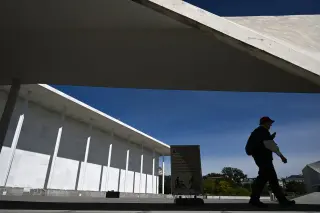
DOJ lawyers told a federal judge that the Kennedy Center is structurally and financially unsustainable without intervention from the Trump administration, even suggesting an outdoor amphitheatre if it must be torn down; the filing comes amid disputes over Trump’s name on the building and ongoing renovation plans.
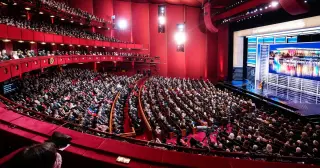
DOJ lawyers argued in a court filing that the Kennedy Center is structurally unsound and could be demolished if it cannot close for about two years for renovations, potentially replacing the center with an outdoor amphitheater; the filing marks a stark shift from the board’s description of a two-year shutdown to upgrade stage lifts, rigging, electrical systems and leak prevention, and a hearing is set this week on the planned closure and on the board’s bid to re-add Trump’s name to the building.
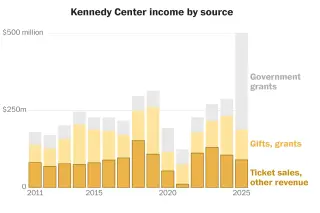
Confidential documents obtained by The Washington Post show ticket sales and fundraising at the Kennedy Center collapsed after President Donald Trump’s name was added to the building, undermining public claims of a financial turnaround and putting the center on track to fall nearly $100 million short of its revenue target.
A Democratic congresswoman and Kennedy Center trustee filed an emergency motion to block the center’s board from re-adding President Donald Trump’s name to the building, arguing the actions violate a federal court ruling and Congress’s mandate to honor John F. Kennedy. The request seeks a temporary injunction before planned signage changes amid a dispute over board actions and fundraising tied to the renaming and branding of the center.
Representative Joyce Beatty has asked a federal court to stop the Kennedy Center from reinstating Trump’s name on one of its buildings, signaling a legal challenge over the renaming.*
Kennedy Center officials told a federal judge they will not remove the tarp obscuring Trump’s name and plan to re-add his name to the facade in early September, despite a prior ruling that the change violated the law; Beatty’s lawyers are seeking a ruling on its legality before Sept. 8 as the legal fight over the building’s naming continues.
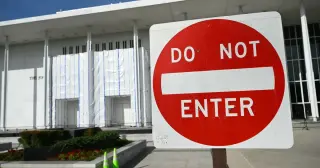
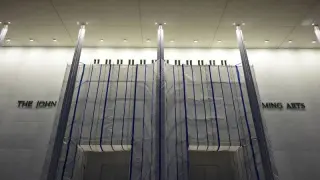
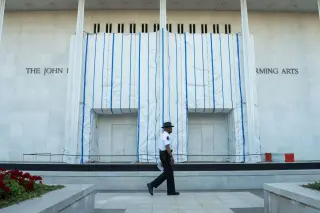
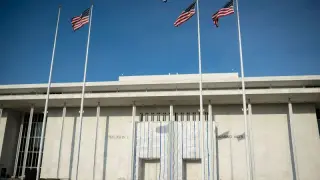
The Kennedy Center’s tarp-covered scaffolding remains in place for water testing and front-portico repairs, even as a renewed plan to inscribe Donald Trump’s name on the facade faces legal scrutiny and a lawmaker’s call for more explanation and a judge’s halt.
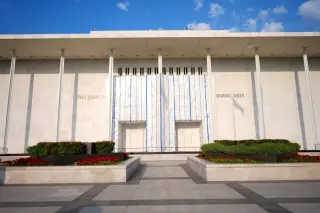
The Kennedy Center board, chaired by Donald Trump, moved to restore Trump’s name to three areas of the complex—on the front facade beneath the official name, with added inscriptions for an endowed fund, and designating the grounds as “President Donald J. Trump Plaza”—after a federal court ruling and ongoing legal battles that previously forced removal of the branding. Rep. Joyce Beatty sued, arguing Congress must approve such memorials, and a judge ruled last May that only Congress could authorize name changes; the center argues the new designations comply with that decision and points to renovations funded by Congress. The center has paused further action until Sept. 8 as Beatty’s lawyers seek a court ruling, while the center pursues an appeal and a separate two-year renovation/closure plan that remains under debate.
The Kennedy Center told a court it will not attempt to restore former President Trump's name on the building before September 8, as the litigation over its naming and signage continues.
The National Symphony Orchestra unveiled its upcoming classical season without performances at the Kennedy Center, planning about 60 concerts from September through June at six regional venues around the Washington, D.C. area, including Lisner Auditorium, Lincoln Theatre, Strathmore, George Mason University, the Rachel M. Schlesinger Concert Hall, and the Clarice Smith Performing Arts Center.
Heather Cox Richardson argues that Trump’s handpicked Kennedy Center board voted to put his name back on the building, signaling loyalty-driven power as the administration widens immigration enforcement—ICE–TSA arrests of visa overstays, rapid immigration-court decisions, a no-bid contract for migrant-children’s lawyers, and new security tools—while vaccine policy shifts and border-measure moves illustrate a broader effort to instrumentalize public institutions for ideological ends.
As the 2026 midterms approach, Trump’s bid to have the Kennedy Center bear his name and the ongoing ballroom project highlight a preoccupation with self-promotion that polls show voters view as misaligned with priorities, risking political backlash for the GOP.
The Kennedy Center board voted to reinsert Donald Trump’s name on the building and to close for two years to complete major renovations, reversing a court order that had demanded the name’s removal. The move drew criticism from Rep. Joyce Beatty and signals ongoing legal fights over who has authority to name the venue, as lawsuits and rulings continue to shape the center’s branding and operations, including a separate case in which a performer was awarded money after a cancellation tied to the rebranding.
The Kennedy Center board voted to append “Restored and Renovated By President Donald J. Trump” to the center’s formal name, two months after a federal judge ordered removal and said any renaming requires congressional approval. Critics, including Congresswoman Joyce Beatty, view the move as an attempt to skirt the court ruling, while the board also approved a two-year renovation closure that had been blocked by the court.
The Kennedy Center board voted to restore President Trump’s name at the venue—adding an inscription and renaming the site as the President Donald J. Trump Plaza—an action that appears to challenge a May federal judge ruling that only Congress could rename the center; the administration has appealed. The move comes alongside a two-year renovation plan for the main building with a $24.7 million upgrade, while programming may move to the REACH, and has drawn criticism from Rep. Joyce Beatty for circumventing court rulings and statutes.