
White House Drafts Order to Place NIH Grants Under Political Veto
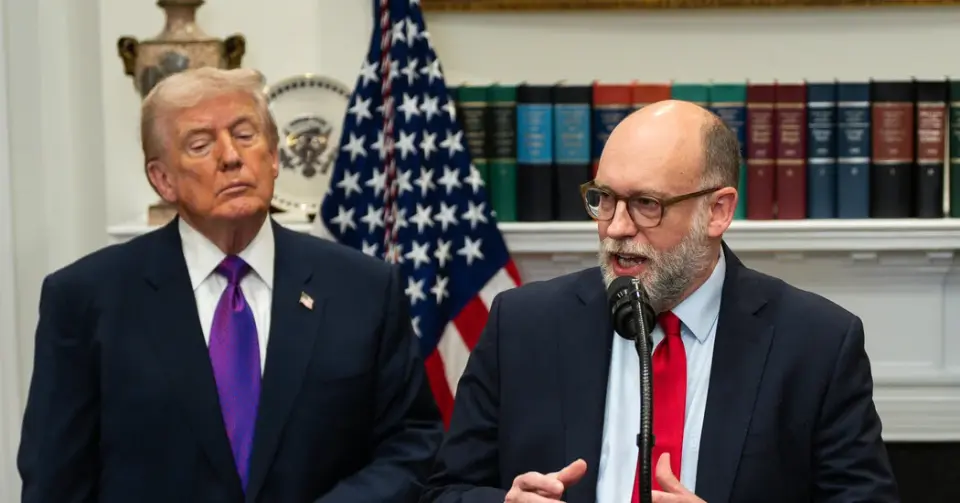
The White House is drafting an executive order to create an external committee with veto power over National Institutes of Health (NIH) grants, aiming to align biomedical research funding with President Trump’s political agenda. The move follows a contentious Friday meeting where OMB Director Russell Vought clashed with NIH Director Jay Bhattacharya over funding priorities, including a failed attempt to cut Harvard University’s grants. While the NIH asserts all appropriated funds will be spent, the proposed board would require unanimous decisions, effectively giving political appointees control over the agency’s $48 billion budget.
Key points
- A new executive order is being drafted to establish an external committee that can veto NIH grant awards not conforming to administration priorities.
- The proposal emerged from a highly contentious Friday meeting involving President Trump, OMB Director Russell Vought, and NIH Director Jay Bhattacharya.
- Vought accused the NIH of funding 'woke' priorities, while Bhattacharya resisted efforts to cut specific grants, including those for Harvard University.
- The proposed board would require unanimous decisions, giving Vought a direct role in determining how the NIH distributes its $48 billion budget.
- Congress previously blocked a similar OMB plan through a stopgap funding bill, but the new executive order may bypass those restrictions.
Background
This development follows months of tension between the OMB and NIH, including a previous freeze on grant-making that was eventually released after pressure from lawmakers. The administration has also sought to cut a 40% budget reduction for the NIH, which Congress rejected in favor of a small increase. Earlier archive coverage notes that the White House has leveraged federal funding signals against states and institutions that oppose administration policies, such as in the case of Colorado and Harvard.
How outlets are covering it
The New York Times emphasizes the executive order as an effort to cement presidential control over scientific grants, highlighting the conflict between Vought and Bhattacharya. Politico focuses on the specific trigger for the meeting: Trump’s demand to cut Harvard’s funding, which Bhattacharya refused, and notes that Congress had previously blocked a similar OMB plan. The Washington Post frames the event as an 'Oval Office clash' where Vought argued the NIH was funding priorities at odds with the president’s agenda. KOMO News summarizes the move as a tightening of control over the $48 billion budget, noting the potential for political appointees to override scientific merit reviews. All sources agree on the core facts but differ in emphasis: NYT and WaPo focus on the ideological conflict, while Politico highlights the Harvard-specific motivation and congressional pushback.
Why it matters
This move represents a significant escalation in the politicization of federal scientific research. If implemented, it would bypass the traditional peer-review process, potentially halting or redirecting billions of dollars in funding for areas such as cancer, heart disease, and infectious diseases. It also raises concerns about the independence of scientific institutions and the role of political appointees in determining research priorities, with potential implications for academic freedom and public health outcomes.
What to watch
The executive order is currently in the drafting phase by the Office of Management and Budget. If finalized, it would establish the external committee and require unanimous decisions on grant awards. Congress may respond with new legislation to block the order, as they did with the previous OMB plan. The NIH and its director, Jay Bhattacharya, are expected to continue resisting efforts to cut specific grants, potentially leading to further legal or political disputes. The outcome will depend on whether the administration can bypass congressional restrictions and whether the proposed board can reach unanimous decisions on controversial grants.
- White House Moves to Take Control of N.I.H. Grants The New York Times
- Trump asked budget chief to draft order bringing health research funding under his control Politico
- White House budget chief pushes for scrutiny of NIH grants in Oval Office clash washingtonpost.com
- Trump orders plan for White House board to approve NIH grants, tightening control of $48B budget komonews.com
- The Real Start of Every Biotech Story is not a Lab but the Funding Decision Moomoo
Want the full story? Read the original reporting
Read on The New York Times