Tag

Nih

All articles tagged with #nih

PETA demands NIH halt foreign animal funding after records reveal biosafety failures
science-and-health10 hours ago

PETA demands NIH halt foreign animal funding after records reveal biosafety failures

PETA has urged the National Institutes of Health (NIH) to immediately cease funding for animal experiments conducted outside the United States, citing federal records that reveal significant biosafety and oversight failures at foreign laboratories. The organization’s complaint to NIH Director Jay Bhattacharya highlights specific incidents, including a suspended bat virus study in Australia and missing compliance documents for facilities in Argentina and the UK. These findings coincide with renewed legislative efforts to pass the bipartisan CARGO Act, which would permanently prohibit federal funding for overseas animal research.
Global study links 58 genetic regions to endometriosis, revealing new therapeutic targets
science2 days ago

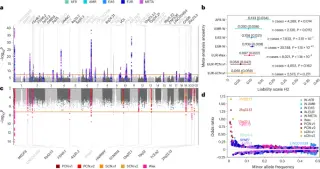
Global study links 58 genetic regions to endometriosis, revealing new therapeutic targets

A massive international study involving over one million women has identified 58 genomic regions linked to endometriosis, including 27 previously unknown loci. By analyzing diverse ancestries and integrating multiple molecular layers, researchers pinpointed 314 candidate genes involved in immune and hormonal pathways. The findings suggest new avenues for non-invasive diagnostics and targeted therapies, though functional validation remains necessary.

NIH Director Demands Investigation into Alleged Ghostwriting of 2020 SARS-CoV-2 Origin Paper

NIH Director Jay Bhattacharya has asked the journal Nature Medicine to investigate whether former officials Anthony Fauci, Francis Collins, and Jeremy Farrar secretly contributed to the influential March 2020 paper that dismissed the COVID-19 lab leak theory. The letter, sent on November 18, 2026, requests a formal review of authorship disclosures and potential retraction. While the paper remains published, the request highlights ongoing disputes over transparency in scientific contributions and the role of government officials in shaping pandemic-era research.

NIH Grant Renegotiations Force Scientists to Alter Research to Avoid Political Censorship
science-and-policy7 days ago

NIH Grant Renegotiations Force Scientists to Alter Research to Avoid Political Censorship

The Trump administration’s National Institutes of Health (NIH) has implemented a controversial 'renegotiation' process that forces researchers to alter grant language and scope to align with political priorities. This has led to widespread changes in funding, with HIV and health equity studies disproportionately affected. While the NIH claims these changes improve scientific rigor, critics and data suggest they constitute viewpoint-based discrimination, causing significant disruptions to medical research and morale.

Research into fatal pediatric brain tumors halted by funding cuts

Research into fatal pediatric brain tumors halted by funding cuts

The New York Times reports that research into a specific, rapidly fatal childhood brain cancer has stalled for one year due to disruptions in scientific funding and policy under the current administration. The article highlights the case of Ryleigh Schecter, a five-year-old girl from Twinsburg, Ohio, diagnosed this year with an incurable tumor. While the piece focuses on the personal impact of the disease, it frames the delay in medical progress as part of a broader 'Science Under Siege' narrative, suggesting that federal policy changes have directly impeded the development of treatments for children who often succumb to the disease within twelve months.

NIH Study Links Legacy PFAS Exposure to Higher Risk of Aggressive Breast Cancer
health11 days ago

NIH Study Links Legacy PFAS Exposure to Higher Risk of Aggressive Breast Cancer

A new National Institutes of Health study finds that higher blood levels of two legacy 'forever chemicals,' PFOA and PFOS, are associated with a significantly increased risk of estrogen receptor-negative (ER-negative) breast cancer. While no clear link was found for breast cancer overall, the association with the more aggressive ER-negative subtype is notable. Researchers emphasize that newer PFAS replacements require further study, as legacy chemicals have largely been phased out.

NIH Study Links Legacy PFAS Exposure to Higher Risk of Aggressive ER-Negative Breast Cancer
health12 days ago

NIH Study Links Legacy PFAS Exposure to Higher Risk of Aggressive ER-Negative Breast Cancer

A new National Institutes of Health study published in the Journal of Clinical Oncology finds that higher blood levels of two legacy 'forever chemicals,' PFOA and PFOS, are associated with a significantly increased risk of estrogen receptor-negative (ER-negative) breast cancer. While no clear link was found for breast cancer overall, the association with the more aggressive ER-negative subtype is notable. Researchers emphasize that newer PFAS replacements require further study, as legacy chemicals have largely been phased out.

NIH Study Links PFOA and PFOS Exposure to Aggressive Breast Cancer
health15 days ago

NIH Study Links PFOA and PFOS Exposure to Aggressive Breast Cancer

A National Institutes of Health study published in the Journal of Clinical Oncology found that higher blood levels of PFOA and PFOS, two types of PFAS 'forever chemicals,' are associated with a significantly increased risk of ER-negative breast cancer. The research indicates a 67% higher rate for PFOA and a 93% higher rate for PFOS. While no clear link was found for breast cancer overall, the association with the more aggressive ER-negative subtype is notable. Researchers emphasize that newer PFAS replacements require further study, as legacy chemicals have largely been phased out.

NIH Study Links PFOA and PFAS Exposure to Aggressive Breast Cancer
health15 days ago

NIH Study Links PFOA and PFAS Exposure to Aggressive Breast Cancer

A new National Institutes of Health study finds that higher blood levels of two 'forever chemicals,' PFOA and PFOS, are associated with a significantly increased risk of ER-negative breast cancer, a more aggressive tumor type. While these legacy chemicals have been phased out, researchers warn that newer replacements require urgent scrutiny.

NIH Board Rebukes Kennedy for Politicizing Vaccine Injury Research
health-policy1 month ago

NIH Board Rebukes Kennedy for Politicizing Vaccine Injury Research

The advisory board for the NIH Clinical Center unanimously condemned HHS Secretary Robert F. Kennedy Jr. for staging a ribbon-cutting ceremony for a new vaccine injury clinic that they argue compromises scientific integrity. While Kennedy’s administration launched a four-part initiative to investigate vaccine adverse events, critics warn that pre-determining narratives undermines public trust. The NIH emphasizes that the new center is a research protocol, not a walk-in clinic, and that causation remains unproven.

HHS Launches Four-Part Vaccine Injury Initiative Amid Public Support for Vaccines
health-policy1 month ago

HHS Launches Four-Part Vaccine Injury Initiative Amid Public Support for Vaccines

HHS Secretary Robert F. Kennedy Jr. announced a four-part initiative to expand vaccine injury research, reporting, and clinical evaluation. The plan includes a new NIH clinic, proposed Medicare reimbursement for clinicians, electronic health record updates, and modernization of the VAERS system. While polls show broad public support for vaccine access, critics argue the initiative risks undermining vaccine confidence through biased data interpretation.

US Scientists Flee Abroad as Federal Funding Cuts Deepen
science-and-policy1 month ago

US Scientists Flee Abroad as Federal Funding Cuts Deepen

American researchers are increasingly relocating to foreign institutions due to sustained federal funding reductions. This trend follows the termination of over 5,700 NIH grants since 2025, including critical health equity studies. While the administration cites misalignment with agency priorities, critics argue these cuts constitute censorship and drive a significant loss of scientific talent.

NIH Cancer Initiative Sparks 14% Jump in Moderna Shares
biotech1 month ago

NIH Cancer Initiative Sparks 14% Jump in Moderna Shares

Moderna shares surged over 14% on October 9, 2026, after reports that the National Institutes of Health (NIH) will launch a major public-private cancer research initiative in December. The program aims to accelerate treatments for pancreatic, liver, and colorectal cancers, as well as pediatric tumors, leveraging advances in AI and mRNA technology. This move follows recent positive clinical trial results for Moderna’s co-developed melanoma therapy, intismeran, which showed improved outcomes when combined with Merck’s Keytruda.

Bipartisan pressure forces White House to scrap NIH grant control plan
politics2 months ago

Bipartisan pressure forces White House to scrap NIH grant control plan

The White House has abandoned a planned executive order that would have granted political appointees veto power over National Institutes of Health grants. The move follows intense bipartisan opposition from Congress, particularly from Senate Appropriations Chair Susan Collins, who argued the plan would undermine merit-based scientific funding. While the order is effectively dead, officials may revisit similar strategies after the midterm elections.

politics2 months ago

White House Abandons Plan to Politicize NIH Grant Decisions After Bipartisan Pushback

The White House has dropped a planned executive order that would have transferred control of National Institutes of Health (NIH) research grants to a board of political appointees. The move follows intense pressure from Senator Susan Collins and bipartisan opposition in Congress. While the administration has paused the specific order, officials may revisit the issue after the midterm elections.