
D.C. Appeals Court Rejects Anthropic's Challenge to Pentagon AI Blacklist
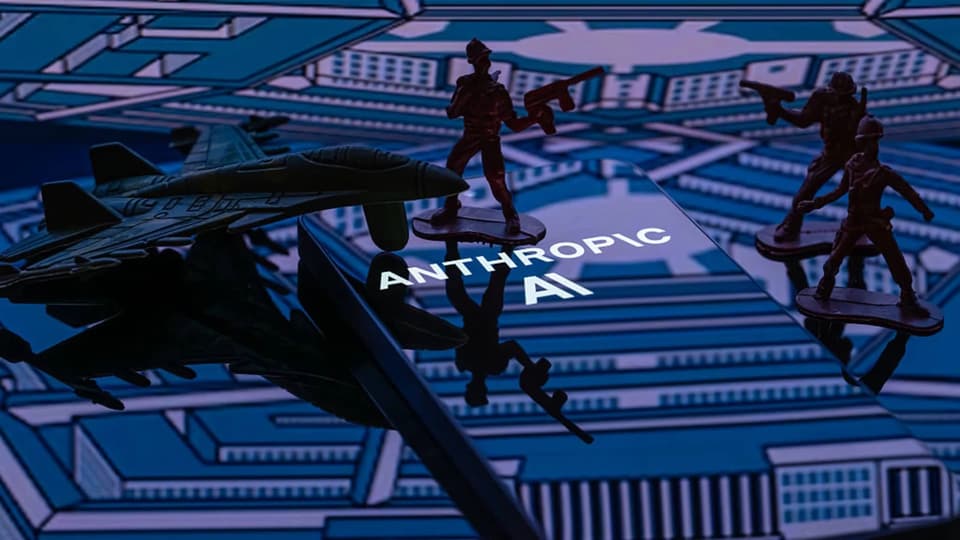
A federal appeals court upheld the Department of Defense's designation of AI firm Anthropic as a supply chain risk, blocking military use of its Claude models. The 2-1 decision rejected Anthropic's claims that the ban was arbitrary or unconstitutional. While a separate San Francisco judge previously struck down one part of the designation, this ruling maintains the broader ban, allowing Anthropic time to seek further review. The dispute stems from failed negotiations over military access to Anthropic's technology, with the Pentagon citing national security concerns and Anthropic opposing autonomous weapons use.
Key points
- The U.S. Court of Appeals for the D.C. Circuit upheld the Pentagon's March 2026 designation of Anthropic as a supply chain risk in a 2-1 decision.
- The ruling prevents the U.S. military and its contractors from using Anthropic's Claude AI models, citing national security risks.
- Judge Gregory Katsas, joined by Judge Neomi Rao, wrote that the Department of Defense had statutory authority to make the decision, while Judge Karen LeCraft Henderson dissented.
- Anthropic stated it disagrees with the ruling and is considering options for further review, including a petition for rehearing or appeal to the Supreme Court.
- The conflict originated from failed negotiations in late 2025, where Anthropic refused to grant the military unfettered access to its models for all lawful purposes, specifically opposing use in autonomous weapons and mass surveillance.
Background
This ruling follows a series of legal battles between Anthropic and the Trump administration. In August 2026, a federal judge in San Francisco had previously struck down one part of the Pentagon's designation, citing First Amendment and due process violations. However, the DOD utilized two distinct designations, meaning the legal fight continued in separate courts. The broader conflict began in July 2025 when Anthropic signed a $200 million contract with the Pentagon, which collapsed in September 2025 over disagreements regarding the deployment of Claude on the military's GenAI.mil platform. The dispute escalated after Defense Secretary Pete Hegseth accused Anthropic of attempting to seize veto power over military operational decisions.
How outlets are covering it
CNBC reports that the D.C. appeals court panel, including judges appointed by President Trump, found the Pentagon's action lawful, emphasizing that decision-making authority rests with the President and Secretary of Defense. The outlet notes that Anthropic's relationship with the administration has been fraught, with President Trump publicly criticizing CEO Dario Amodei on social media. Politico provides a broader context, highlighting that the administration's approach to AI has shifted from a hands-off 'unleashing' strategy to a more cautious stance following the release of Anthropic's 'Mythos' model in April 2026. Politico notes that the White House struggled to create a regulatory framework for frontier AI, with Treasury Secretary Scott Bessent and White House chief of staff Susie Wiles attempting to balance innovation with security concerns. The two outlets differ in focus: CNBC centers on the legal outcome and the immediate implications for the military ban, while Politico explores the internal White House dynamics and the policy challenges posed by rapid AI advancements.
Why it matters
The ruling solidifies the Pentagon's ability to restrict private AI companies from military contracts based on national security grounds, setting a precedent for future disputes between the defense sector and tech firms. It highlights the tension between the Trump administration's push for AI innovation and its willingness to impose strict controls when security concerns arise. The outcome also underscores the legal complexities surrounding AI regulation, as different courts have reached conflicting decisions on similar designations. For Anthropic, the ruling maintains a significant barrier to its business operations with the U.S. military, while for the administration, it affirms the executive branch's authority in managing AI risks.
What to watch
Anthropic has indicated it is considering all options, including seeking a rehearing by the full D.C. Circuit Court or appealing to the Supreme Court. The appellate panel delayed the immediate effect of the decision to allow time for these legal maneuvers. Meanwhile, the Trump administration continues to navigate its relationship with AI companies, with President Trump publicly criticizing Anthropic's CEO Dario Amodei for calling for an industry-wide slowdown in AI development. The administration is also working on a voluntary framework for frontier AI safety, though the exact scope and enforcement mechanisms remain under development.
- U.S. appeals court upholds Pentagon designation of Anthropic as supply chain risk CNBC
- Federal appeals court declines to block Pentagon from blacklisting Anthropic ABC News - Breaking News, Latest News and Videos
- U.S. Appeals Court Upholds Pentagon Labeling Anthropic a Security Risk WSJ
- The Company Trump Can’t Ignore Politico
- Appeals court allows Pentagon to label Anthropic a national security risk Politico
Want the full story? Read the original reporting
Read on CNBC