
911 logs expose 30-minute emergency response delay after Pike's botched execution
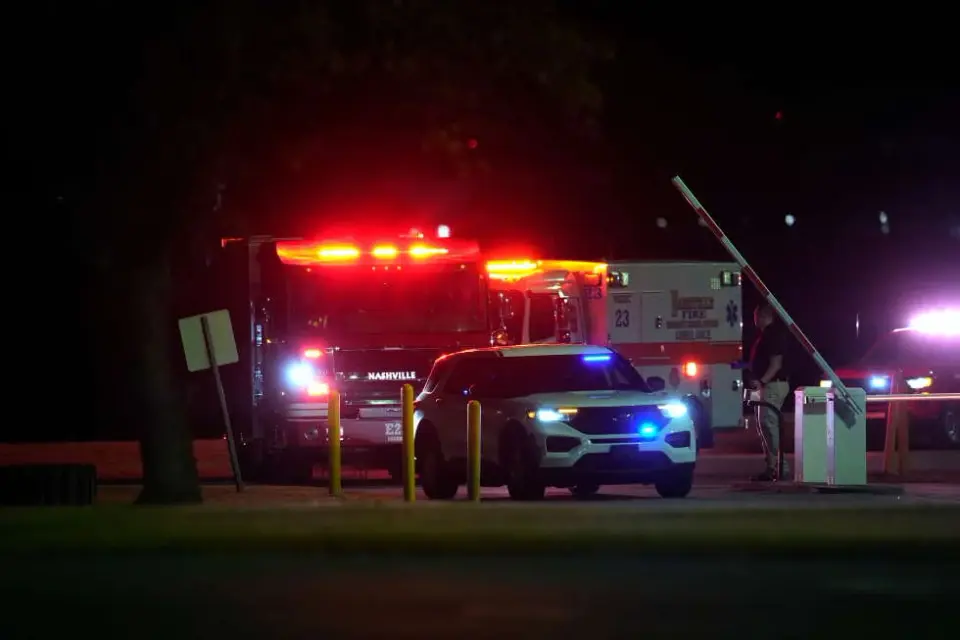
Released 911 recordings reveal a 30-minute delay in emergency response to Christa Pike's failed execution on Sept. 30, 2026, caused by a lack of verification codes and confusion among prison and dispatch officials. Pike survived two doses of pentobarbital and was hospitalized, raising legal questions about a potential second execution attempt.
Key points
- The first 911 call at 8:40 p.m. from Riverbend Maximum Security Institution was delayed by 20 minutes of verification due to the caller lacking a required code.
- Emergency vehicles did not reach the prison gates until 9:10 p.m., and Pike arrived at a hospital at 9:36 p.m., nearly an hour after the initial call.
- Pike survived two doses of pentobarbital, was hospitalized, and was released to a state women's prison on Oct. 10.
- Attorneys are preparing legal arguments against a second execution attempt, citing double jeopardy and cruel and unusual punishment.
- Governor Bill Lee has paused executions but has not commuted Pike's sentence, leaving the possibility of a second attempt open.
Background
Christa Pike, a 50-year-old Tennessee death row inmate, was sentenced to death for the 1995 murder of 19-year-old Colleen Slemmer. Her failed execution on Sept. 30, 2026, followed a day of legal challenges, including a pause ordered by the U.S. Court of Appeals for the Sixth Circuit and a 6-3 Supreme Court decision allowing the execution to proceed. Pike is the only woman on Tennessee's death row and would have been the first woman executed in the state in over 200 years.
How outlets are covering it
AP News and The Tennessean highlight the 30-minute delay in emergency response due to a lack of verification codes and confusion among prison and dispatch officials. CNN focuses on the legal battle over a potential second execution attempt, with experts citing double jeopardy and cruel and unusual punishment. WSMV provides background on Pike's 1995 murder and her hospitalization, noting that she was thought to be brain dead before regaining consciousness. The Tennessean and AP News emphasize the confusion and lack of protocol in the 911 calls, while CNN and WSMV focus on the legal and medical implications of the failed execution.
Why it matters
The 30-minute delay in emergency response to Pike's failed execution raises questions about the safety and protocol of lethal injections in Tennessee. The legal battle over a potential second execution attempt could set a precedent for double jeopardy and cruel and unusual punishment in death penalty cases. The incident has intensified scrutiny of capital punishment in the US and globally, with Governor Bill Lee pausing executions but not commuting Pike's sentence.
What to watch
Pike's attorneys are preparing legal arguments against a second execution attempt, citing double jeopardy and cruel and unusual punishment. Governor Bill Lee has paused executions but has not commuted Pike's sentence, leaving the possibility of a second attempt open. The Tennessee Department of Corrections has maintained it acted according to its protocol, but the incident has raised questions about the safety and protocol of lethal injections in Tennessee.
- Emergency help was delayed by confusion after failed execution of Christa Pike, 911 calls reveal AP News
- Confusion over 911 protocol slowed response in Christa Pike execution The Tennessean
- Whether Tennessee tries to execute Christa Pike again is an open question. Here’s why CNN
- 911 call transcript from botched Christa Pike execution released WSMV
- Emergency help for Christa Pike was delayed over confusion after botched execution, 911 calls reveal CBS News
Want the full story? Read the original reporting
Read on AP News