
Cornell protests erupt as new records reveal gaps in 2024 gang-rape investigation
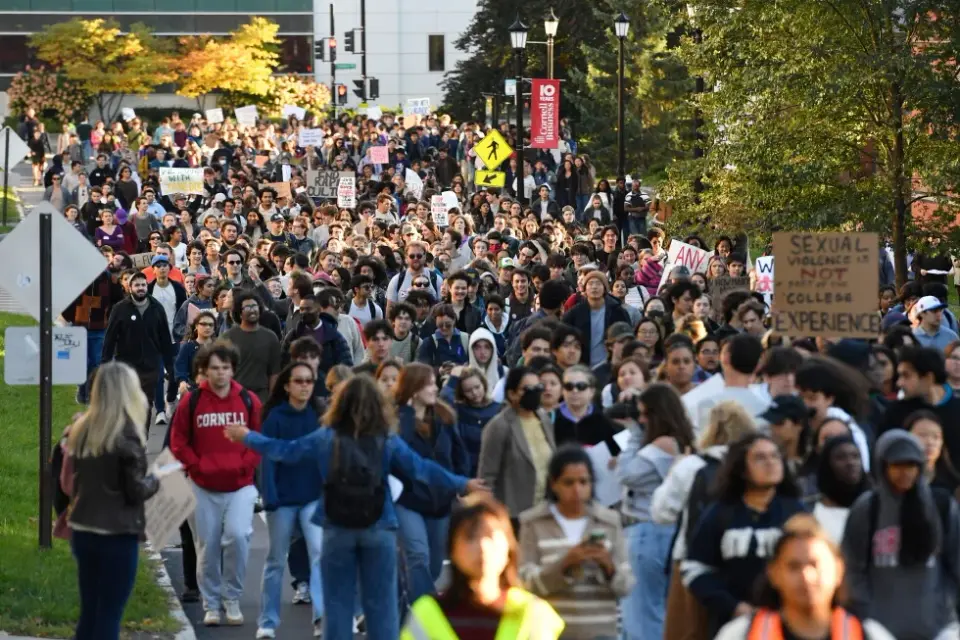
Thousands of students and faculty protested at Cornell University on Monday, demanding accountability for the 2024 alleged gang rape of a former student known as Jane Doe. The demonstrations followed the release of new records showing that Cornell police drafted requests for phone records in 2024, but the Tompkins County District Attorney's office declined to review them. Governor Kathy Hochul has appointed Attorney General Letitia James as special prosecutor to investigate the case, while the university faces intense scrutiny over its initial disciplinary actions and communication with local authorities.
Key points
- Protesters at Cornell University demanded the resignation of President Michael Kotlikoff and called for the banning of fraternities, citing the university's handling of the 2024 alleged gang rape of Jane Doe.
- Newly obtained records indicate Cornell police drafted letters to wireless carriers in November 2024 to preserve evidence, but the Tompkins County District Attorney's office declined to review these materials or additional interviews, relying instead on a condensed six-page statement from the victim.
- New York Governor Kathy Hochul appointed Attorney General Letitia James as special prosecutor to investigate the case, following criticism that the local district attorney failed to conduct a thorough review of the evidence.
- Jane Doe's attorney stated that the victim experienced a typical trauma response, moving from denial to shame before ultimately reporting the assault, and that the university's initial disciplinary measures were insufficient.
- Cornell President Michael Kotlikoff issued an apologetic video statement, acknowledging the 'heartbreaking and troubling issues' raised by the case and promising a serious review of the role of fraternities and sororities on campus.
Background
In September 2026, a former Cornell student filed a civil lawsuit alleging she was drugged and gang-raped by seven members of the Chi Phi fraternity in October 2024. The lawsuit accused the university of negligence and inadequate response, leading to national scrutiny of how elite institutions handle sexual violence. Prior to the current protests, the Tompkins County District Attorney had declined to bring criminal charges, citing insufficient evidence, which prompted calls for an independent investigation by state authorities.
How outlets are covering it
The Associated Press and CNN emphasized the procedural failures in the 2024 investigation, highlighting that Cornell police drafted requests for phone records that were never reviewed by the district attorney. NBC News focused on the rapid influx of tips to campus police after the initial alert, suggesting a more active initial response than previously acknowledged. The Guardian highlighted the intensity of the student protests, including vandalism and demands for the president's resignation, framing the issue as a broader failure of institutional accountability. While all outlets agree on the severity of the alleged assault, they differ in emphasis: AP and CNN focus on the legal and investigative gaps, NBC on the timeline of police response, and The Guardian on the social and political backlash on campus.
Why it matters
The case has become a national flashpoint for debates over how universities and local law enforcement handle sexual assault allegations. The appointment of a special prosecutor and the release of new records have intensified scrutiny of institutional accountability, potentially leading to changes in how fraternities and campus police interact with local prosecutors. The outcome of the investigation could set a precedent for future cases involving elite institutions and the handling of sexual violence on college campuses.
What to watch
Attorney General Letitia James will lead a comprehensive investigation into the 2024 alleged gang rape, with the goal of determining whether criminal charges should be filed. Cornell University is expected to conduct a serious review of the role of fraternities and sororities on campus, as promised by President Michael Kotlikoff. The university may face further legal challenges from Jane Doe's civil lawsuit, and the outcome of the special prosecutor's investigation could lead to changes in how campus police and local law enforcement collaborate on sexual assault cases.
- A crowd of students protests Cornell’s response to gang rape complaint AP News
- How Cornell Punished Each of the 7 Men Accused of Sexual Assault The New York Times
- Tips came in just minutes after Cornell alerted students to an alleged sex assault at a frat house NBC News
- Students vandalize Cornell building over handling of gang-rape allegations The Guardian
- Cornell police tried to get phone records in Jane Doe’s sex assault investigation. Her lawyer says records never got to DA CNN
Want the full story? Read the original reporting
Read on AP News