
Florida to Execute James Robertson, Who Killed Cellmate to Secure Death Sentence
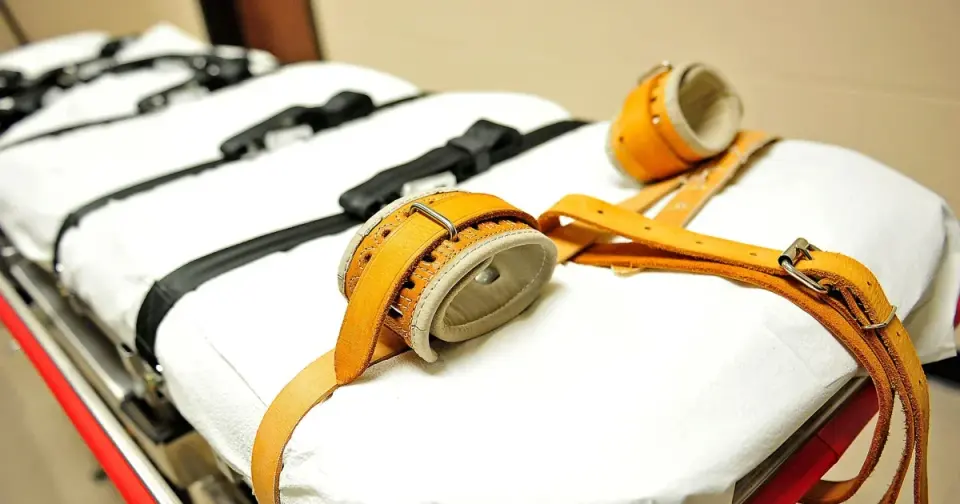
James Robertson, 63, is scheduled for execution by lethal injection at Florida State Prison on Tuesday, nearly 18 years after strangling his cellmate, Frank Hart, in 2008. Robertson admitted to the killing, stating he did it to be moved to death row rather than serve a life sentence. He waived all appeals and is set to die via a three-drug injection. This execution follows a rare reprieve for another inmate, William Lee Thompson, whose death warrant Governor Ron DeSantis withdrew last week. Robertson’s case highlights ongoing debates about the death penalty’s deterrent effect, with opponents arguing that the existence of capital punishment may incentivize such crimes.
Key points
- James Robertson, 63, is scheduled for execution by lethal injection at Florida State Prison near Starke on Tuesday.
- Robertson pleaded guilty to the 2008 strangling of cellmate Frank Hart and waived all appeals, stating he killed Hart to secure a death sentence.
- Governor Ron DeSantis withdrew the death warrant for William Lee Thompson last week, the first time he has done so, leaving Thompson on death row pending a potential new warrant.
- Florida has carried out 16 executions in 2026 so far, with two more scheduled for October and November, potentially matching the state’s 2025 total.
- Death penalty opponents argue Robertson’s case demonstrates that the death penalty may not deter crime but instead incentivize it, while proponents maintain it serves justice for victims' families.
Background
Florida has been the nation’s most active state in carrying out executions, with Governor Ron DeSantis overseeing 19 executions in 2025, the highest single-year total for a Florida governor since the death penalty was reinstated in 1976. The state resumed executions in 2023 after a pause during the COVID-19 pandemic. Robertson’s case follows a series of high-profile executions and reprieves, including the recent failed execution attempt of Christa Pike in Tennessee and the scheduled firing squad execution of Nidal Malik Hasan by the U.S. military. Florida’s aggressive use of capital punishment has drawn criticism from opponents who argue it fails to deter crime and raises ethical concerns.
Why it matters
Robertson’s execution underscores the contentious debate over the death penalty’s effectiveness and morality. His admission that he killed his cellmate to secure a death sentence challenges the argument that capital punishment deters crime, suggesting instead that it may incentivize it. The case also highlights the political dynamics surrounding executions, as Governor DeSantis’s withdrawal of Thompson’s death warrant marks a rare deviation from his otherwise aggressive approach to capital punishment. With Florida leading the nation in executions, the case reflects broader national trends and ongoing scrutiny of the death penalty’s role in the justice system.
What to watch
James Robertson is set to be executed by lethal injection at noon on Tuesday. If executed as planned, along with William Reaves on October 20 and Jesse Guardado on November 5, Florida will match its 2025 execution total with eight weeks remaining in 2026. William Lee Thompson will remain on death row, with a potential new death warrant to be signed in the future. The case may also draw further attention to the death penalty’s deterrent effect and the conditions that lead inmates to commit crimes to secure capital punishment.
Want the full story? Read the original reporting
Read on NBC News