
AIPAC’s $2.5M California Bet Tests Democratic Unity on Israel
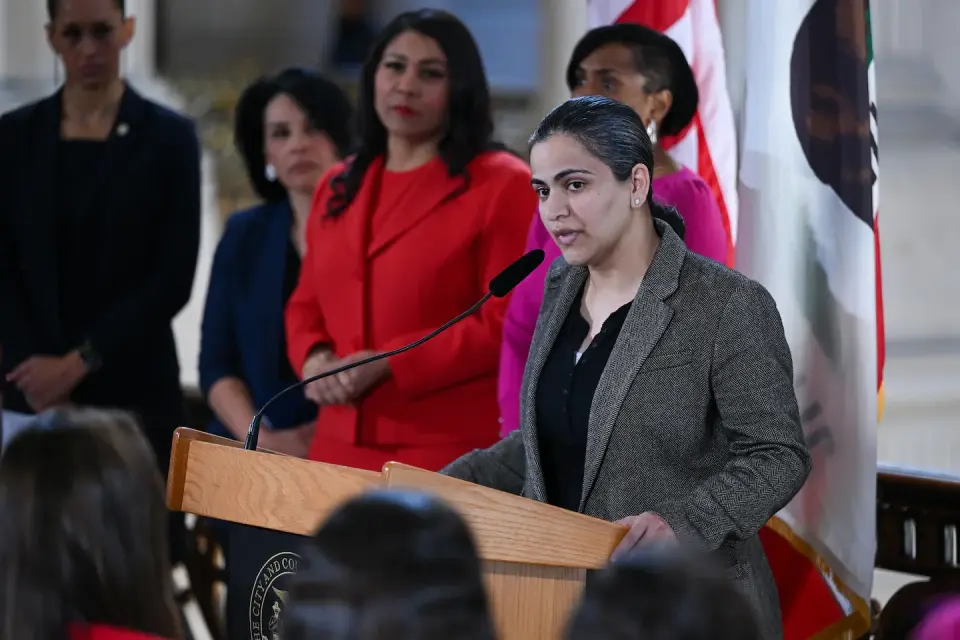
AIPAC’s super PAC spent nearly $2.5 million in a California runoff to replace Eric Swalwell, backing moderate Melissa Hernandez against progressive Aisha Wahab. The race highlights deep Democratic divisions over Israel, with outside groups spending $6 million total. Wahab leads but faces intense opposition, while Hernandez claims local support. The winner serves until January, with both facing off again in November.
Key points
- AIPAC’s United Democracy Project spent $2.5M in the California runoff, part of $6M total outside spending.
- Wahab, a progressive, leads Hernandez by 26 points in the June primary but faces AIPAC-backed ads.
- Hernandez, a moderate, received $2.6M from Bold America, an AIPAC-linked group.
- Wahab plans an FEC complaint over alleged bot activity; Hernandez denies donor influence.
- The race reflects broader Democratic tensions over Israel, with AIPAC spending tens of millions this year.
Background
Eric Swalwell resigned in April after sexual assault allegations, triggering a special election. His pro-Israel voting record made the seat a target for AIPAC. The 14th District boundaries were redrawn by Proposition 50, but the special election uses old maps. AIPAC’s spending follows mixed results in other races, including a loss in Michigan’s Senate primary.
How outlets are covering it
The Washington Post emphasizes AIPAC’s strategic spending and Democratic internal conflict, noting Wahab’s lead and Hernandez’s local base. AP News highlights the jungle primary system and the $4.1M total outside spending, with $3.7M favoring Hernandez. Al Jazeera frames the race as a proxy fight for the Democratic Party’s soul, detailing Wahab’s FEC complaint and Hernandez’s attack on Wahab’s criminal justice record. All agree on the financial scale but differ on narrative focus: Post on party division, AP on mechanics, Al Jazeera on ideological stakes.
Why it matters
The outcome signals AIPAC’s influence in 2026 midterms and the viability of progressive candidates in swing districts. It tests whether establishment money can override local support, with implications for future races on Israel and Gaza.
What to watch
Wahab and Hernandez will face off again in November for a full term. The special election winner serves until January. FEC complaints may delay or influence the outcome, and AIPAC’s spending strategy will be scrutinized in upcoming midterms.
- AIPAC has a new target to exert influence over Democrats The Washington Post
- AP Decision Notes: What to expect in California’s special congressional election AP News
- AIPAC Targets Progressive Democrat in Race to Replace Swalwell The New York Times
- 3 things to watch as East Bay voters choose Eric Swalwell’s replacement in Congress San Francisco Chronicle
- What to know about California’s special election to replace Eric Swalwell Al Jazeera
Want the full story? Read the original reporting
Read on The Washington Post