
Federal Court Halts Army’s Plan to Detonate Unstable Lead Azide in Iowa Amid Public Outcry
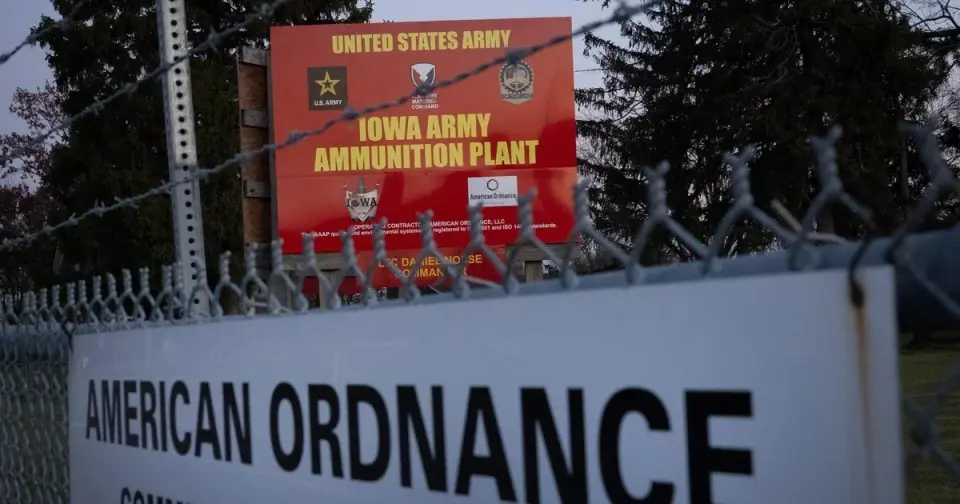
A federal appeals court has suspended the U.S. Army’s plan to detonate nearly five tons of unstable lead azide at the Iowa Army Ammunition Plant in Middletown. The halt follows an emergency lawsuit by environmental groups challenging the EPA’s emergency permit, which critics argue failed to provide adequate public notice or explore safer disposal alternatives. While the Army insists the material is too volatile to transport and must be destroyed before freezing temperatures worsen its instability, residents and officials fear the blast will spread toxic lead dust across rural Iowa and into Illinois, posing severe health risks to children and communities.
Key points
- The 8th U.S. Circuit Court of Appeals granted an emergency motion to pause the demolition of 68 drums of lead azide, originally scheduled for November 20 but postponed to November 23.
- The Army discovered the explosives had begun 'recrystallizing' in March 2026, creating a high risk of spontaneous detonation that increases in cold weather.
- Environmental groups, including Earthjustice and the Iowa Environmental Council, argue the EPA gave residents insufficient notice and failed to require a full review of alternatives, such as chemical neutralization.
- The Justice Department opposes the court’s stay, citing an imminent danger to human health and invoking a federal regulation that allows waste treatment without an EPA permit in qualifying emergencies.
- Iowa Governor Kim Reynolds activated the State Emergency Operations Center to coordinate the state response, while Illinois Governor JB Pritzker urged the Army for more transparency regarding potential impacts on Illinois residents.
Background
The Iowa Army Ammunition Plant, built in 1941, produces medium- and large-caliber munitions. In March 2026, the Army discovered that 68 drums of lead azide, a highly sensitive primary initiating explosive, had started recrystallizing. This process creates a high risk of spontaneous explosion, particularly in cold weather. The Army modeled four different methods to neutralize the chemicals and concluded that a controlled detonation posed the lowest risk to the public in the immediate area. However, critics contend that the Army rejected a safer option offered by MuniRem Environmental, a Georgia-based firm that uses chemicals to neutralize munitions, citing safety concerns related to prolonged handling.
How outlets are covering it
The Army and the EPA maintain that the controlled detonation is the safest option, arguing that relocating the unstable material poses an unacceptable risk of accidental explosion. Acting Secretary of the Army Adam Telle stated that officials meticulously planned the event since March and would take extreme mitigation measures, including saturating the soil with water and using sand-filled barriers. Conversely, environmental groups and local residents argue that the Army failed to adequately inform the public until days before the scheduled blast and did not sufficiently explore chemical neutralization. Iowa Governor-elect Rob Sand criticized the lack of communication, while Illinois Governor JB Pritzker urged the Army for more data on potential impacts on Illinoisans. The Justice Department supports the Army’s position, citing an imminent danger to human health, while environmental advocates argue that the EPA’s emergency permit was an 'extraordinary and extreme backstop' used to bypass proper judicial review.
Why it matters
The case highlights tensions between federal emergency powers and local public health concerns. If the detonation proceeds, lead particles could spread across hundreds of square miles, potentially contaminating soil, water, and crops in Iowa and Illinois. Lead exposure is particularly dangerous for children under age 6, as it can impede growth and damage the brain and nervous system. The outcome of the legal battle will determine whether the Army can invoke emergency regulations to bypass standard environmental reviews, setting a precedent for future hazardous waste disposal operations.
What to watch
The 8th U.S. Circuit Court of Appeals is expected to rule on the emergency motion before November 23, though no specific timetable has been given. The EPA plans to file a response by November 22. If the court upholds the stay, the Army may need to explore alternative disposal methods or delay the operation until after the forecasted temperature drop. If the stay is lifted, the Army plans to proceed with the controlled detonation on November 23, with residents advised to evacuate the immediate area and stay indoors for 24 to 48 hours afterward.
- Why the Army says it needs to detonate unstable, lead-filled explosives in Iowa and what's at risk CBS News
- The Army Plans to Blow Up Tons of Toxic Explosives. It Rejected a Safer Option. The New York Times
- Justice Department to oppose bid to block the US Army's lead detonation in Iowa Iowa Public Radio
- Judge halts Army’s plan to detonate 5 tons of bomb-making material as Iowa residents worry about lead exposure CNN
- Federal court puts EPA permit for Middletown detonations on hold WQAD
Want the full story? Read the original reporting
Read on CBS News