
Hakeem Jeffries wins Democratic nomination to become first Black House Speaker
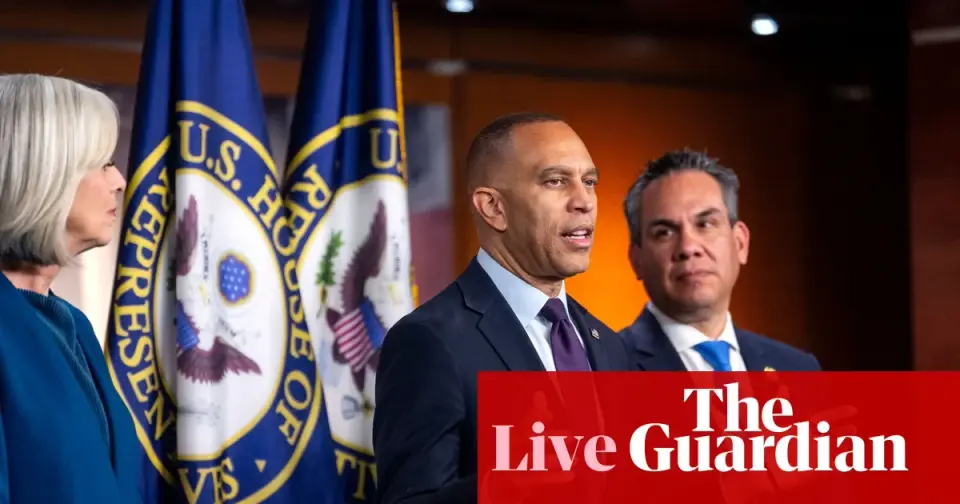
Hakeem Jeffries was nominated by House Democrats to become the first Black speaker of the US House, defeating a small progressive bloc in a 251-11 vote. He is set to lead a Democratic majority that will check President Trump's power, while facing internal pressure to adopt bolder policies on healthcare and Israel.
Key points
- House Democrats nominated Hakeem Jeffries by a 251-11 vote, with 11 members voting against him.
- Jeffries is expected to be elected by the full House on January 3, becoming the first Black speaker in US history.
- The nomination followed a massive Democratic midterm victory, securing a 259-seat majority in the House.
- Jeffries pledged to 'fight Maga extremism' and check President Trump's powers in the final two years of his term.
- A group of seven progressive lawmakers voted against him, demanding commitments on Medicare for All and ending US aid to Israel.
- Jeffries recently endorsed expanding Medicare coverage, a shift toward progressive priorities to secure support.
Background
Jeffries has served as the Democratic minority leader since 2023, succeeding Nancy Pelosi, who is retiring at the end of 2026. His nomination follows a period of intense internal party debate, with progressive factions pushing for more aggressive policy positions and procedural changes. The 2026 midterms resulted in a historic Democratic majority, giving the party significant leverage to challenge the Trump administration.
How outlets are covering it
The Guardian and The New York Times emphasize the historic nature of Jeffries's nomination and his broad support within the caucus, noting the 251-11 vote as a sign of unity. CNN highlights the resistance from ultra-progressives, detailing the specific policy demands of the 11 dissenting members, including Medicare for All and a ban on arms sales to Israel. MS NOW focuses on Jeffries's strategic decision to call for a vote rather than seeking acclamation, framing it as a move to neutralize progressive leverage and set the tone for his leadership. All sources agree that Jeffries faces internal pressure to adopt bolder policies, but differ in their assessment of the significance of the progressive dissent.
Why it matters
Jeffries's leadership will define the Democratic approach to checking President Trump's power in the final two years of his term. His ability to manage internal party divisions and deliver on progressive priorities will be crucial for maintaining the Democratic majority and advancing their agenda. The nomination also signals a shift in the party's stance on healthcare and Israel, reflecting the influence of progressive members in the new Congress.
What to watch
Jeffries will be formally elected by the full House on January 3, 2026. He will then work to build a leadership team, including Katherine Clark as majority leader and Pete Aguilar as whip. The party will also elect a new Senate majority leader, with Chuck Schumer facing a challenge from Chris Van Hollen. Jeffries will need to navigate internal party divisions and deliver on his promises to fight 'Maga extremism' and advance progressive policies.
- Hakeem Jeffries on brink of House history as he tells Democrats to ‘fight Maga, not each other’ – US politics live The Guardian
- Hakeem Jeffries overwhelmingly wins House speaker nomination despite threats from ultra-progressives CNN
- Democrats Nominate Hakeem Jeffries for Speaker of the House, Making History The New York Times
- Opinion | Hakeem Jeffries took a risk with his caucus vote – and it paid off MS NOW
- Hakeem Jeffries’ progressive defectors reveal the limits of their power: From the Politics Desk NBC News
Want the full story? Read the original reporting
Read on The Guardian