
New Mexico Megachurch Endorses GOP Candidates Amid Federal Legal Challenges
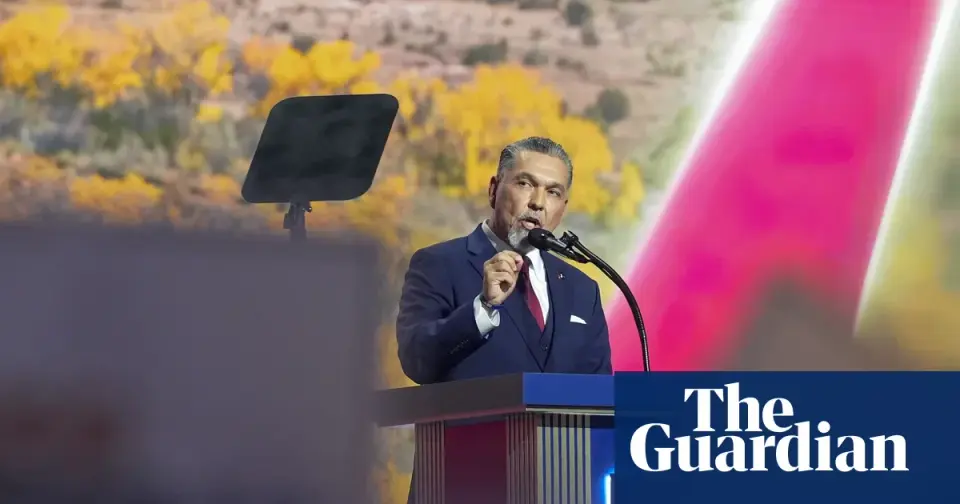
Legacy Church in New Mexico has explicitly endorsed Republican candidates Greg Cunningham and Gregg Hull, violating federal laws barring tax-exempt nonprofits from political endorsements. This move occurs as the Trump administration attempts to weaken the 1954 Johnson Amendment in federal court, while most Protestant pastors remain opposed to such endorsements.
Key points
- Pastor Steve Smothermon of Legacy Church endorsed Republican congressional candidate Greg Cunningham and gubernatorial candidate Gregg Hull in October 2026, urging his congregation to vote for them.
- The endorsements violate the Johnson Amendment, a 1954 law prohibiting tax-exempt organizations from endorsing political candidates, though the Trump administration is currently challenging this ban in federal court.
- Cunningham is trailing incumbent Democrat Gabriel Vasquez by 4 percentage points in polling, with Vasquez holding 48% support compared to Cunningham’s 44%.
- Smothermon has a history of political involvement, including previous endorsements and disputes with local politicians, and has faced criticism for his church’s social and political stances.
- A recent survey indicates that 93% of US Protestant pastors would not endorse candidates from the pulpit even if the law were changed, suggesting that Legacy Church’s actions are not representative of the broader evangelical community.
Background
This development follows a broader trend of Republican candidates in the 2026 midterms distancing themselves from President Trump’s unpopular policies, such as tariffs and the Iran war, to improve their electoral prospects. The current legal challenges to the Johnson Amendment are part of a long-standing effort by the Trump administration to weaken restrictions on church political activity, which has been a contentious issue since 2017.
How outlets are covering it
The Guardian and New Mexico Political Report highlight the explicit nature of Legacy Church’s endorsements and the historical pattern of Smothermon’s political involvement, emphasizing the tension between federal law and church actions. Crosswalk.com provides a contrasting perspective, noting that the vast majority of Protestant pastors would not endorse candidates even if the law were changed, suggesting that Legacy Church’s actions are an outlier. The Geosirius analysis focuses on the practical enforcement challenges of the Johnson Amendment, arguing that the IRS rarely revokes tax-exempt status for political endorsements, creating a low-risk environment for such actions.
Why it matters
The case of Legacy Church underscores the ongoing legal and political battles over the separation of church and state in the US. It highlights the potential for religious institutions to influence elections and the challenges in enforcing federal laws that restrict political activity by tax-exempt organizations. The outcome of these legal challenges could have significant implications for the role of religion in American politics and the integrity of the electoral process.
What to watch
The next steps include the ongoing federal court proceedings regarding the Johnson Amendment, which could determine whether churches can endorse political candidates without losing their tax-exempt status. Additionally, the November 2026 midterm elections will test the impact of Legacy Church’s endorsements on voter behavior in New Mexico’s competitive races. The IRS may also consider enforcement actions against Legacy Church, though such actions are rare and typically involve lengthy legal battles.
- New Mexico megachurch endorses Republican candidates, testing federal ban The Guardian
- Oklahoma Watch - Pulpit Politics: Johnson amendment rarely enforced Duncan Banner
- Testing church/state separation, Albuquerque megachurch endorses Hull, Cunningham New Mexico Political Report
- Most Protestant Pastors Won't Endorse Political Candidates From the Pulpit, Survey Finds Crosswalk.com
- Why Megachurches Are Openly Endorsing Candidates In 2026 ИФЗ РАН
Want the full story? Read the original reporting
Read on The Guardian