
Trump’s Port Huron Rally Targets El-Sayed with Islamophobia Amidst Midterm Stakes
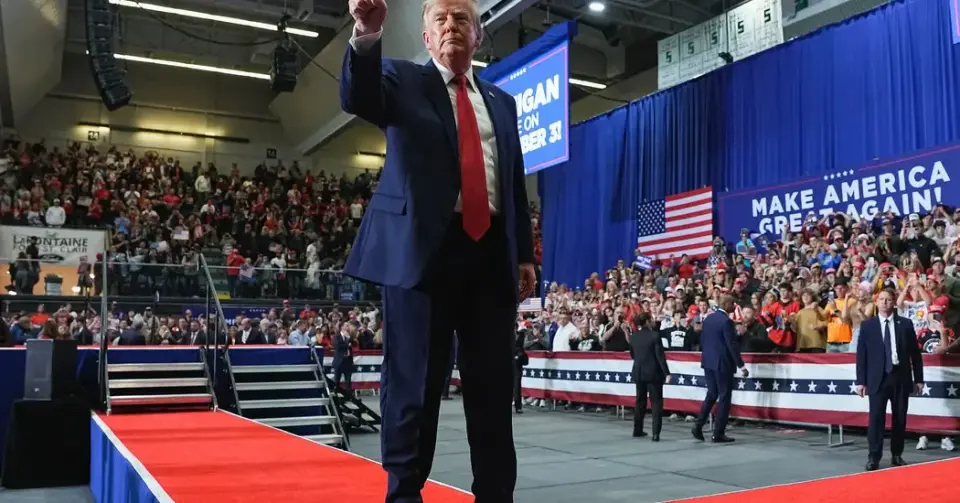
President Trump intensified anti-Muslim rhetoric at a Sunday rally in Port Huron, Michigan, labeling Democratic Senate nominee Abdul El-Sayed a 'jihadist' and falsely claiming ties to the Muslim Brotherhood. The remarks, delivered nine days before the election, drew sharp condemnation from Arab American leaders and Democrats who framed the attacks as a distraction from economic concerns. El-Sayed, who would be the first Muslim U.S. senator, dismissed the claims as shameful and emphasized his loyalty to the Constitution. The race remains a critical battleground for Senate control, with Trump’s strategy relying on fear-mongering despite record-low approval ratings.
Key points
- Trump called El-Sayed a 'jihadist' and 'Muslim Brotherhood member' at a rally in Port Huron, claiming he would invite terrorists to the U.S. if elected.
- El-Sayed, a U.S.-born epidemiologist, has repeatedly denied any affiliation with extremist groups, calling the attacks 'shameful' and a diversion from cost-of-living issues.
- Bishara Bahbah, founder of Arab Americans for Trump (now Arab Americans for Peace), condemned the remarks as 'racist' and 'out of line,' warning voters will remember the comments on November 3.
- The Michigan Senate race is pivotal for Democrats seeking a majority; El-Sayed narrowly defeated Haley Stevens in the primary, with concerns over support among Black and Jewish voters.
- Trump’s rally featured rapper Nicki Minaj and invoked the 9/11 story of Todd Beamer, while Democrats like Bernie Sanders criticized the focus on religion over economic policy.
Background
This escalation follows weeks of Trump’s midterm campaign blitz, where he has faced criticism for gaffes and a record-low approval rating of 33%. Previous archive coverage noted tensions within the GOP base over economic policies and data center expansion, while recent polling shows Democrats gaining ground in key Pennsylvania and Texas House races. The Michigan race is crucial for Democrats to secure a net four-seat gain in the Senate, with El-Sayed’s narrow primary victory highlighting internal party divisions over his stance on Israel and Gaza.
How outlets are covering it
The New York Times and The Washington Post emphasize the baseless nature of Trump’s claims, noting that El-Sayed has disavowed the Muslim Brotherhood and that no evidence supports the allegations. CNN highlights the strategic debate within the Democratic Party, with Sen. Adam Schiff urging a focus on cost of living over impeachment, while Rep. Haley Stevens expressed lukewarm support for El-Sayed, citing policy disagreements. Yahoo News underscores the backlash from Arab American communities, with Bishara Bahbah calling the remarks 'racist' and warning of electoral consequences. All sources agree that the race is a toss-up, with Trump’s strategy relying on fear-mongering despite economic concerns, while Democrats frame the attacks as a distraction from voter priorities.
Why it matters
The Michigan Senate race is a key determinant of Senate control, with Democrats needing a net four-seat gain to secure a majority. Trump’s Islamophobic rhetoric risks alienating moderate and Arab American voters, potentially undermining GOP turnout in a state where he previously won Dearborn. The controversy also highlights broader tensions in the 2026 midterms, where economic issues like inflation and fuel prices are central, and could influence voter turnout in other battleground states. The incident underscores the polarizing nature of Trump’s campaign strategy and its potential impact on down-ballot races.
What to watch
El-Sayed and Rogers will continue campaigning in the final days before November 3, with El-Sayed focusing on economic issues and Rogers emphasizing national security. Democrats will likely amplify the criticism of Trump’s remarks, while Republicans may double down on the narrative of El-Sayed as a security threat. The outcome of the Michigan race will be closely watched as an indicator of the broader midterm trend, with potential implications for Senate control and future presidential ambitions.
- In Islamophobic Rant, Trump Seeks to Stir Republican Base in Michigan The New York Times
- Trump invokes 9/11 in urging Michigan voters to oppose Muslim Senate candidate El-Sayed Reuters
- Trump making final midterm sprint in red states where Republicans are in danger of losing seats CNN
- Trump calls El-Sayed a ‘jihadist’ as he escalates campaign rhetoric The Washington Post
- Trump escalates anti-Muslim attacks against El-Sayed in Michigan, drawing Arab American rebuke Yahoo
Want the full story? Read the original reporting
Read on The New York Times