
Hurricane Isaias weakens but leaves four dead and 800,000 without power in US Southeast
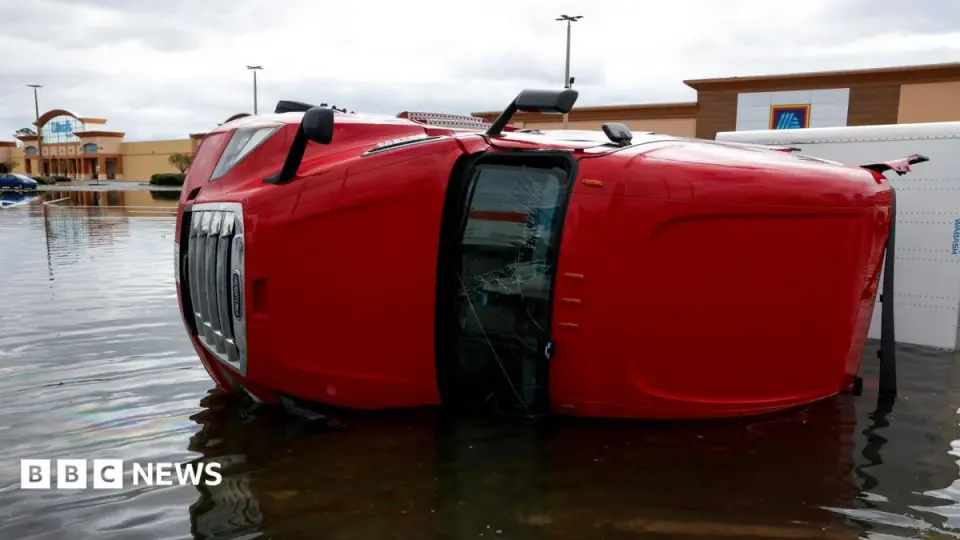
Hurricane Isaias has weakened to a post-tropical cyclone after making landfall in Florida, but it has left a significant trail of destruction across the southeastern United States. The storm has killed at least four people and left approximately 800,000 customers without power across Florida, Alabama, and Georgia. While the wind threat has diminished, the National Hurricane Center warns that heavy rainfall continues to pose a severe risk of flash and river flooding. Authorities in Alabama have rescinded mandatory evacuations as roads reopen, while residents in Florida report mixed experiences, with some noting less damage than anticipated despite widespread outages and debris.
Key points
- Four deaths have been confirmed: two in Florida (one from a fallen tree, one from carbon monoxide poisoning) and two in Alabama.
- Approximately 800,000 customers are without power, with Florida accounting for over 438,000 and Alabama for over 251,000.
- The storm has downgraded to a post-tropical cyclone with winds of 35 mph, but heavy rain of up to 15 inches is expected in parts of the Florida Panhandle.
- Alabama Governor Kay Ivey has rescinded mandatory evacuations for non-residents and reopened major roads, including the Intracoastal Waterway.
- Travel remains disrupted, with several airports closed or experiencing high cancellation rates and Amtrak suspending services in the region.
Background
Isaias was the first hurricane of the 2026 Atlantic season, making landfall near Destin, Florida, on Friday night as a Category 2 storm. Prior to landfall, the storm forced widespread shutdowns of U.S. Gulf oil and gas production, threatening fuel costs during a period of rising global oil prices. This follows a pattern of severe weather events in the region, including a nor'easter in Connecticut in September that caused similar power outages and road closures.
How outlets are covering it
BBC News provides a comprehensive overview of the human toll and infrastructure damage, highlighting specific incidents such as the carbon monoxide poisoning in Florida and the injury of a sheriff's deputy in Alabama. CNN focuses on the economic implications, specifically the disruption to America's refining nerve center, though the provided text is largely technical metadata. Both sources agree on the severity of the power outages and the ongoing flooding risks, but BBC emphasizes the immediate safety and recovery efforts, while CNN highlights the broader energy sector impact.
Why it matters
The aftermath of Hurricane Isaias underscores the vulnerability of the southeastern United States to severe weather, even when storms weaken before landfall. The significant power outages and flooding risks highlight the challenges in infrastructure resilience and emergency response. Additionally, the disruption to Gulf oil and gas production could have lasting effects on fuel prices and energy supply, particularly during a period of global energy tension.
What to watch
Authorities are focused on power restoration and flood mitigation as the storm continues to move inland. The National Hurricane Center expects heavy rainfall to continue, with potential for flash and river flooding. Cleanup efforts are underway in Alabama and Florida, with roads reopening and mandatory evacuations lifted. Travel disruptions are expected to persist for several days as airports and rail services resume normal operations.
- Hurricane Isaias strengthens to category three as evacuations orders issued along US Gulf Coast BBC
- Hurricane Isaias live tracker: Major Category 3 storm strengthening before making landfall along Gulf Coast; evacuations ordered in Alabama and Florida Yahoo
- BP Curbs Production at Two Platforms in Gulf of Mexico Due to Hurricane Isaias WSJ
- ‘Zero tolerance for disruptions.’ Hurricane Isaias could mess with America’s refining nerve center | CNN Business CNN
- Isaias is now a ��major’ hurricane and is expected to bring significant rain to the Philly area Inquirer.com
Want the full story? Read the original reporting
Read on BBC